
mu · @mu
103 followers · 1292 posts · Server ni.hil.isthttps://yourforestpodcast.com/good-fire-podcast - a podcast about tending the land with fire and other natural wisdom by experienced elders, younger native people, and scholars, mostly indigenous. I was a little curious about how people traditionally used fire in their farming. Now, I'm a believer.
I learned that some native people do a "cultural" burn after they know the land and for something specific in the landscape, e.g., a species or just the whole system, but not all native people do a "cultural" burn. A human-managed forest has trees that are spaced out. One thing this does is allow precipitation to reach the soil and the roots.
I also learned that intentional fires are not just for preventing catestrophic burns that ruin the topsoil. Burning an area causes native plants and grasses to emerge. I bet you can easily raise plants from seed in a swidden. A burned area stays thinned out for eight years. They burn next to something green, next to water, or when rain is imminent. Those with traditional experience say it will go out eventually. People also burn to prevent ticks.
I had to search for a video that they mentioned in season 2, episode 3, but I'm not sure if I found it. Here is what I found: Gathering Voices Society on Vimeo, https://vimeo.com/user105935556.
Here's a fire-related quote that I've posted before:
"low-intensity fires were created in such a way that they did not get out of hand and did not harm trees and other large vegetation. Burning released nutrients to the soil, stimulated regrowth—which provided forage for game and other wildlife—and prevented a buildup of fuel, which would otherwise result in disastrous wildfires. It also created and maintained prairies and meadows, increased the abundance of food-producing bulbs and grasses, enhanced the density and diversity of plants, reduced competition, and helped control insects and disease."
"The effect of these practices ... was to maintain large and small areas at a mid-succession stage by simulating natural disturbance. The disturbances often reduced the dominance of existing communities, creating openings for colonization by other species. While the biomass was reduced temporarily, it was more than made up for by the increased vigor of the new growth. Some areas were burned every two or three years, others every five or six, while others were burned every fifteen years or so." (One-Straw Revolutionary, chapter five)
A similar podcast is The Big Burn, https://laist.com/podcasts/the-big-burn, but only the third and fourth episodes contain indigenous knowledge.
I read that southeast North "American" natives used to burn underbrush, grass, and weeds, too. ("Native American 'Garden Agriculture' in Southeastern North America" by C Margaret Scarry and John F Scarry from World Archaeology, Vol 37, No 2 (Jun 2005) jstor.org/stable/40024233)
#agroforestry #indigenousAustralia @indigenousauthors #IndigenousKnowledge #indigenousPeoples #indigenousPeople #IndigenousAustralians #Aboriginal #FirstNations #LandBack #IndigenousAuthors #NativeAmericans #ClimateChange #NationalParks #CrownLand
#agroforestry #IndigenousAustralia #IndigenousKnowledge #indigenouspeoples #indigenouspeople #IndigenousAustralians #aboriginal #firstnations #landback #indigenousauthors #nativeamericans #climatechange #nationalparks #crownland
Gwenfar :plantmage6: · @GwenfarsGarden
419 followers · 13263 posts · Server rage.love
The W&J Nagana Yarrbayn Cultural Custodians need your financial support to help them keep Waddananggu going through the wet season, which will continue until March, in their fight against Adani mining (Queensland).
https://standing-our-ground.org/donate-to-waddananggu
"Since the 26th August 2021, there has been a Wangan and Jagalingou Cultural Custodian in the ceremonial bora ring next to the Adani coal mine at all times, even on blistering hot days and cold stormy nights.
Our ongoing presence means we can care for our ancestral homelands, monitor damage and destruction on our Country, and hold those who harm our lands and waters to account.
Harsh conditions, flooding rains, and fine dust mean we continuously need repairs for camping gear, vehicles, solar panels, and our communications tower. On top of that, we have ongoing costs for food, medical supplies, fuel, and transporting family to and from Waddananggu."
More info https://standing-our-ground.org/
#IndigenousAustralians #australia #stopadani #firstnations

MusiqueNow :newpride: · @MusiqueNow
356 followers · 11188 posts · Server todon.eu
#podcast
#Bowraville | Podcast Trailer
Three children disappear from one small Australian town; the same man seen at the scene of each, but never convicted. A investigation by the Australian newsp...
#Podcast #Bowraville #IndigenousAustralians #australia #missingchildren #racism
Gwenfar :plantmage6: · @GwenfarsGarden
419 followers · 13265 posts · Server rage.lovePlease help the Waddananggu camp.
Today marks 272 days that they have been occupying their tribal lands across the road from the Adani coal mine. Recent floods in Queensland have meant they have lost a number of large tents, and crucial equipment has been damaged. There is also an ongoing need for food and medical supplies.
Donate here: https://standing-our-ground.org/donate-to-waddananggu/
#IndigenousAustralians #australia #mutualaid
MusiqueNow :newpride: · @MusiqueNow
356 followers · 11198 posts · Server todon.eu
#indigenousAustralians
Federal Government Buys Aboriginal Flag | #NIRS –
#NationalIndigenousRadioService
The Australian Government has struck a deal with the copyright holders of the Aboriginal Flag to ensure free public use of the design following years of negotiations. The flag was designed by Luritja…
https://nirs.org.au/news/legal/federal-government-buys-aboriginal-flag/
#IndigenousAustralians #NIRS #NationalIndigenousRadioService
Gwenfar :plantmage6: · @GwenfarsGarden
419 followers · 13248 posts · Server rage.loveIn 1965, a group of students from the University of Sydney drew national and international attention to the appalling living conditions of Aboriginal people and the racism that was rife in New South Wales country towns. Known as the Freedom Ride, this 15-day bus journey through regional New South Wales would become a defining moment in Australian activism.
https://aiatsis.gov.au/explore/1965-freedom-ride
#IndigenousAustralians #australia #AustralianHistory
Gwenfar :plantmage6: · @GwenfarsGarden
419 followers · 13248 posts · Server rage.loveAboriginal communities and nations to decide who is and who is not a member of their sovereign country.
https://indigenousx.com.au/aboriginal-communities-and-nations-to-decide-who-is-and-who-is-not-a-member-of-their-sovereign-country/
"...But I also want to say that the history Aboriginal identity, as a result of attempted dispossessing, colonial violence and child theft is complex, occasionally ambiguous and (legally, at least) sometimes uncertain.
Rather than be subject to a media circus, with populist megaphones acting as self-anointed ringleaders, authority over these matters must be given to specific Aboriginal communities and nations to decide who is and who is not a member of their sovereign country. The rest of us should perhaps keep our commentary to ourselves rather than spray it across social media in an undignified and decidedly non-Aboriginal way."
#IndigenousAustralians #australia
Gwenfar :plantmage6: · @GwenfarsGarden
419 followers · 13248 posts · Server rage.loveIf you are looking for a short series on #Netflix, I highly recommend: Wrong Kind of Black.
It's about Boori Monty Pryor, an indigenous Aussie story teller, who uses comedy and drama to explore his experience of 1970s Melbourne as a DJ, and the endemic racism.
There are 4 episodes only 15 mins each, but it packs a lot in that time. Defo try it.
#netflix #australia #IndigenousAustralians
Gwenfar :plantmage6: · @GwenfarsGarden
419 followers · 13248 posts · Server rage.loveTIL that the name Kangaroo, comes from a northern Queensland indigenous language. When Captain Cook visited in 1770, this was the area he disembarked and learned this word, but of course, assumed that all indigenous languages were the same.
So first white settlers in Sydney in 1788 used this word and the local indigenous group thought the white people were calling all animals Kangaroo, because of course they had a different word for the same creature. But Kangaroo stuck (coz white people) and is the word used today.
There were c. 250 Indigenous languages in 1788.
#IndigenousAustralians #australia #language
Gwenfar :plantmage6: · @GwenfarsGarden
419 followers · 13248 posts · Server rage.love


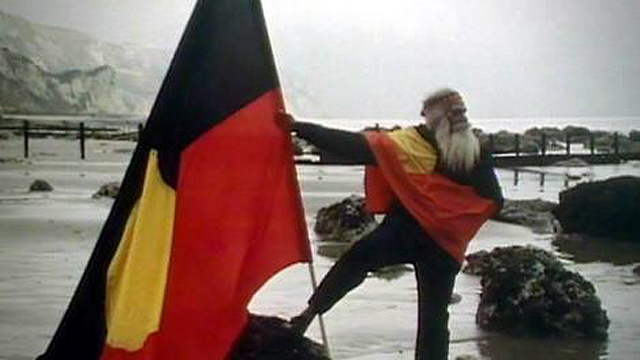
TIL that on January 26 1988*, an indigenous Australian, Burnum Burnum, planted the indigenous Australian flag :flag_aboriginal_australian: on the beaches under the white cliffs of Dover, claiming possession of England on behalf of Indigenous Australians.
He made what is known as the Burnum Burnum Declaration, which included:
*In claiming this colonial outpost, we wish no harm to you natives, but assure you that we are here to bring you good manners, refinement and an opportunity to make a Koopartoo – “a fresh start.”
*Henceforth, an Aboriginal face shall appear on your coins and stamps to signify our sovereignty over this domain.
*Based on our 50,000 year heritage, we acknowledge the need to preserve the Caucasian race as of interest to antiquity, although we may be inclined to conduct experiments by measuring the size of your skulls for levels of intelligence. We pledge not to sterilize your women, not to separate your children from their families.
Picture and more info: http://www.ultrakulture.com/2016/01/01/what-if-aborigines-had-colonized-england-2/
*200 years after the first fleet arrived in Sydney habour. 26th January is #InvasionDay (aka Australia Day)
#IndigenousAustralianHistory #AustralianHistory #IndigenousAustralians
#InvasionDay #IndigenousAustralianHistory #AustralianHistory #IndigenousAustralians
Gwenfar :plantmage6: · @GwenfarsGarden
419 followers · 13248 posts · Server rage.love‘I found my identity’: how TikTok is changing the lives of its popular Indigenous creators
The video-sharing app has fostered a strong First Nations community that has kickstarted a cultural journey in spite of the trolls
#IndigenousAustralians #australia #firstnations #tiktok
Gwenfar :plantmage6: · @GwenfarsGarden
419 followers · 13248 posts · Server rage.loveI came across this really interesting article about 'cultural burning', as a much better way of better managing the Australian landscape. Indigenous knowledge needs to be respected and used if Australia has any chance of a future given the impacts that climate change will have.
"Right fire for right future: how cultural burning can protect Australia from catastrophic blazes
Traditional knowledge has already reduced bushfires and emissions in the top end, so why isn’t it used more widely?"
#australia #IndigenousAustralians
Gwenfar :plantmage6: · @GwenfarsGarden
419 followers · 13248 posts · Server rage.loveReading 'Growing up Aboriginal' and one person commented that they were sick of people asking them "when did you realise you were Aboriginal?"
So they started responding "when did you realise you were white?"
#racism #IndigenousAustralians #whitesupremacy

Gwenfar Dewines Planhigion · @GwenfarsGarden
862 followers · 11357 posts · Server kith.kitchenDespite what a lot of Australians think, slavery has been part of our history too
10 things you should know about slavery in Australia
https://www.sbs.com.au/nitv/article/2016/12/01/10-things-you-should-know-about-slavery-australia
#racism #slavery #australia #IndigenousAustralians