
World History Encyclopedia · @whencyclopedia
1246 followers · 2351 posts · Server mstdn.social
The ancient city of Aquileia was situated near the head of the Adriatic Sea west of the Roman province of Illyria. #History #RomanEmpire #AttilaTheHun #Aquileia #HistoryFacts https://www.worldhistory.org/aquileia/
#historyfacts #Aquileia #attilathehun #romanempire #History
World History Encyclopedia · @whencyclopedia
1212 followers · 2263 posts · Server mstdn.social
The Avars were a confederation of heterogeneous (diverse or varied) people consisting of Rouran, Hephthalites, and Turkic-Oghuric races who migrated to the region of the Pontic Grass Steppe (an area corresponding to modern-day Ukraine, Russia, Kazakhstan) from Central Asia after the fall of the Asiatic Rouran Empire in 552 CE. https://www.worldhistory.org/Avars/ #History #Alboin #AttilatheHun #Avars
#Avars #attilathehun #alboin #History
World History Encyclopedia · @whencyclopedia
1170 followers · 2175 posts · Server mstdn.social
Bayan I (reigned 562/565-602 CE) was a king of the Avars, a confederation of heterogeneous people who migrated from the region of Mongolia, north of China, in 552 CE and came in contact with the Eastern Roman Empire c. https://www.worldhistory.org/Bayan_I/ #History #Alboin #AttilatheHun #Avars
#Avars #attilathehun #alboin #History
World History Encyclopedia · @whencyclopedia
1098 followers · 1989 posts · Server mstdn.social
The Avars were a confederation of heterogeneous (diverse or varied) people consisting of Rouran, Hephthalites, and Turkic-Oghuric races who migrated to the region of the Pontic Grass Steppe (an area corresponding to modern-day Ukraine, Russia, Kazakhstan) from Central Asia after the fall of the Asiatic Rouran Empire in 552 CE. https://www.worldhistory.org/Avars/ #History #Alboin #AttilatheHun #Avars
#Avars #attilathehun #alboin #History
World History Encyclopedia · @whencyclopedia
910 followers · 1529 posts · Server mstdn.social
Attila the Hun (r. https://www.worldhistory.org/Attila_the_Hun/ #History #AttilatheHun #Huns #RomanWarfare
#romanwarfare #huns #attilathehun #History
World History Encyclopedia · @whencyclopedia
731 followers · 964 posts · Server mstdn.social
The Avars were a confederation of heterogeneous (diverse or varied) people consisting of Rouran, Hephthalites, and Turkic-Oghuric races who migrated to the region of the Pontic Grass Steppe (an area corresponding to modern-day Ukraine, Russia, Kazakhstan) from Central Asia after the fall of the Asiatic Rouran Empire in 552 CE. https://www.worldhistory.org/Avars/ #History #Alboin #AttilatheHun #Avars
#Avars #attilathehun #alboin #History
World History Encyclopedia · @whencyclopedia
669 followers · 771 posts · Server mstdn.social
The Huns were a nomadic tribe prominent in the 4th and 5th century CE whose origin is unknown but, most likely, they came from "somewhere between the eastern edge of the Altai Mountains and the Caspian Sea, roughly modern Kazakhstan" (Kelly, 45). They are first mentioned in Roman sources by the historian Tacitus in 91 CE as living in the region around the Caspian Sea and, at this time, are not ...https://www.worldhistory.org/Huns/ #AttilatheHun #Huns #History

Jesse Butler · @Jesse
51 followers · 109 posts · Server matthewedavis.onlineBeen working on the Poetic Edda, and got to the tragedy of Brynhild, who is apparently Attila the Hun’s sister?
I guess that gives a pretty exact date for these tales, although not necessarily any indication of historical accuracy.
Don’t mess with a Valkyrie.
#mythology #norse #attilathehun #poeticedda #norsemythology

Global Museum · @globalmuseum
123 followers · 266 posts · Server mastodon.online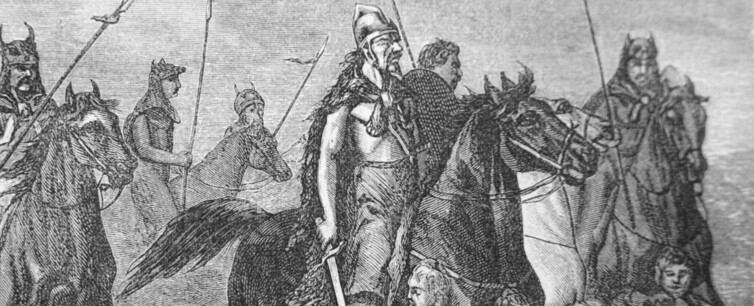
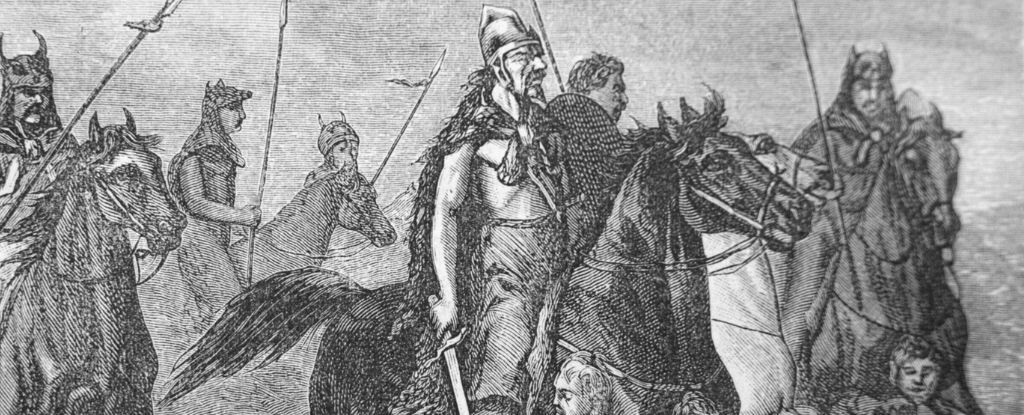
Attila The Hun Attacked Rome to Save His People From Starvation, New Study Suggests https://www.sciencealert.com/attila-the-hun-attacked-rome-to-save-his-people-from-starvation-new-study-suggests #history #attilathehun