
SRBR Outreach · @SRBR_Outreach
79 followers · 83 posts · Server mas.toSomething different this #sciencesunday. Babies' sleep and circadian rhythms take time to settle to a day-night pattern - for some takes much longer than we hoped! Lucy Pasha-Robinson The Guardian talks about the stresses of (unrealistic) expectations of baby sleep:
https://www.theguardian.com/commentisfree/2023/aug/28/baby-sleep-parenting-competence-shame
SRBR Outreach · @SRBR_Outreach
79 followers · 80 posts · Server mas.toOur brains use light to keep us in time with the day outside, a system which evolved for the natural day-night cycle. But what happens when you introduce artificial light like we humans use? How are other species affected? This #sciencesunday check out:

Joe Wynne · @joewynne
443 followers · 4324 posts · Server mindly.social
The Cormorant is an unusual bird that swims very low in the water to fish and is often seen spreading its wings out when on land to dry.
It also has a long neck, useful for snatching fish underwater. How else can a long neck be useful?
Ibis Pond, Pinckney Island National Wildlife Refuge, Pinckney Island, SC
#sciencesunday #naturephotography #nature #birds #s23ultra

NWS Portland (bot) · @nwsportland_bot
492 followers · 64 posts · Server pdx.social
Thunderstorms have been on the minds of meteorologists lately, but have you ever wondered how a thunderstorm actually forms? On this #ScienceSunday, lets look a bit more into what components you need for a thunderstorm. ⛈️ (1/6)
Joe Wynne · @joewynne
334 followers · 2794 posts · Server mindly.social
A Great Blue Heron walks across my path, heading to Ibis Pond, Pickney Island Wildlife Refuge, SC, USA.
Fascinated by the structure of their feathers.
On Pickney Island these Herons thrive because they can access fish in saltwater (ocean and marshes) and freshwater (like Ibis Pond).
Options like this help animal and plant populations remain resilient to human activities. If they are restricted to small areas, they cannot adjust.
#sciencesunday #nature #naturephotography #birds
Joe Wynne · @joewynne
328 followers · 2624 posts · Server mindly.social
Adult and juvenile Great Egrets congregate into a noisy rookery. Look densely-populated? There can be ten nests per tree. This rookery is surrounded by a moat of water, keeping out raccoons and other stranger danger. That makes it popular.
Many bird populations are dependent on availability of rookery locations like this for survival.
From Ibis Pond in the Pickney Island National Wildlife Refuge, Pickney Island, SC, USA
#sciencesunday #travel #travelphotography #nature #naturephotography
SRBR Outreach · @SRBR_Outreach
78 followers · 69 posts · Server mas.toCircadian cycles orchestrate many functions of the immune system. Find out a bit about how this was discovered and what new research is telling us about circadian immunity in this featuring @McKeatingLab @LM_Ince @jkimmey @gibbs_lab_UoM:

Joe Wynne · @joewynne
278 followers · 1556 posts · Server mindly.social
#ScienceSunday #NativePlants
The Ecology of Garden Poop
In this garden, berries appear in summer, notably Beautyberry, Trumpet Jessamine and Blackberry. The lifecycle of a berry seed goes through the alimentary canal of birds and mammals and exits as a poop-fertilized planting package.
All good, but where the birds sit when this happens matters. Aggressive Blackberry plants must be removed often. Under the back gutter, though, just call it an orchard. The flowers now are nice.
#sciencesunday #nativeplants #gardening
SRBR Outreach · @SRBR_Outreach
78 followers · 67 posts · Server mas.to
A month after the USA has switched to DST - have you fully adjusted? How are you Europeans doing two weeks in?
For #sciencesunday check out this explainer from @cgpgrey - Why does (some of) the world have DST anyway? And who doesn't?
Joe Wynne · @joewynne
250 followers · 1250 posts · Server mindly.social
Flowers have coevolved with their pollinators for eons, using different tactics to attract their targets and stick pollen onto them, such as this Honeybee pushing into The Carolina Jessamine flower cup. It will get covered in pollen.
Climate change has stressed the flower/pollinator relationship. Either the timing of appearance is mismatched, or one species is weakened. Those relationships that are most specialized may not survive.
2/2
#sciencesunday #nativeplants #science #flowers #ecology
Joe Wynne · @joewynne
250 followers · 1247 posts · Server mindly.social
Carolina Jessamine is an early spring food source for many insects in this region. On this day, honeybees, native bees and this Bumblebee all climbed into the "cup" shape formed by the flowers. There is nectar at the bottom.
This little cup forces the hairy bee into tight quarters where it cannot hope to avoid getting covered with pollen. The pollen will be transferred to another vine's flowers to spread genetic material.
1/2
Joe Wynne · @joewynne
244 followers · 1058 posts · Server mindly.social
Trumpet Honeysuckle has appeared on the vine trellis without being planted. It is a native vine, so will be a valued addition.
Why? Leaves are eaten by caterpillars of the Spring Azure Moth and the
Hummingbird Moth (seen here and posted previously). Berries are eaten by birds, nectar by Hummingbirds.
This one plant will be an ecological hub all year. More will be grown in the future.
Still, humans, look at those bright red flower bunches that appear all over.
Michael Emerman · @memerman
644 followers · 446 posts · Server mstdn.scienceIn our monthly Classic Papers in HIV journal club, Episode 17, https://research.fredhutch.org/emerman/en/courses/classic-papers-in-hiv-biology-journal-club.html , we discussed two papers that describe the specificity of HIV-1 integration into the actively transcribed genes of the human genome due to the binding of a host protein, LEDGF to the HIV-1 integrase protein. https://doi.org/10.1038/nm1329 and
https://doi.org/10.1073/pnas.0914142107 #Virology #HIV #ClassicPaperJournalClub #ScienceSunday 1/7
#virology #hiv #classicpaperjournalclub #sciencesunday
Joe Wynne · @joewynne
229 followers · 788 posts · Server mindly.socialNow the analysis begins on our collected samples. Technicians will check for DNA of beneficial parasitic nematodes living in "our" snails and slugs. Maybe one or more of these will be able to be made into a safe product for gardeners to use to control snails and slugs. This should be a much better solution than poisons.
It was a fun and easy project for me and my daughter. You should consider searching for a project that interests you.
5
#citizenscience #sciencesunday #science #environment

Joe Wynne · @joewynne
226 followers · 704 posts · Server mindly.social
Time to wrap up this collection! The slugs and snails are safely in the eight collection cups and the labels have been completed. We stretch some fabric over the top of the cups and then press on the tops. Now our subjects can breathe.
My daughter then puts the labels on the cups and we place the cups in the box.
Some extra space here, so I'll mention how great my daughter, the scientist, is.
More on what happens next to be tooted on #ScienceSunday.
4
#citizenscience #sciencesunday #environment
Joe Wynne · @joewynne
226 followers · 616 posts · Server mindly.social
#CitizenScience SlugFest
Continuing from the #ScienceSunday post. We opened the styrofoam box and took out all the items.
Everything we needed for the collection was provided, even detailed instructions. We prepped the cups where the snails and slugs would be stored. Next it was off to find our targets in my garden!
I took her first to the #compost bin, functioning since before she was born. There was a slug under the lid as expected.
2
#citizenscience #sciencesunday #compost #gardening #nature #environment
Joe Wynne · @joewynne
221 followers · 562 posts · Server mindly.social


Management of the suburban lawn and garden often includes a cascade of chemicals to kill pests. The chemicals affect non-target species.
I helped my daughter, an agricultural scientist, with a #CitizenScience project. The objective is to find beneficial nematodes that kill snails and slugs, so that poisons are not necessary to protect gardens or crops.
Follow this week to see how these projects work. You might want to try one.
See alt text for more. Will this get gross?
1
#sciencesunday #citizenscience
SRBR Outreach · @SRBR_Outreach
79 followers · 51 posts · Server mas.to#chronoshaming, #nightowls, #sleep - this week an article in @Guardian called for an end to circadian-rhythm shaming. Does your workplace accommodate your chronotype?
#sciencesunday #sleep #nightowls #chronoshaming
Daniel MacPhee 🥼🔬🧬🧫🇨🇦 · @dmacphee
423 followers · 2892 posts · Server mas.to
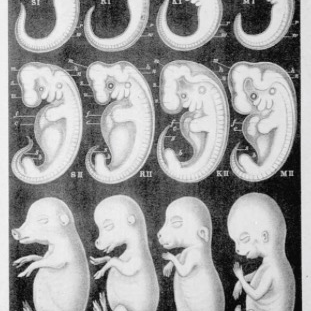
And the paper itself. One highlight: “Differentiation between X versus Y chromosomes contributions to sex differences”
#DevBio #ReproSci #science #MedMastodon #ScienceSunday #Scicomm
https://www.cell.com/stem-cell-reports/fulltext/S2213-6711(22)00513-6
#scicomm #sciencesunday #MedMastodon #science #reprosci #devbio
Michael Emerman · @memerman
644 followers · 446 posts · Server mstdn.scienceIn our monthly Classic Papers in HIV journal club, Episode 16, we discussed two papers from 2011 that simultaneously described the discovery of SAMHD1 as the target of the viral protein X (Vpx) to allow lentivirus infection of macrophages and dendritic cells. https://www.nature.com/articles/nature10117 from the Benkirane group and https://www.nature.com/articles/nature10195 from the Skowronski group. #Virology #HIV #ClassicPaperJournalClub #ScienceSunday 1/7
#virology #hiv #classicpaperjournalclub #sciencesunday