Sada Shree · @sadashree
3 followers · 54 posts · Server mstdn.socialHe wrote Niruddesher Kahani in 1896, a very famous short story and his Palatak Toophan was one of the first works in Bengaki science fiction. A close friend to Gurudev Rabindranath Tagore, he would spend many evenings with him, listening to his stories and plays.
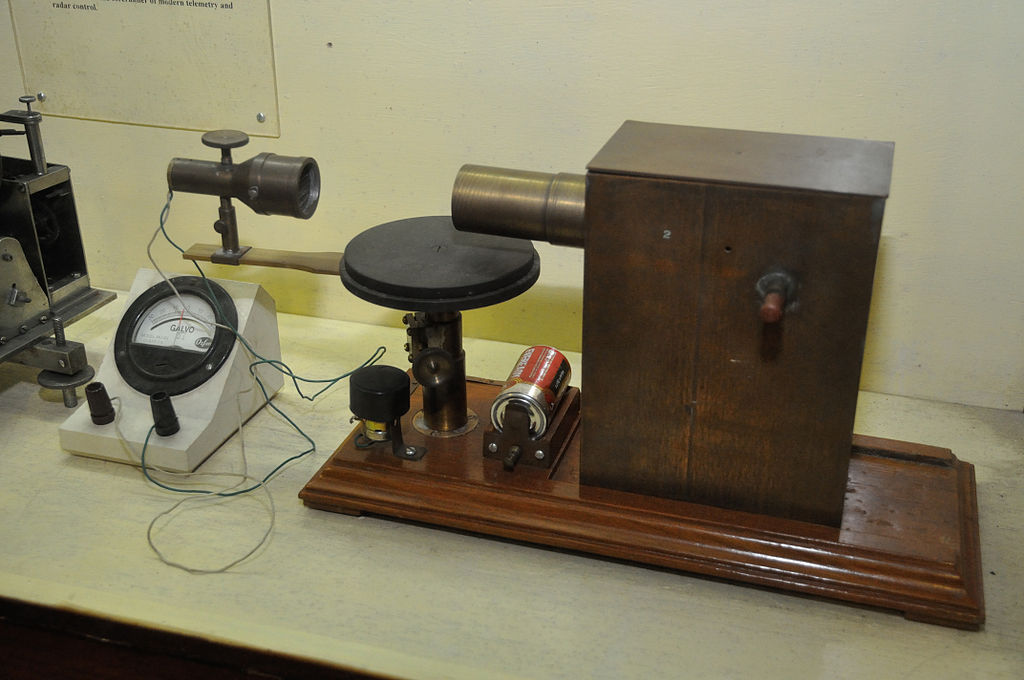
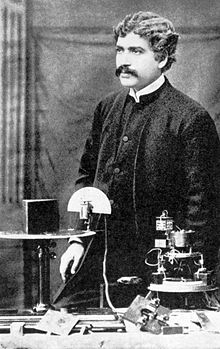
In the history of science, Bose has been credited with invention of wireless detection device as well as a pioneer in the field of biophysics.
Sada Shree · @sadashree
3 followers · 54 posts · Server mstdn.socialHe made an appeal to the ancient temples of learning, at Taxila and Nalanda that in their heydays attracted scholars from all over the world. It was significant that the thunderbolt fashioned out of Rishi Dadichi’s bones would be it’s symbol.
In a sense Acharya Jagadish Chandra Bose was a modern day Dadichi, who gave away everything, without expecting anything in return. He was also a writer, an author, a polymath, a connoisseur of fine arts, and father of Bengali Sci-Fi.
Sada Shree · @sadashree
3 followers · 54 posts · Server mstdn.socialHe was greatly helped in his endeavor by Gurudev Tagore, who contributed financially, and also backed him in his efforts.
For Bose the institute would be a center for advancing original thought, where people would research and discover, and then share their knowledge for the betterment of mankind.
Sada Shree · @sadashree
3 followers · 54 posts · Server mstdn.socialBose did not give up on his research work even after retirement and kept working on it till the end of his life. Having experienced the struggle of doing research without proper equipment, he came up with the idea of a full fledged research institute, and laboratory.
He began to collect funds for this very purpose, and finally on Nov 23, 1917, his dream came true, when the Bose Research Institute was opened in Kolkata.
Sada Shree · @sadashree
3 followers · 54 posts · Server mstdn.socialHis pioneering work on plant stimuli would be the basis for many fields like physiology, chronobiology and cybernetics.
In 1915, Bose retired as Professor of Physics, he had actually got a 2 year extension in recognition of his services. Even after retirement, the Govt made him as Professor Emeritus on full pay, instead of giving him pension as per the standard practice.
Sada Shree · @sadashree
3 followers · 54 posts · Server mstdn.socialOne aspect which Bose was pretty much against, was patenting his inventions. In a sense he never saw science as a means of monetary benefit, for him it was used to benefit mankind.
He could easily have had made a fortune just by patenting his inventions, but he was never really interested in it. This is the reason, why Marconi gets the credit for radio, though it was Bose who actually first demonstrated it’s practical application.
Sada Shree · @sadashree
3 followers · 54 posts · Server mstdn.socialMany other scientists like Prof Fitzerland, Sir William Ramsay, Sir George Gabriel Stokes too pitched in, requesting for all the assistance that had to be given to him.
The then Viceroy Lord Elgin, though showing interest in the project, felt it was not a priority, and the lab ultimately was opened in 1914, just a year before Bose retired.
Sada Shree · @sadashree
3 followers · 54 posts · Server mstdn.socialHe was the first to use a semiconductor junction to detect radio waves, and this was an influence on Pearson and Brattain in 1954, when they were doing their work on semiconductors.
Sir Nevil Mott, Noble Laureate remarked that “J.C.Bose was at least 60 years ahead of his time, had anticipated the existence of N and P type semiconductors much before than any one”.
Sada Shree · @sadashree
3 followers · 54 posts · Server mstdn.socialIn a sense Bose shattered the myth that only the West was good at science.
Lord Kelvin congratulated him on his success, the renowned papers like Times, Spectator were all praise. The fact that Bose managed to achieve so much with pretty rudimentary equipment, and in the face of discrimination, made his achievement, that much more remarkable.
Sada Shree · @sadashree
3 followers · 54 posts · Server mstdn.socialWithin a year in 1896, one of his other papers “On the Determination of the Indices of Refraction of Sulphur for the Electric Ray” was published by Royal Society of London, and it was probably the first time, papers by an Indian were published in a Western periodical.
The scientific community now sat up and took notice of him, he was given the Doctor of Science degree, the British Govt came forward to help him monetarily.
#JagadishChandraBose
Sada Shree · @sadashree
3 followers · 54 posts · Server mstdn.social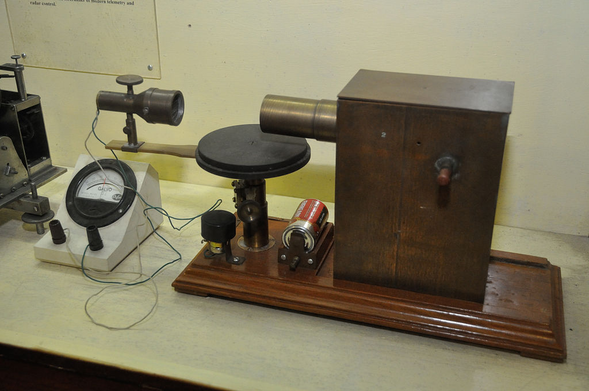
He also developed an improved “Coherer” over the previous ones by Eduard Branly and Oliver Lodge, and used that to demonstrate various aspects of radio waves.
In 1895 he published his findings in “On the polarisation of Electric Rays by Double Reflecting Crystals” at the Asiatic Society of Bengal, his first research paper.
Sada Shree · @sadashree
3 followers · 54 posts · Server mstdn.socialBose had read Oliver Lodge’s book on Hertz’s experiments and was motivated to study more on electric waves. Realizing the disadvantages associated with long waves, Bose first reduced them to mm level around 5mm wavelength
In Nov 1894, Bose for the first time gave a demonstration of microwaves at the Kolkata Town Hall, where by he ignited gunpowder and rang a bell at a distance of using the microwaves.
Sada Shree · @sadashree
3 followers · 54 posts · Server mstdn.socialEven then Bose was only paid 1/2 of what Britishers were paid, and he also was not given the proper facilities for research, and he had to improvise his own equipment.
He got over this by creating a makeshift laboratory at home, and would pursue his research after college. Most of his salary went into his laboratory, and equipment, and he lived rather frugally.
Sada Shree · @sadashree
3 followers · 54 posts · Server mstdn.socialHowever Bose could not cope with the rigors of the course, and had to quit because of ill health. In 1882, he enrolled in Cambridge for a course in Natural Sciences, in the Christ College there.
The fact that his brother in law Anandamohan Bose studied there, earlier was also a factor. Being the brilliant student that he was he soon received the Natural Science Tripos at Cambridge.
#jagadishchandrabose
Sada Shree · @sadashree
3 followers · 54 posts · Server mstdn.socialWith not much friends there to speak, he spent his time in solitude, and this is where he developed his skills of observation and scientific temperament. Being intelligent he was a favorite of his teachers and passed most examinations with distinction.
One of the biggest influences on his life was Father Eugene Lafont, a Belgian Jesuit, who was known for his vast knowledge in science. #jagadishchandrabose
Sada Shree · @sadashree
3 followers · 54 posts · Server mstdn.socialGrowing up in the company of boys less fortunate than him, made him more tolerant, and never differentiated between the rich and poor.
At the age of 9, he was admitted to the prestigious St.Xaviers School in Kolkata. Coming from a vernacular background, he had to face a class full of English speaking guys, who often teased him about it and provoked him too.
Sada Shree · @sadashree
3 followers · 54 posts · Server mstdn.social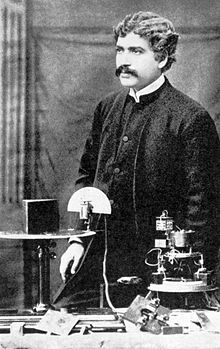
Acharya Jagdish Chandra Bose, one of the great Indian scientists of modern era, who came up with the first version of the radio, discovered that plants have feelings too. A genius in his own right.
Thread on his Jayanti today.

cerebraltangent · @cerebralvortex
11 followers · 293 posts · Server mastodon.social
RT @SadaaShree@twitter.com
Acharya Jagdish Chandra Bose, one of the great Indian scientists of modern era, who came up with the first version of the radio, discovered that plants have feelings too. A genius in his own right.
Thread on his Jayanti today. #JagadishChandraBose
🐦🔗: https://twitter.com/SadaaShree/status/1597798927390343168
Shanmugam :verified: · @shanmugamsvkp4
30 followers · 445 posts · Server mstdn.social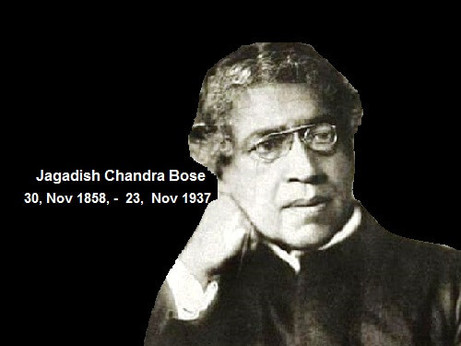

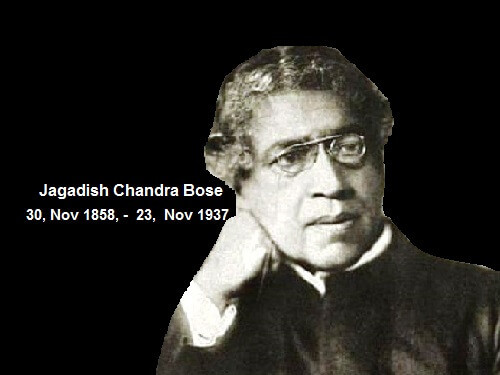
#JagadishChandraBose
#BirthAnniversary
🌷Happy Birthday🌷
#birthanniversary #JagadishChandraBose