
Jon Sullivan · @joncounts
878 followers · 2178 posts · Server mastodon.nz
This is the view from my office window at the moment, at #LincolnUniversityNZ.
Rainbow!
#LincolnUniversityNZ #sky #rainbow #lincoln #nz #photo
Jon Sullivan · @joncounts
848 followers · 1548 posts · Server mastodon.nz
#LincolnUniversityNZ Ecology Senior Tutor Mike Bowie is retiring at the end of this month, after 40 years. Mike's a legend in entomology and ecological restoration, He's had major roles in such projects as the restoration of Ōtamahua/Quail Island and native tree planting on the Canterbury plains for the Te Ara Kakariki initiative.
Today Mike started to tidy out his office.
If you know Mike, there will be a big send off in early May.
#LincolnUniversityNZ #ecology #nz #ecologicalrestoration
Jon Sullivan · @joncounts
840 followers · 1494 posts · Server mastodon.nz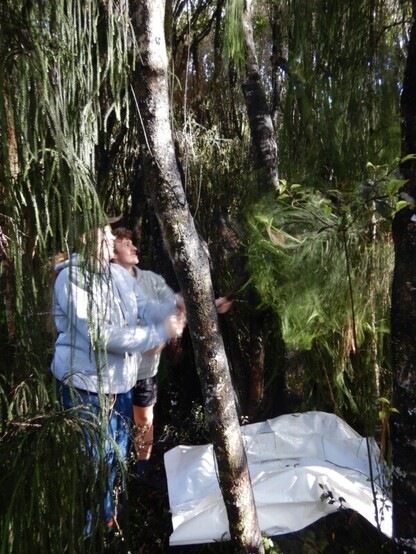
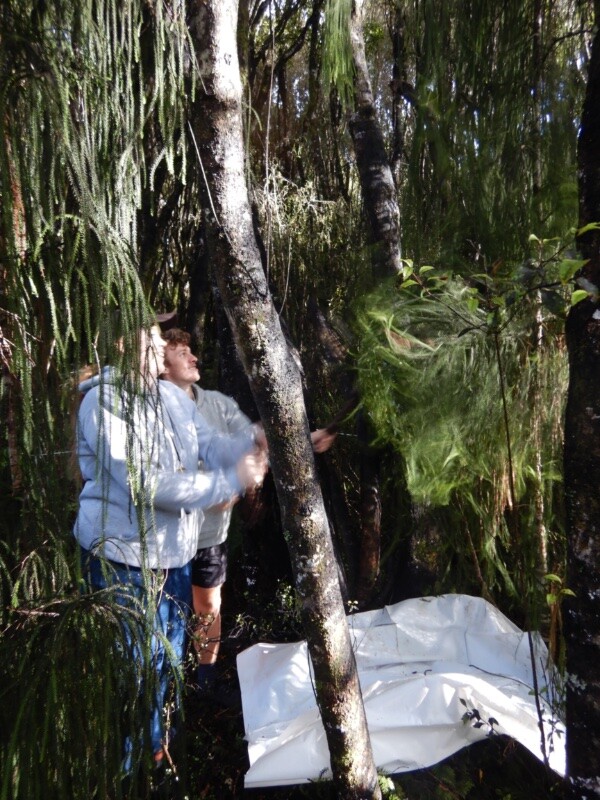
Earlier this week we ran our 3-day Biodiversity Coast-to-Coast field trip for the #LincolnUniversityNZ course Biological Diversity. This takes us from East Coast to West Coast across Te Waipounamu/NZ's South Island.
Students work in groups to lay out random 10 m by 10 m forest plots at each site, then photograph all the species they can find of certain taxonomic groups.
We'll be uploading our finds to #iNaturalistNZ over the next weeks.
https://inaturalist.nz/projects/ecol202-biodiversity-coast-to-coast-2015-and-later
#LincolnUniversityNZ #iNaturalistNZ #university #fieldtrip #ecology
Jon Sullivan · @joncounts
827 followers · 1412 posts · Server mastodon.nz
In the latest article from our ecology department blog at #LincolnUniversityNZ, Adrian Paterson writes about research by Master of Science student Kat Bugler.
Kat looked at how human observers, and trail cameras, alter the behaviour of red pandas. Spoiler alert: both do.
Adrian is also a Lord of the Rings fanatic, so, of course, he makes lots of connections to the Eye of Sauron.
"I see you: Sauron and the panda"
https://lincolnecology.org.nz/2023/03/13/i-see-you-sauron-and-the-panda/
#LincolnUniversityNZ #EcologicalMonitoring #animalbehaviour #redpanda
Jon Sullivan · @joncounts
796 followers · 1238 posts · Server mastodon.nz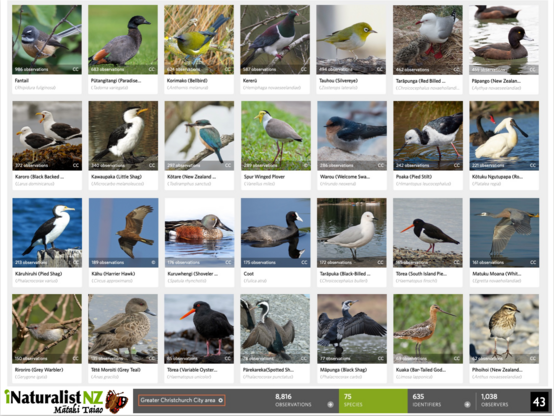
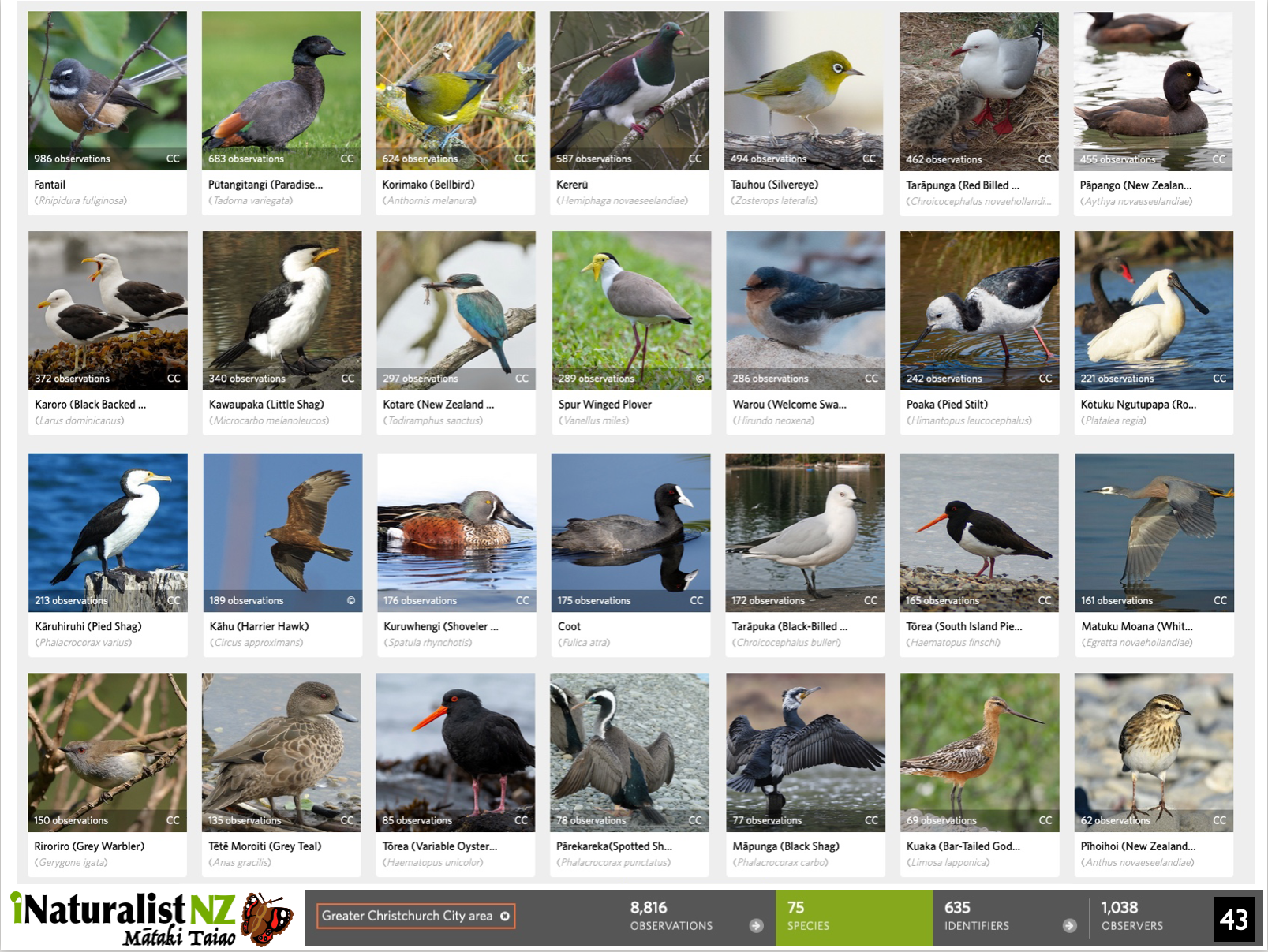
For a lecture yesterday at #LincolnUniversityNZ, I showed the 28 most commonly observed native bird species in the Ōtautahi-Christchurch area on #iNaturalistNZ. I added which are also Australians or have close Australian relatives.
Five arrived in NZ after European settlement. Only korimako and kererū are not also in Australia nor have relatives in their genus in Australia.
1,000 years ago, deep endemic birds would have dominated. Most are now gone.
#LincolnUniversityNZ #iNaturalistNZ #inaturalist #birds #aotearoa #nz
Jon Sullivan · @joncounts
777 followers · 1104 posts · Server mastodon.nz
I had a fun afternoon looking at data with #LincolnUniversityNZ postgrad student Wendy Fox, who is studying karoro (NZ's black backed gulls). In mid-Nov. Wendy and her team of volunteers put GPS transmitters on 10 adult birds that were nesting on the Ashburton River in South Canterbury.
Here's where the gulls went between mid-November and mid-January.
They've been busy! For the most part, each gull has headed off each day doing something different to the others.
#LincolnUniversityNZ #birds #gulls #nz #movement
Jon Sullivan · @joncounts
777 followers · 1104 posts · Server mastodon.nz
@dubh Jenny Dent mapped out korimako dialects around Ōtautahi-Christchurch for her PhD at #LincolnUniversityNZ. Here's her figure. Jenny revealed four distinct dialects, with perhaps a fifth near the eastern end of the Port Hills.
At Lincoln, where male birds visit during the winter, we mostly get birds from Jenny's Type B and Type C dialects (Omahu Bush and Kennedys Bush).
Imagine doing this across NZ, and watching it change over time!
#LincolnUniversityNZ #birds #dialects #song #nz
Jon Sullivan · @joncounts
764 followers · 1028 posts · Server mastodon.nz
Earlier in the month I was at the #BoyleOutdoorEducationCentre, helping teach #LincolnUniversityNZ's third-year field ecology course. It's where students do their own research. One student, Katie, was eager to do a study comparing tūī and korimako. We convinced her not to as we hardly ever see tūī.
Then, perhaps as expected, a tūī ended up visiting a flowering NZ flax right by the lodge every day.
Tūī are like that. Flamboyant contrarians.
https://inaturalist.nz/observations/148717407
#birds #Aoteara #NZ #tui
#boyleoutdooreducationcentre #LincolnUniversityNZ #birds #Aoteara #nz #tui
Jon Sullivan · @joncounts
699 followers · 718 posts · Server mastodon.nz
For today's #BlueBugs hashtag, I offer the NZ Southern Blue, Zizina oxleyi, seen on the campus of #LincolnUniversityNZ.
Students have been counting butterflies in our second year biodiversity class since 2014, using #iNaturalist. They've shown that blues were rare on campus, until one of our big earthquake damaged buildings was demolished and fenced off, making a large wild gravel area for the butterflies to live. That's largely tidied up now.
#bluebugs #LincolnUniversityNZ #inaturalist #insects #butterflies
Jon Sullivan · @joncounts
621 followers · 516 posts · Server mastodon.nz@JoFountain Yes, it's been great to hear korimako song in Lincoln in recent years. They're still nowhere near the densities in Ōtautahi-Christchurch. Our student monitoring of birds on Lincoln University's campus so far shows no increase in korimako numbers over the past five years. There's a lot of potential for improvement at Lincoln.
#EcologicalMonitoring #birds #LincolnUniversityNZ
#EcologicalMonitoring #birds #LincolnUniversityNZ
Jon Sullivan · @joncounts
603 followers · 467 posts · Server mastodon.nz
I like how this big fence, that was erected to keep people out of a construction site, has four yellow-framed windows in it. Landscapes are friendlier when fences have windows in them.
#window #frame #construction #LincolnUniversityNZ
Jon Sullivan · @joncounts
245 followers · 135 posts · Server mastodon.nz





It's time for a proper #introduction. Kia ora.
I'm an #ecology lecturer at #LincolnUniversityNZ and live in Ōtautahi-Christchurch. I'm interested in #EcologicalMonitoring, #BiologicalInvasions (esp. #weeds), and NZ #NaturalHistory (so much still to discover!). I'm site admin for #iNaturalistNZ #MātakiTaiao, the NZ node of #iNaturalist.
I'm @joncounts because I count a lot of nature (~17,000 species counts each month). See https://wildcounts.org.
#introduction #ecology #LincolnUniversityNZ #EcologicalMonitoring #BiologicalInvasions #weeds #naturalhistory #iNaturalistNZ #MātakiTaiao #inaturalist #AotearoaNZ #nature #plants #insects #birds