
NASA · @nasa
65330 followers · 7294 posts · Server social.beachcom.org
NASA · @nasa
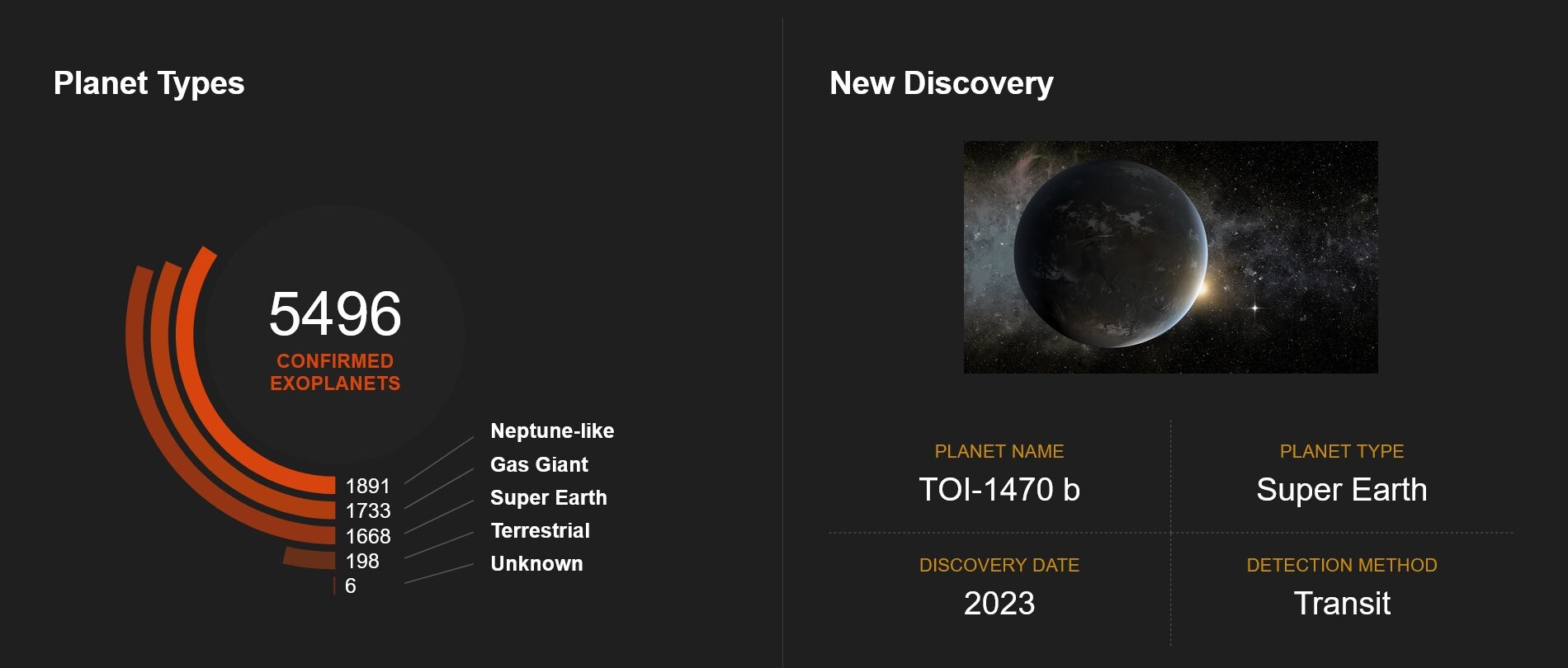
65307 followers · 7289 posts · Server social.beachcom.orgMany! As in exoplanets. (5,496 planets confirmed beyond our solar system!) http://exoplanets.nasa.gov
#NASAExoplanets
NASA · @nasa
65307 followers · 7288 posts · Server social.beachcom.org
5,496!
That's how many planets we've confirmed beyond our own solar system. Some may have rubies blowing in winds, others may have broken glass. Some are so hot, molecules can't survive. Others are so cold, everything is locked in a deep freeze. Each is just right in its own way.…
#NASAExoplanets
NASA · @nasa
65136 followers · 7280 posts · Server social.beachcom.org
A point in the peacock🦚
@NASAHubble imaged the galaxy NGC 6684, 44 million light-years from Earth in the constellation Pavo. Pavo – Latin for peacock – is a southern sky constellation and one of four constellations known as the Southern Birds. https://go.nasa.gov/3OqgnUO
#NASAExoplanets
NASA · @nasa
65076 followers · 7280 posts · Server social.beachcom.org
NASA · @nasa
65058 followers · 7279 posts · Server social.beachcom.org
You are in space✨
The famous Pale Blue Dot reveals Earth as a bit of light in a sunbeam from 3.8 billion miles (6 billion km) away. @NASAVoyager was much closer than we can get to exoplanets, but rare photographs reveal exoplanets as bright dots. But those dots...
#NASAExoplanets
NASA · @nasa
64984 followers · 7271 posts · Server social.beachcom.org
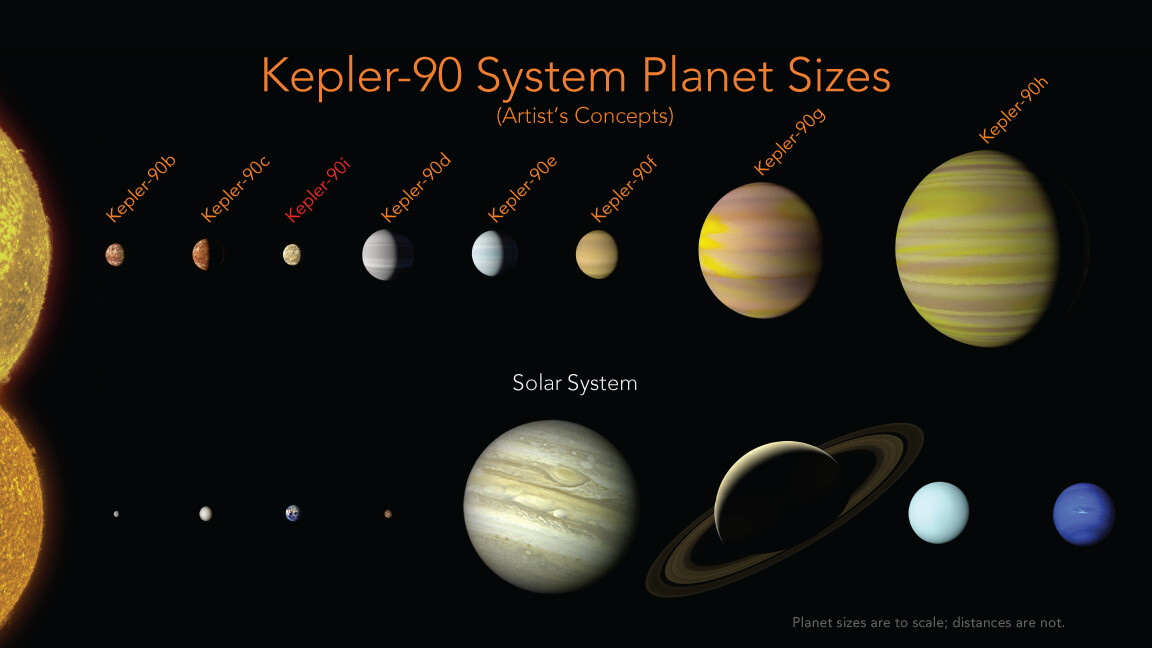
More than 2,000 light-years away, eight planets orbit a Sun-like star. The rocky inner worlds are closer to the star with gas giants farther out. All eight would orbit inside Mercury's orbit around the Sun! https://exoplanets.nasa.gov/news/1476/discovery-of-eight-planets-makes-alien-system-the-first-to-tie-with-our-solar-system/
#NASAExoplanets
NASA · @nasa
64802 followers · 7250 posts · Server social.beachcom.orgWhen a star like the Sun begins nears the end, it will blow off huge clouds of gas and dust. These outbursts can form spectacular structures such as in the Cat's Eye nebula. Listen: A radar-like scan moves clockwise emanating from the center point to produce pitch based on data.
[Video embedded in original tweet]
#NASAExoplanets

BeefGriller (he/him/his) · @BeefGriller
96 followers · 939 posts · Server dice.camp
Captain, Scout, Brain, or Friend?
What's your explorer type? Take our fun quiz!
https://exoplanets.nasa.gov/quizzes/exoplaneteers/
#NASAExoplanets https://social.beachcom.org/@nasa/110850747107842083
I am The Brain!
Would anyone like to be my Pinky?
NASA · @nasa
64699 followers · 7234 posts · Server social.beachcom.org
More than 1,400 light-years from Earth, the exoplanet WASP-12 b is being slowly devoured by its star. Scientists think it could be gone in 10 million years.
But not today. #MondayMotivation: Today belongs to you!✨
#NASAExoplanets
#mondaymotivation #NASAExoplanets
NASA · @nasa
64603 followers · 7228 posts · Server social.beachcom.orgWhen the Sun warms your skin, the light traveled 8 minutes to reach you.
When we talk about the cosmos, it’s easy to toss out big numbers – it's hard to wrap our minds around just how large, how far, and how numerous celestial bodies really are. https://exoplanets.nasa.gov/faq/26/what-is-a-light-year/
[Video embedded in original tweet]
#NASAExoplanets
NASA · @nasa
75068 followers · 7203 posts · Server social.beachcom.org
An ''unusually calm and remote'' galaxy cluster was discovered 8.4 billion light-years away. (Sound like anyone you know?) Astronomers call it “relaxed,” meaning that it shows no signs of having been disrupted by violent collisions. https://go.nasa.gov/45cj0Af
#NASAExoplanets
NASA · @nasa
75011 followers · 7201 posts · Server social.beachcom.org
What's your vibe? Calm? Creative? Ever ready? Smart? (A mix?) Take our fun quiz to get your results and learn the perfect exoplanets for you! Share your results and tag us! https://go.nasa.gov/44SCw4G
#NASAExoplanets
NASA · @nasa
74971 followers · 7200 posts · Server social.beachcom.org
A cluster of hundreds of galaxies that existed when the universe was 6.2 billion years old is a cosmic teenager known as “El Gordo” (Spanish for the “Fat One”). @NASAWebb took a look and discovered galaxies beyond and details within: http://go.nasa.gov/3YkoBCp
#NASAExoplanets
NASA · @nasa
74888 followers · 7181 posts · Server social.beachcom.org
32 light-years away, AU Mic b is in one of the youngest planetary systems ever observed. Researchers recently saw the planet ''hiccuping''! Our Exoplaneteer Captain is learning more about the world. Explore and more: http://exoplanets.nasa.gov/exoplaneteers
#NASAExoplanets
NASA · @nasa
74740 followers · 7172 posts · Server social.beachcom.org
Test images from @esa's Euclid are promising greatness. Here, light is separated by wavelength, so each streak is one star or galaxy! This helps determine what each is made of, and evaluate its distance. Euclid also has @nasa instruments and participation. https://www.esa.int/Science_Exploration/Space_Science/Euclid/Euclid_test_images_tease_of_riches_to_come
#NASAExoplanets
NASA · @nasa
74734 followers · 7170 posts · Server social.beachcom.org
Exoplanets are far away and hard to see, especially next to much bigger and brighter stars. One way to spot them, though, is to look to their stars. An orbiting exoplanet can change the star's light. https://go.nasa.gov/323Oue0
#MondayMotivation: Small acts can have a big effect.
#NASAExoplanets
#mondaymotivation #NASAExoplanets
NASA · @nasa
74493 followers · 7155 posts · Server social.beachcom.orgAre Sun-like stars the best place to find livable worlds? Two rocket teams traveled to Australia for a better view of a pair of stars that may hold the answer. In Episode 5 of High Above Down Under, it’s finally time to launch.
Follow the series: http://go.nasa.gov/3PHtenQ
[Video embedded in original tweet]
#NASAExoplanets
NASA · @nasa
74314 followers · 7129 posts · Server social.beachcom.org
Hi, friends!
Meet The Friend, up for any adventure and will always have your back. Check out the other Exoplaneteers and take our quiz to see which one you're most like: http://exoplanets.nasa.gov/exoplaneteers
#NASAExoplanets
NASA · @nasa
74249 followers · 7123 posts · Server social.beachcom.org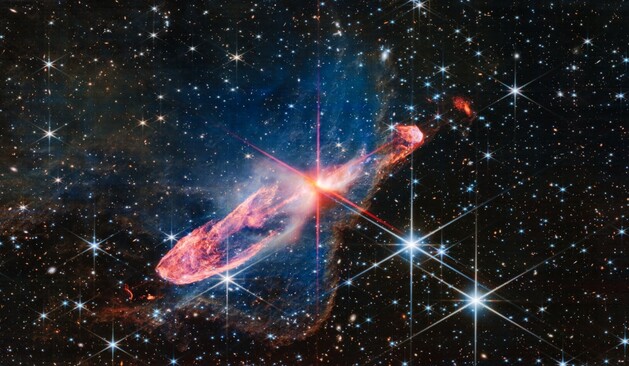




Stars in our eyes 🤩
At the center of this image are two stars forming. Over thousands of years, they repeatedly consume, then eject the gas and dust around them. After millions of years, the pair – binary stars – will take their place in the universe. https://go.nasa.gov/3OFJFjP
#NASAExoplanets