
Marc Robinson-Rechavi · @marcrr
829 followers · 1062 posts · Server ecoevo.socialEuro #EvoDevo 2024 will include the following satellite meetings:
#Amphioxus
#Platynereis
#ArthropodEvolution (that's a lot of species for a satellite meeting!)
#FishEvolution
#Crustacean
https://ecoevo.social/@EED2024/110219897240880479
#evodevo #Amphioxus #Platynereis #arthropodevolution #fishevolution #crustacean

Albert Cardona · @albertcardona
1696 followers · 1909 posts · Server mathstodon.xyz
"MorphoFeatures for unsupervised exploration of cell types, tissues, and organs in volume electron microscopy"
Valentyna Zinchenko et al. 2023 https://elifesciences.org/articles/80918 with @vuhlmann Arendt & Kreshuk labs
"We further illustrate how our features can facilitate the detection of cell types by morphological means, via similarity-based clustering in the MorphoFeature vector space, sorting the cells into morphologically meaningful groups that show high correlation with genetically defined types such as muscle cells and neurons."
#Platynereis #vem #electronmicroscopy #neuroscience

Gaspar Jekely · @jekely
347 followers · 116 posts · Server qoto.org
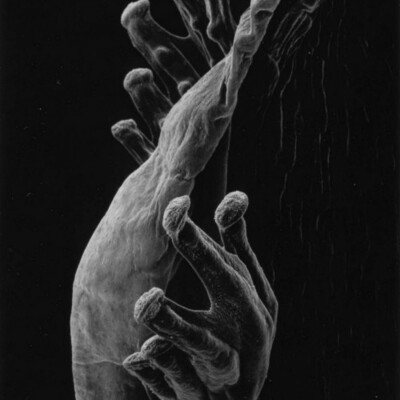
Hydrostatic pressure is a dominant cue in the sea and many aquatic organisms are known to respond to changes in pressure, however the neuronal mechanisms have remained unclear.
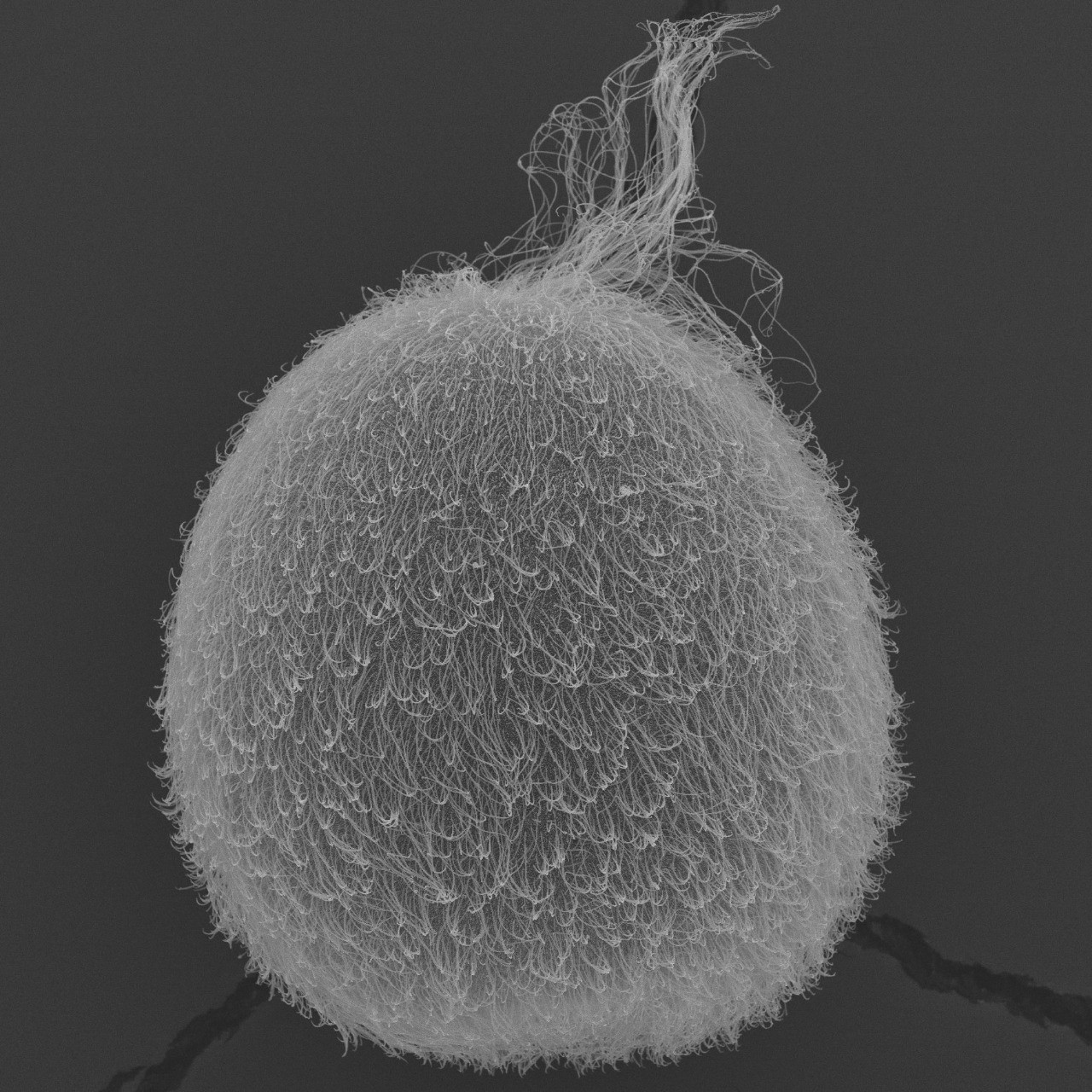
We studied the larvae of the marine #annelid #Platynereis and found that they respond to increases in pressure by increased upward swimming.
#neuroscience
2/9
#annelid #Platynereis #neuroscience
Posnien Lab · @posnienlab
131 followers · 130 posts · Server fediscience.org
RT @COSHeidelberg
We are happy to welcome Gaspar Jekely (@JekelyLab) as full professor at COS focusing on evolutionary neurobiology mostly using #Platynereis larvea as an experimental system. A new and exciting research line @UniHeidelberg !

Ewan Birney · @ewanbirney
2128 followers · 556 posts · Server genomic.social
RT @COSHeidelberg@twitter.com
We are happy to welcome Gaspar Jekely (@JekelyLab@twitter.com) as full professor at COS focusing on evolutionary neurobiology mostly using #Platynereis larvea as an experimental system. A new and exciting research line @UniHeidelberg@twitter.com !
🐦🔗: https://twitter.com/COSHeidelberg/status/1615313137380507648
Gaspar Jekely · @jekely
332 followers · 108 posts · Server qoto.org
There will be new #postdoc and #PhD openings, if you are interested to work with us, please get in touch. Possible topics include #Platynereis neurobiology, eye #evolution, #connectomics, the behaviour of ciliated #larvae etc. You can work on a growing selection of organisms kept in the lab, including Platynereis (still our no. 1), #Trichoplax, #Nematostella or join more exotic projects investigating hard-to-culture marine animals including polyclads, hemichordates or amphioxus.
4/5
#phd #Platynereis #evolution #connectomics #larvae #Trichoplax #Nematostella #postdoc
Gaspar Jekely · @jekely
301 followers · 72 posts · Server qoto.org
The revised version of our paper on the desmosomal #connectome of the #Platynereis larva is now out
https://elifesciences.org/articles/71231
by Sanja Jasek et al.
#volumeEM #rstat
#rstat #connectome #Platynereis #volumeem

Albert Cardona · @albertcardona
728 followers · 626 posts · Server qoto.org



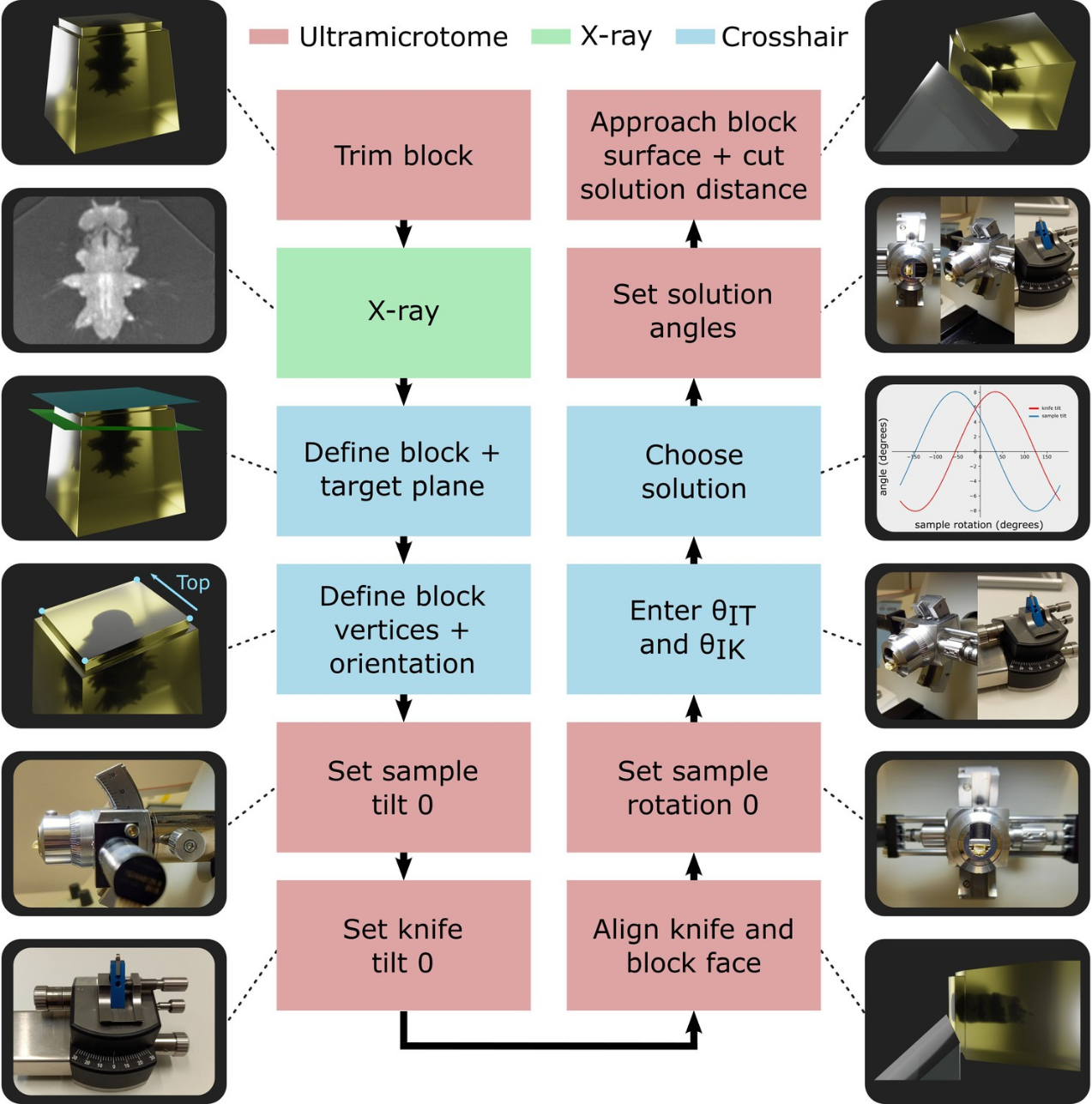
For all electron microscopists out there:
"Crosshair, semi-automated targeting for electron microscopy with a motorised ultramicrotome"
Kimberly Meechan et al. 2022 @eLife from Yannick Schwab's lab at EMBL in collaboration with The Crick institute. https://elifesciences.org/articles/80899
Presents a new method for reliably and "selectively targeting small regions of interest in a resin block by trimming with an ultramicrotome", powered by "user-friendly software to convert X-ray images of resin-embedded samples into angles and cutting depths for the ultramicrotome."
Reviewed by three outstanding electron microscopists: Christel Genaud, Song Pang, and Michaela Wilsch-Bräuninger.
#electronmicroscopy #microCT #Platynereis #science #methods #EMBL #TheCrick
#electronmicroscopy #microct #Platynereis #methods #embl #TheCrick #science
Albert Cardona · @albertcardona
697 followers · 557 posts · Server qoto.org@manlius Yes, a lot, but generated mostly with #CATMAID which is more purpose-built for #connectomics.
An early reconstruction of a neural circuit done with #TrakEM2 was by Davi Bock et al. 2011 on the mouse visual cortex, "Network anatomy and in vivo physiology of visual cortical neurons" https://www.nature.com/articles/nature09802
Another one with #TrakEM2 was by Dan Bumbarger et al. 2013 "System-wide rewiring underlies behavioral differences in predatory and bacterial-feeding nematodes" where they compared #celegans with another nematode, #pristionchus pacificus that has the exact same amount of neurons but connected differently https://www.sciencedirect.com/science/article/pii/S0092867412015000
Later ones with #CATMAID include:
The polychaete worm #Platynereis by @jekely 's group, "Whole-animal #connectome and cell-type complement of the three-segmented Platynereis dumerilii larva" Verazto et al. 2020 https://www.biorxiv.org/content/10.1101/2020.08.21.260984v2.abstract
And all of ours in #Drosophila larva. See the #VirtualFlyBrain server which hosts the #vEM of the whole central nervous system and lists all the neurons included in each published paper (currently 23), shared among the papers and all connecting to each other: https://l1em.catmaid.virtualflybrain.org/?pid=1&zp=108250&yp=82961.59999999999&xp=54210.799999999996&tool=tracingtool&sid0=1&s0=2.4999999999999996&help=true&layout=h(XY,%20%7B%20type:%20%22neuron-search%22,%20id:%20%22neuron-search-1%22,%20options:%20%7B%22annotation-name%22:%20%22papers%22%7D%7D,%200.6)
The 24th will come soon, featuring the complete whole #Drosophila larval brain with ~2,500 neurons. It's under review.
#catmaid #Celegans #pristionchus #Platynereis #connectome #Drosophila #VirtualFlyBrain #vem #connectomics #TrakEM2
Albert Cardona · @albertcardona
697 followers · 557 posts · Server qoto.orgWhat can you do with a #CATMAID server? Say, let's look at the #Drosophila (vinegar fly, often referred to as fruit fly) larval central nervous system, generously hosted by the #VirtualFlyBrain https://l1em.catmaid.virtualflybrain.org/?pid=1&zp=108250&yp=82961.59999999999&xp=54210.799999999996&tool=tracingtool&sid0=1&s0=2.4999999999999996&help=true&layout=h(XY,%20%7B%20type:%20%22neuron-search%22,%20id:%20%22neuron-search-1%22,%20options:%20%7B%22annotation-name%22:%20%22papers%22%7D%7D,%200.6) or the #Platynereis (a marine annelid) server from the Jekely lab https://catmaid.jekelylab.ex.ac.uk/
First, directly interact by point-and-click: open widgets, find neurons by name or annotations, fire up a graph widget and rearrange neurons to make a neat synaptic connectivity diagram, or an adjacency matrix, or look at neuron anatomy in 3D. Most text–names, numbers–are clickable and filterable in some way, such as regular expressions.
Second, interact from other software. Head to r-catmaid https://natverse.org/rcatmaid/ (part of the #natverse suite by Philipp Schlegel @uni_matrix, Alex Bates and others) for an R-based solution from the Jefferis lab at the #MRCLMB. Includes tools such as #NBLAST for anatomical comparisons of neurons (see paper by Marta Costa et al. 2016 https://www.sciencedirect.com/science/article/pii/S0896627316302653 ).
If R is not your favourite, then how about #python: the #navis package, again by the prolific @uni_matrix, makes it trivial, and works also within #Blender too for fancy 3D renderings and animations. An earlier, simpler version was #catpy by @csdashm https://github.com/ceesem/catpy , who also has examples on access from #matlab.
Third, directly from a #psql prompt. As in, why not? #SQL is quite a straightforward language. Of course, you'll need privileged access to the server, so this one is only for insiders. Similarly privileged is from an #ipython prompt initialized via #django from the command line, with the entire server-side API at your disposal for queries.
Fourth, and one of my favourites: from the #javascript console in the browser itself. There are a handful of examples here https://github.com/catmaid/CATMAID/wiki/Scripting but the possibilities are huge. Key utilities are the "fetchSkeletons" macro-like javascript function https://github.com/catmaid/CATMAID/wiki/Scripting#count-the-number-of-presynaptic-sites-and-the-number-of-presynaptic-connectors-on-an-axon and the NeuronNameService.getInstance().getName(<skeleton_id>) function.
Notice every #CATMAID server has its /apis/, e.g., at https://l1em.catmaid.virtualflybrain.org/apis/ will list all GET or REST server access points. Reach to them as you please. See the documentation: https://catmaid.readthedocs.io/en/stable/api.html
In short: the data is there for you to reach out to, interactively or programmatically, and any fine mixture of the two as you see fit.
#Drosophila #natverse #MRCLMB #django #javascript #VirtualFlyBrain #Platynereis #NBLAST #python #navis #blender #catpy #matlab #psql #sql #ipython #catmaid