
ToroidalCore · @toroidalcore
184 followers · 2045 posts · Server hackers.town
Input is about 0.11 A at 38.47 V for 4.23 W, and output is 0.17 A at 12.48 V for 2.12 W into the light bulb. (I only have the one meter handy, so I had to measure these at different times, values might be off by a few 10s of mA or mV.)
That's 50% efficient. Not great, but it's also at very low power. I designed this to handle 5 A on the low voltage side (could be 12 or 24 V nominal), and I haven't taken it that high yet. I'm going to work on the firmware some more and then take it up gradually.
It does work well in both directions, (step up or step down), though. Ideally it will be able to charge one battery from another so long as one is a higher voltage.
#electronics #BuckConverter #power #PowerElectronics #PowerConversion
#PowerConversion #powerelectronics #power #buckconverter #electronics
🎃 Forbidden Donut 🎃 · @toroidalcore
161 followers · 1702 posts · Server hackers.town
Looks like it's working with about 37.5 V, from 3 12 volt #batteries. So not too bad. Once again, I have the shield just in case.
#electronics #PowerConversion #BuckConverter #PrintedCircuitBoard #LeadAcidBatteries #36v
#36v #LeadAcidBatteries #printedcircuitboard #buckconverter #PowerConversion #electronics #batteries
🎃 Forbidden Donut 🎃 · @toroidalcore
161 followers · 1702 posts · Server hackers.town


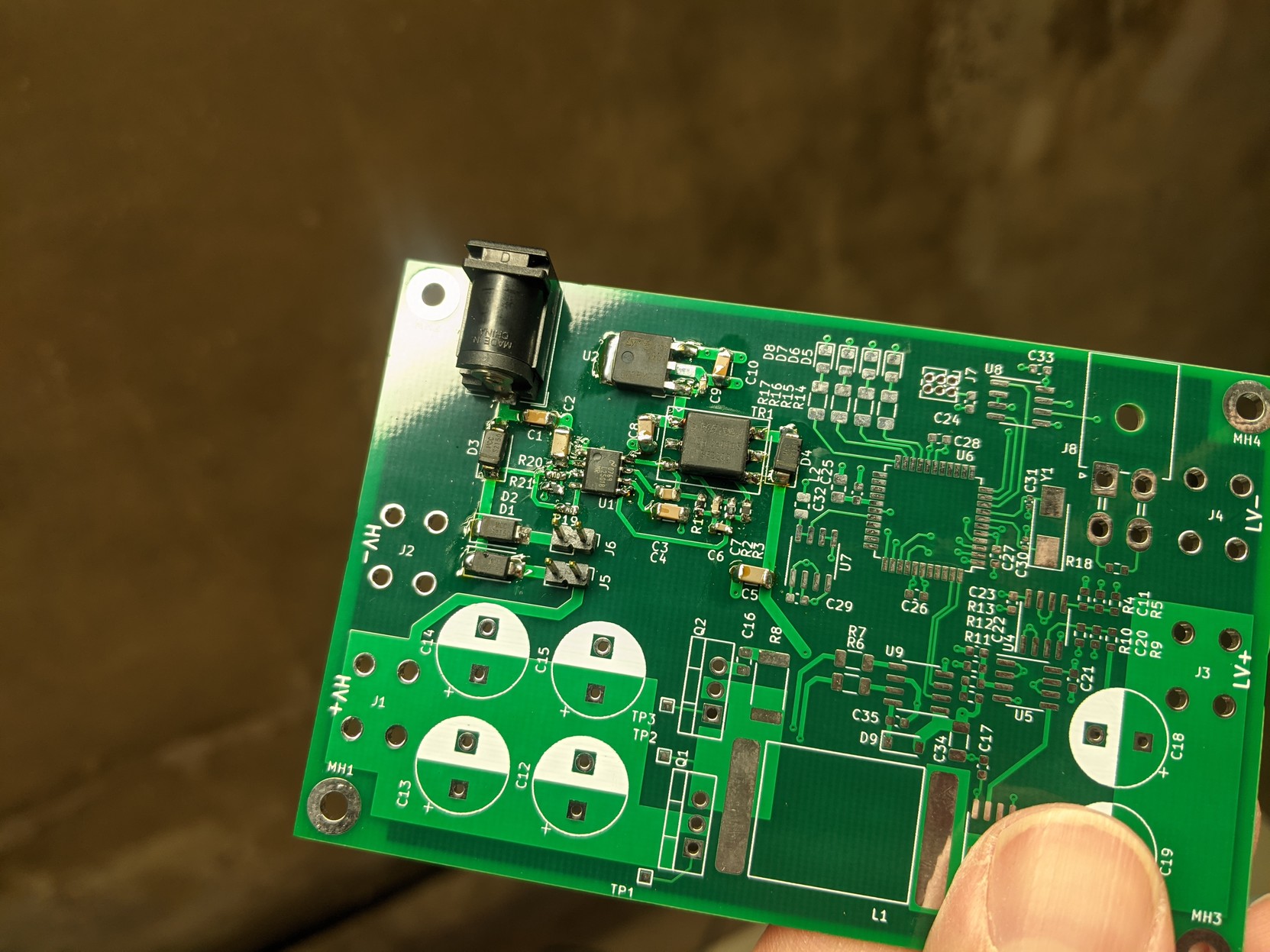
Alright, I have part of this assembled, now to apply power. This is just the housekeeping supply, so I'm really just trying to see if I can get 5 volts out.
#PowerConversion #printedcircuitboard #electronics