
Reymond Aguinaldo · @mondinspace
685 followers · 1522 posts · Server mastodon.social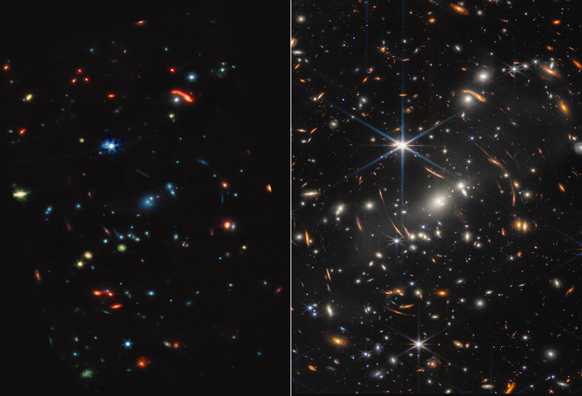
#SMACS0723, a previously understudied region of #Space, is being viewed through the #JamesWebbSpaceTelescope as it appeared 4.6 billion years ago, providing new insights into the early #Universe.
More information: https://webbtelescope.org/contents/media/images/2022/035/01G7DDDR3P8ZW10HD8MKXGV8MJ
More information about #JWST’s first images: https://www.nasa.gov/webbfirstimages
#SpaceMastodon #Spacedon #Space #Astronomy #Astrodon #ScienceMastodon #Sciencedon #Science #Webb #GalaxyClusters
#SMACS0723 #space #jameswebbspacetelescope #universe #jwst #SpaceMastodon #spacedon #astronomy #Astrodon #sciencemastodon #sciencedon #science #webb #galaxyclusters
Reymond Aguinaldo · @mondinspace
684 followers · 1521 posts · Server mastodon.social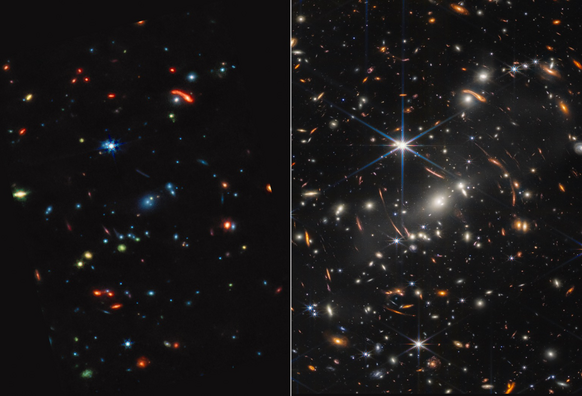
A side by side comparison of the #JamesWebbSpaceTelescope’s First Deep Field (MIRI and NIRCam).
#SMACS0723 is a cluster of #Galaxies located in the southern #Constellation #Volans that contains thousands of galaxies, including some of the faintest objects ever observed in infrared light. When viewed in mid-infrared light (L), the region appears with a range of new colors compared to the near-infrared image (R).
#SpaceMastodon #Space #Astronomy #Astrodon #ScienceMastodon #Science #JWST #Webb
#jameswebbspacetelescope #SMACS0723 #galaxies #constellation #Volans #SpaceMastodon #space #astronomy #Astrodon #sciencemastodon #science #jwst #webb
Reymond Aguinaldo · @mondinspace
375 followers · 1244 posts · Server mastodon.social
Two views of the galaxy cluster #SMACS0723—#HubbleSpaceTelescope on the left, #JamesWebbSpaceTelescope on the right. #Hubble’s image on the left shows many faint stars and galaxies, but the #Webb image absolutely pops with light, revealing many hidden structures.
Hubble vs Webb: https://webb.nasa.gov/content/about/comparisonWebbVsHubble.html
#SpaceMastodon #Spacedon #Space #Astronomy #Astrodon #ScienceMastodon #Sciencedon #Science #JWST #HST #Galaxies #GalaxyCluster
#SMACS0723 #hubblespacetelescope #jameswebbspacetelescope #hubble #webb #SpaceMastodon #spacedon #space #astronomy #Astrodon #sciencemastodon #sciencedon #science #jwst #hst #galaxies #galaxycluster
Reymond Aguinaldo · @mondinspace
375 followers · 1244 posts · Server mastodon.social
Revisiting the #JamesWebbSpaceTelescope’s first image. It shows the galaxy cluster #SMACS0723 in unprecedented detail—and as it appeared 4.6 billion years ago. SMACS 0723 is a cluster of galaxies in the southern constellation #Volans and hasn’t previously been studied extensively.
More information about #JWST’s first images: https://www.nasa.gov/webbfirstimages
#SpaceMastodon #Spacedon #Space #Astronomy #Astrodon #ScienceMastodon #Sciencedon #Science #Webb #JWST #Galaxies #GalaxyCluster
#Volans #jwst #SpaceMastodon #spacedon #space #astronomy #Astrodon #sciencemastodon #sciencedon #science #webb #galaxies #galaxycluster #jameswebbspacetelescope #SMACS0723

Julien M. · @julm
486 followers · 4935 posts · Server framapiaf.org
#Astronomie
> #JamesWebb contre #Hubble : on a comparé les images des deux télescopes
https://www.radiofrance.fr/franceinter/james-webb-contre-hubble-on-a-compare-les-images-des-deux-telescopes-4929789
- Piliers de la création
- Les étoiles émergentes dans la nébuleuse de #Tarentule
- L'amas de galaxies #SMACS0723 et son immense profondeur de champ
- #Jupiter et ses lumières fluorescentes
- #Neptune et ses anneaux
#neptune #jupiter #SMACS0723 #tarentule #hubble #jameswebb #astronomie

Troll & 🥔 · @Troll
2743 followers · 63235 posts · Server maly.io
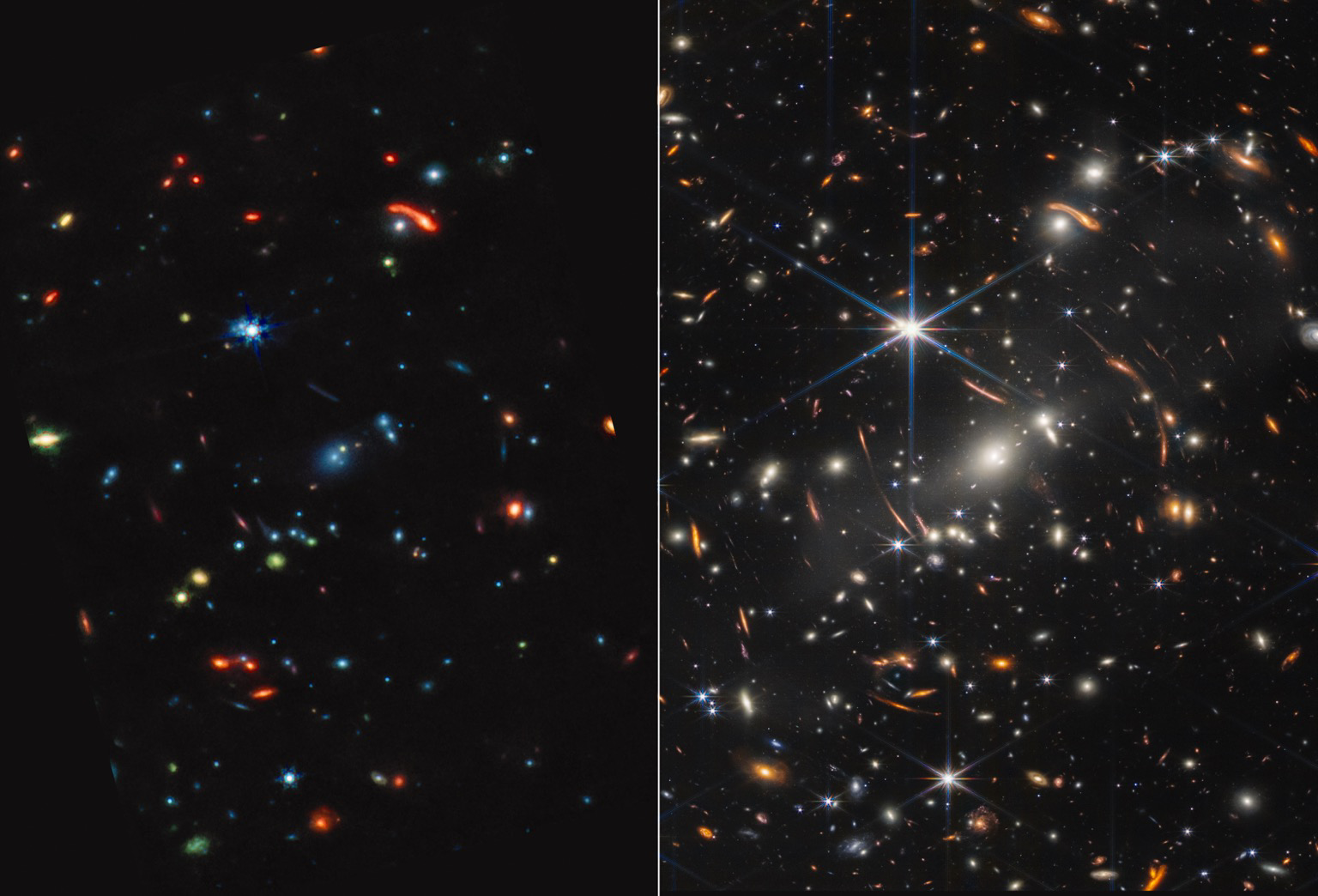
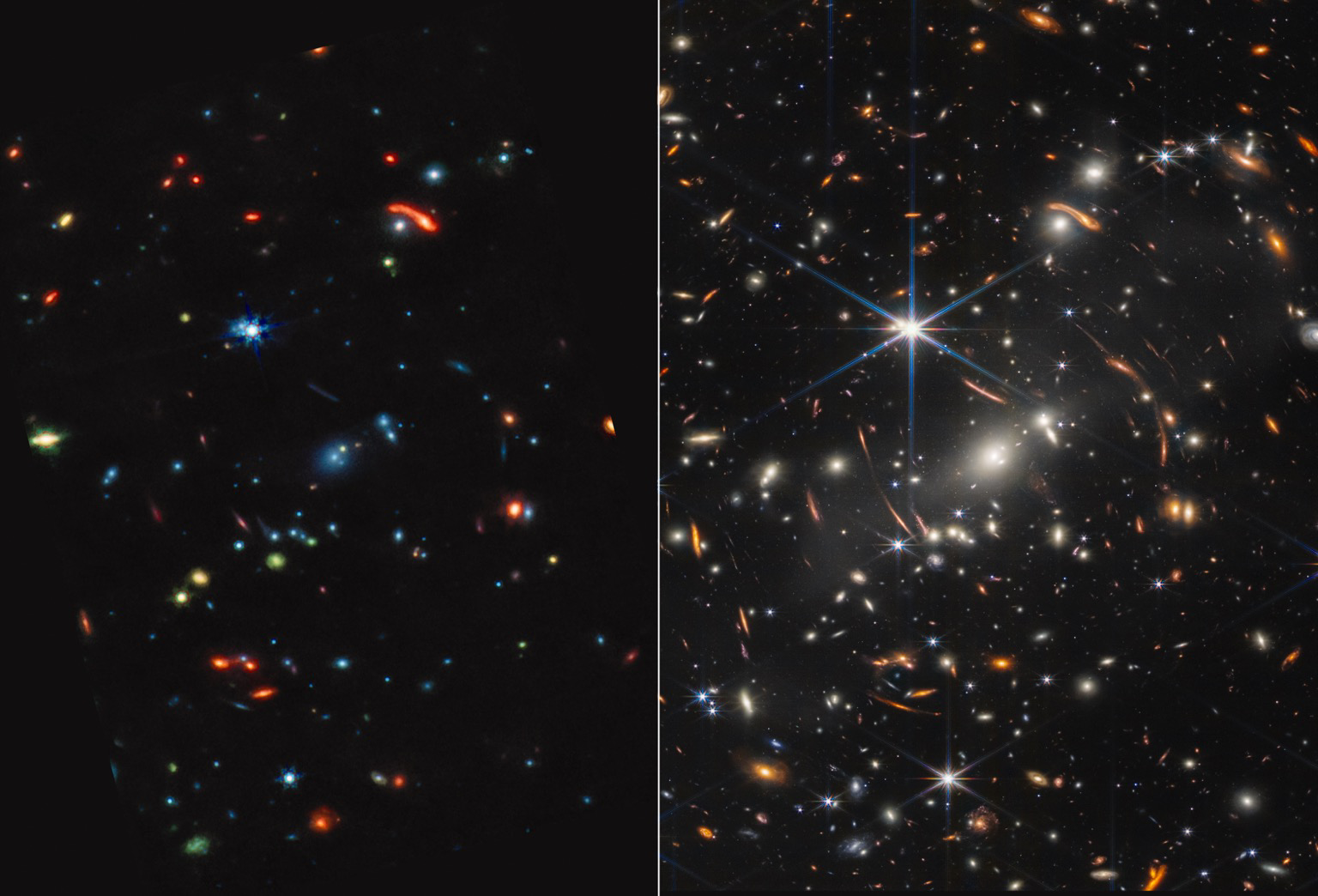


L'amas de galaxies #SMACS0723 tel qu'il est apparu il y a 4,6 milliards d'années
A gauche:
La même portion de ciel prise avec le télescope spatial Hubble en plusieurs semaines (~ 2 semaines ).
A droite:
Celle prise avec le James Webb en environ 12h30.