AkaSci 🛰️ · @AkaSci
1475 followers · 1584 posts · Server fosstodon.org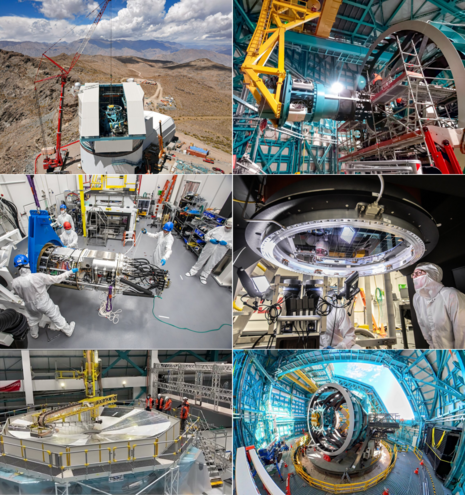
The Vera C. Rubin Observatory is an engineering marvel in its design and construction.
Some of the extraordinary engineering and technological feats include the fabrication of large, high-precision non-spherical optics; construction of a huge, highly-integrated array of sensitive, wide-band imaging sensors; and the operation of a data management facility handling tens of terabytes of data each day.
https://www.lsst.org/about/dm/technology#:~:text=Realizing%20the%20vision%20of%20Rubin,operation%20of%20a%20data%20management
https://noirlab.edu/public/images/archive/category/rubin/?search=
#VeraRubin #astronomy
8/n
AkaSci 🛰️ · @AkaSci
1475 followers · 1584 posts · Server fosstodon.org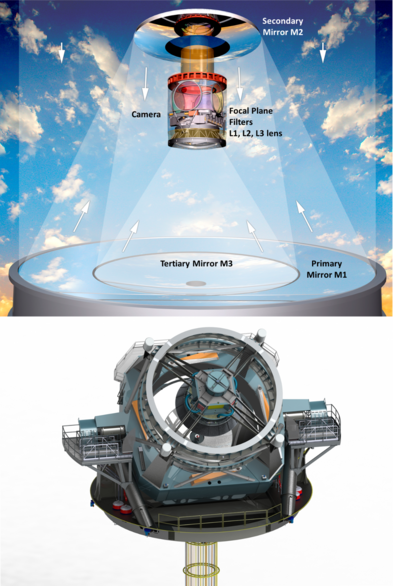
The Rubin Observatory Simonyi Survey Telescope consists of 3 aspheric mirrors: an 8.4-m primary mirror M1, a 3.5-m convex secondary mirror M2, and a 5.0-m tertiary mirror M3.
The primary and tertiary mirrors are fabricated from a single piece of glass. Because the two mirrors curve differently, a slight cusp is formed where they meet.
The secondary mirror (M2) is the largest convex mirror ever made.
https://www.lsst.org/about/tel-site/optical_design
#VeraRubin #astronomy
7/n
AkaSci 🛰️ · @AkaSci
1470 followers · 1576 posts · Server fosstodon.org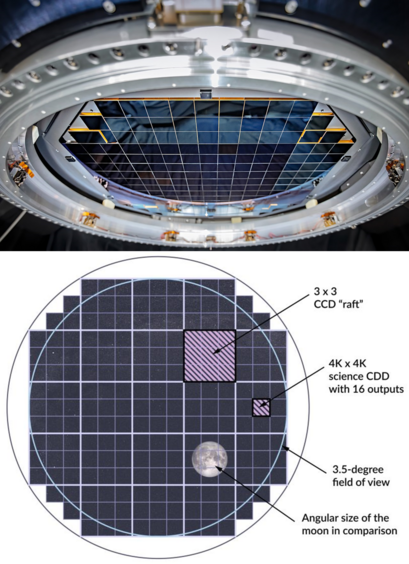
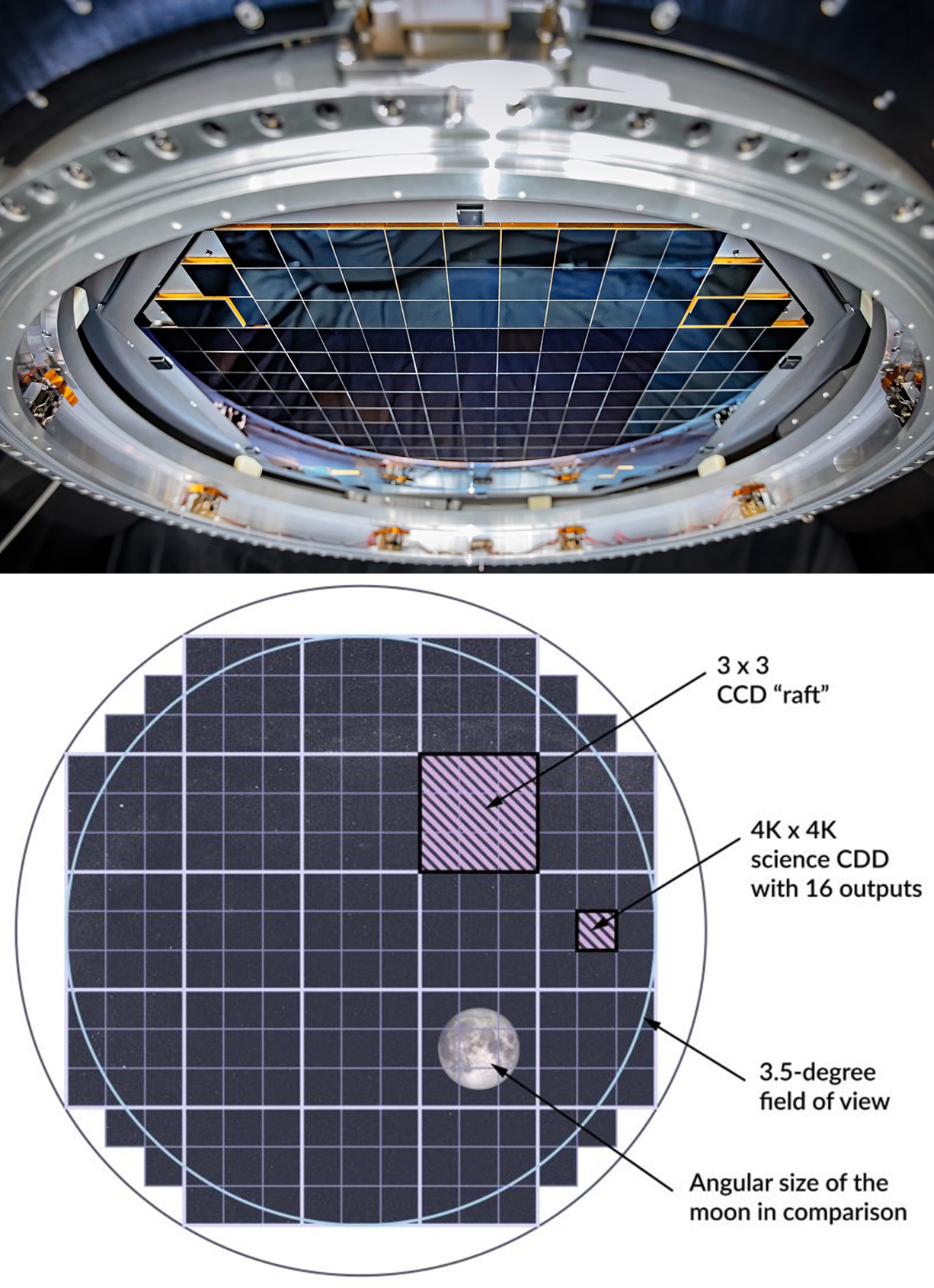
The focal plane of the Vera C. Rubin telescope consists of 189 charge-coupled device (CCD) sensors, arranged in a total of 21 3-by-3 square arrays The system is cooled to about -100 °C to minimize noise.
The 3.5-degree field of view of the 60 cm wide array is 40 times the area of the full moon in the sky.
https://rubin.canto.com/v/gallery/album/HDSNU?display=curatedView&viewIndex=2&column=image&id=o46f0msu2d6733e7v1r2opt66t
https://www6.slac.stanford.edu/lsst
#VeraRubin #astronomy
6/n
AkaSci 🛰️ · @AkaSci
1470 followers · 1576 posts · Server fosstodon.org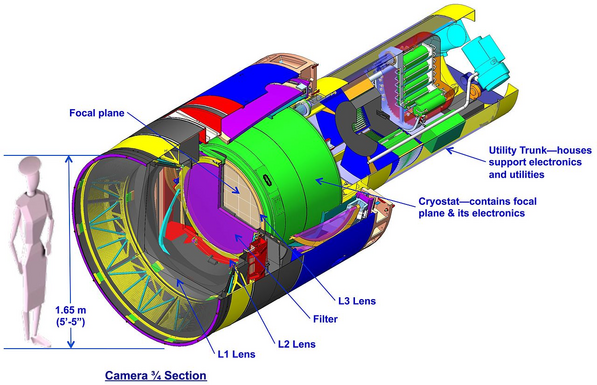
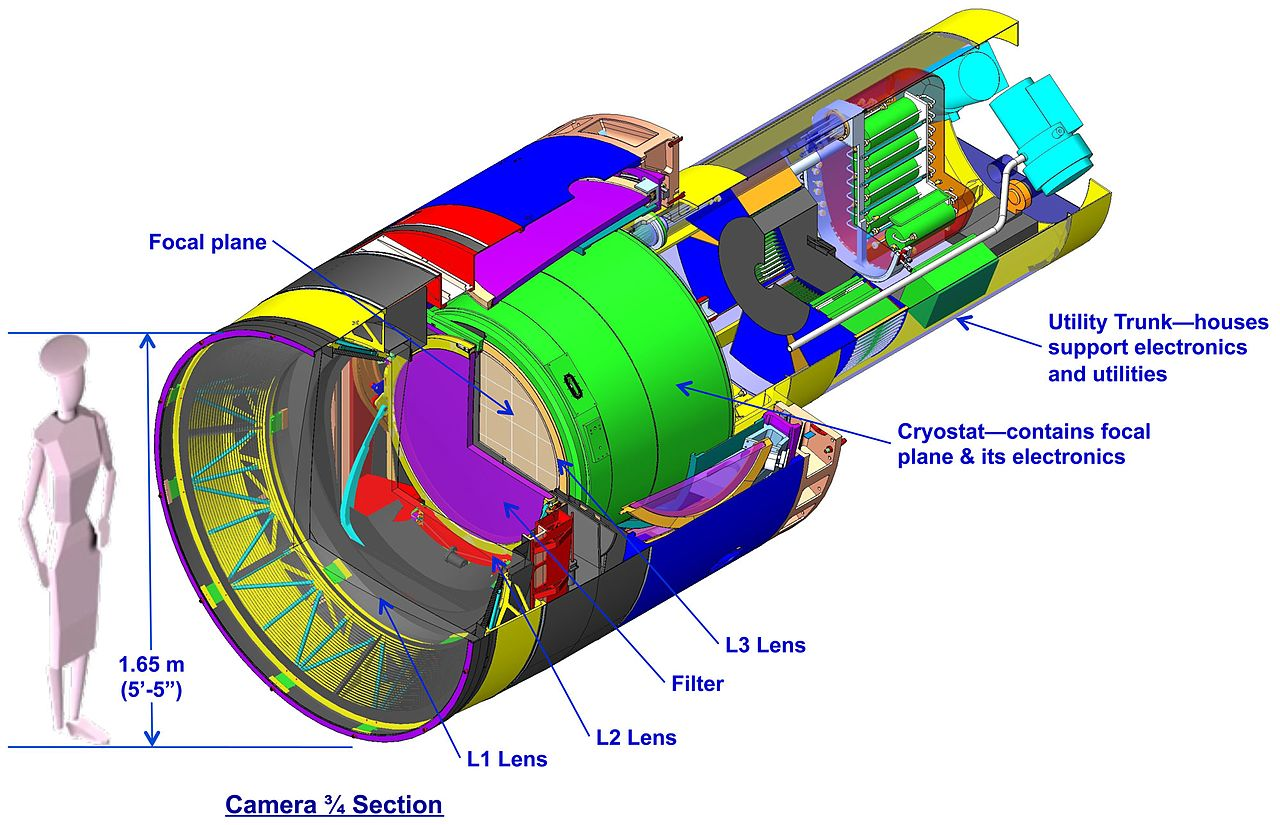
The LSST Camera is the largest camera ever constructed for astronomy. It is a large-aperture, wide-field optical camera, capable of viewing light from the near ultraviolet to near infrared wavelengths.
Length: 3.73 m
Height: 1.65 m
Weight: 2,800 kg
Pixels: 3200 million
Wavelength: 0.32–1.06 μm
Filters: 6 (u-g-r-i-z-y)
https://www6.slac.stanford.edu/lsst
https://www.lsst.org/about/camera/features
#VeraRubin #astronomy
5/n
AkaSci 🛰️ · @AkaSci
1470 followers · 1576 posts · Server fosstodon.org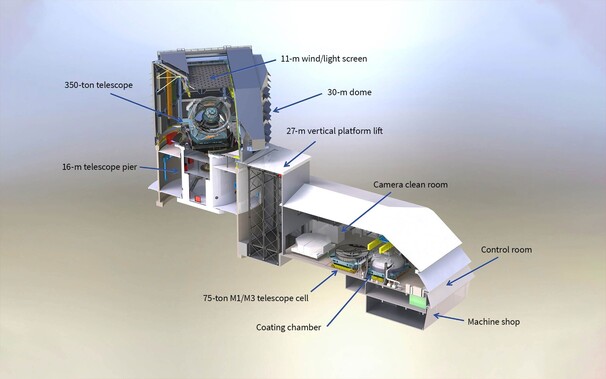
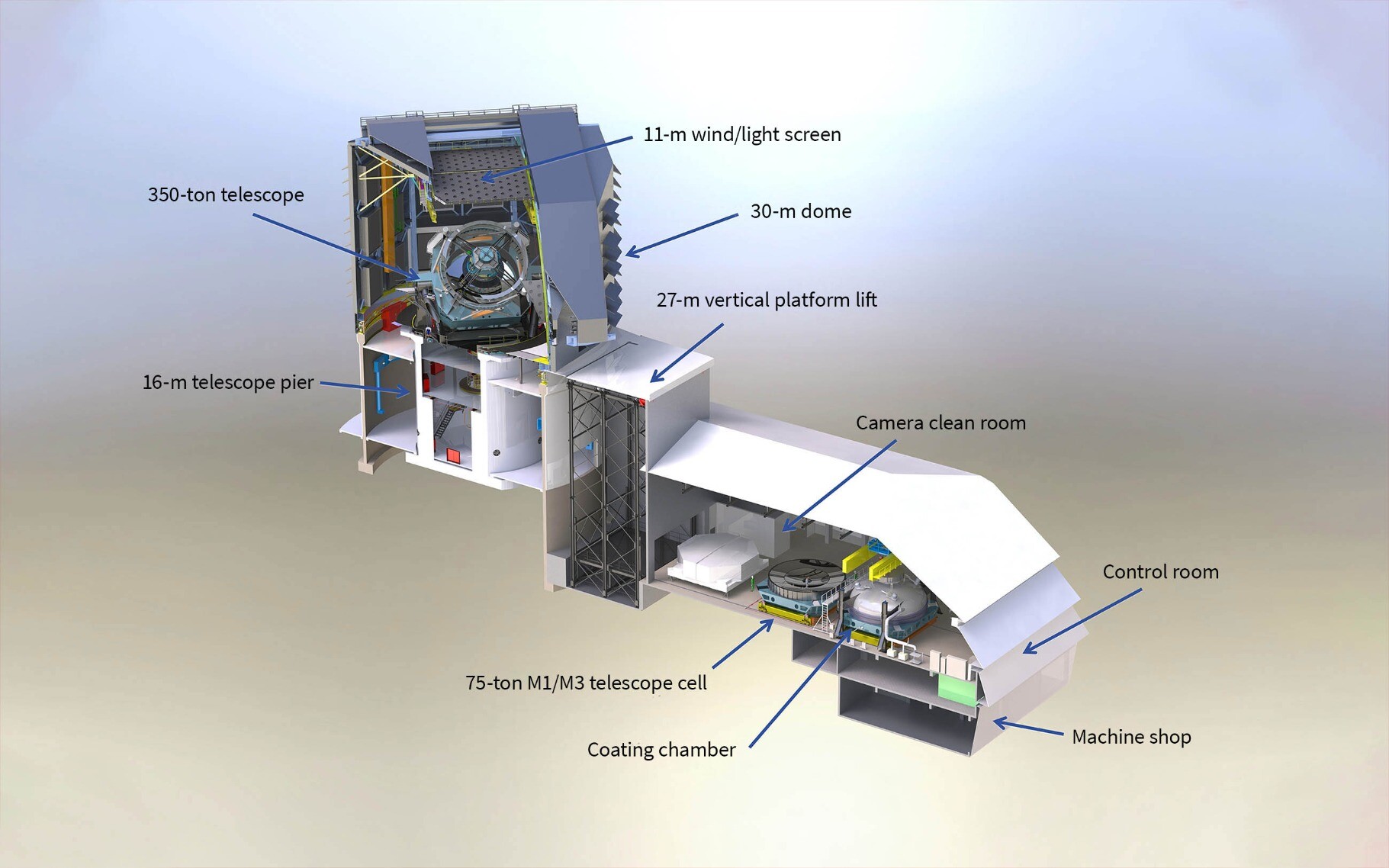
Here is a hi-res cutaway rendering of the Vera C. Rubin Observatory, its dome, and support building.
https://rubin.canto.com/v/gallery/album/HDSNU?display=curatedView&viewIndex=2&column=image&id=ej4umrolel7sffq32ml70u5n2d
credit: Rubin Observatory/NSF/AURA/J. Andrew
#VeraRubin #astronomy
4/n
AkaSci 🛰️ · @AkaSci
1469 followers · 1573 posts · Server fosstodon.orgA fascinating time-lapse video of 11 years of construction of the Vera C. Rubin Observatory from 2011 to 2022.
https://www.youtube.com/watch?v=GicDYZXMboc
#VeraRubin #astronomy
3/n
AkaSci 🛰️ · @AkaSci
1469 followers · 1572 posts · Server fosstodon.org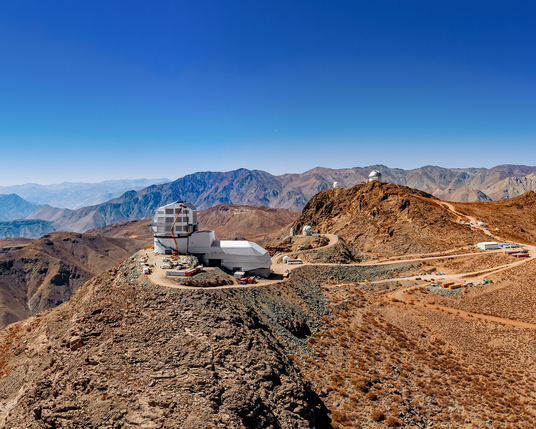
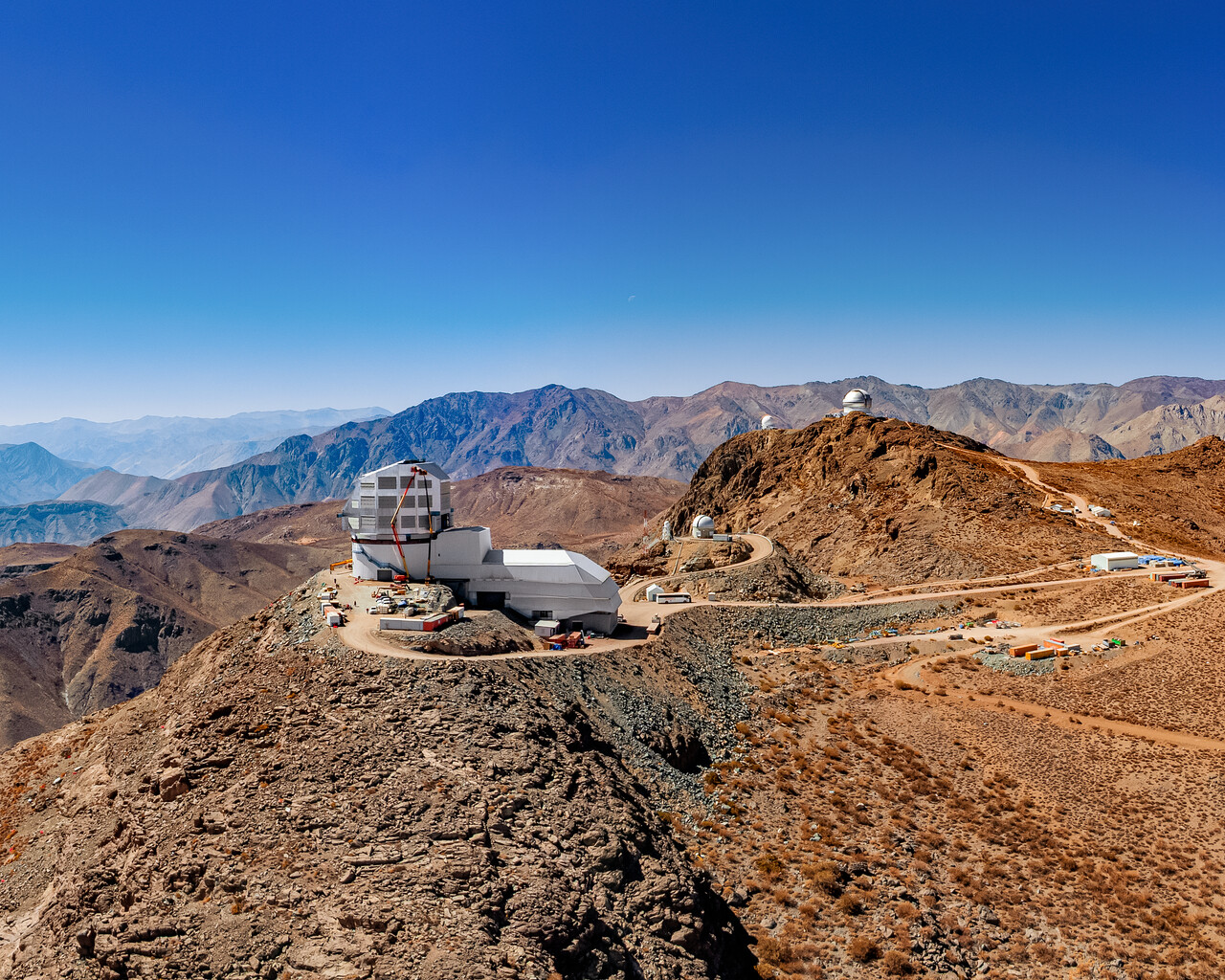
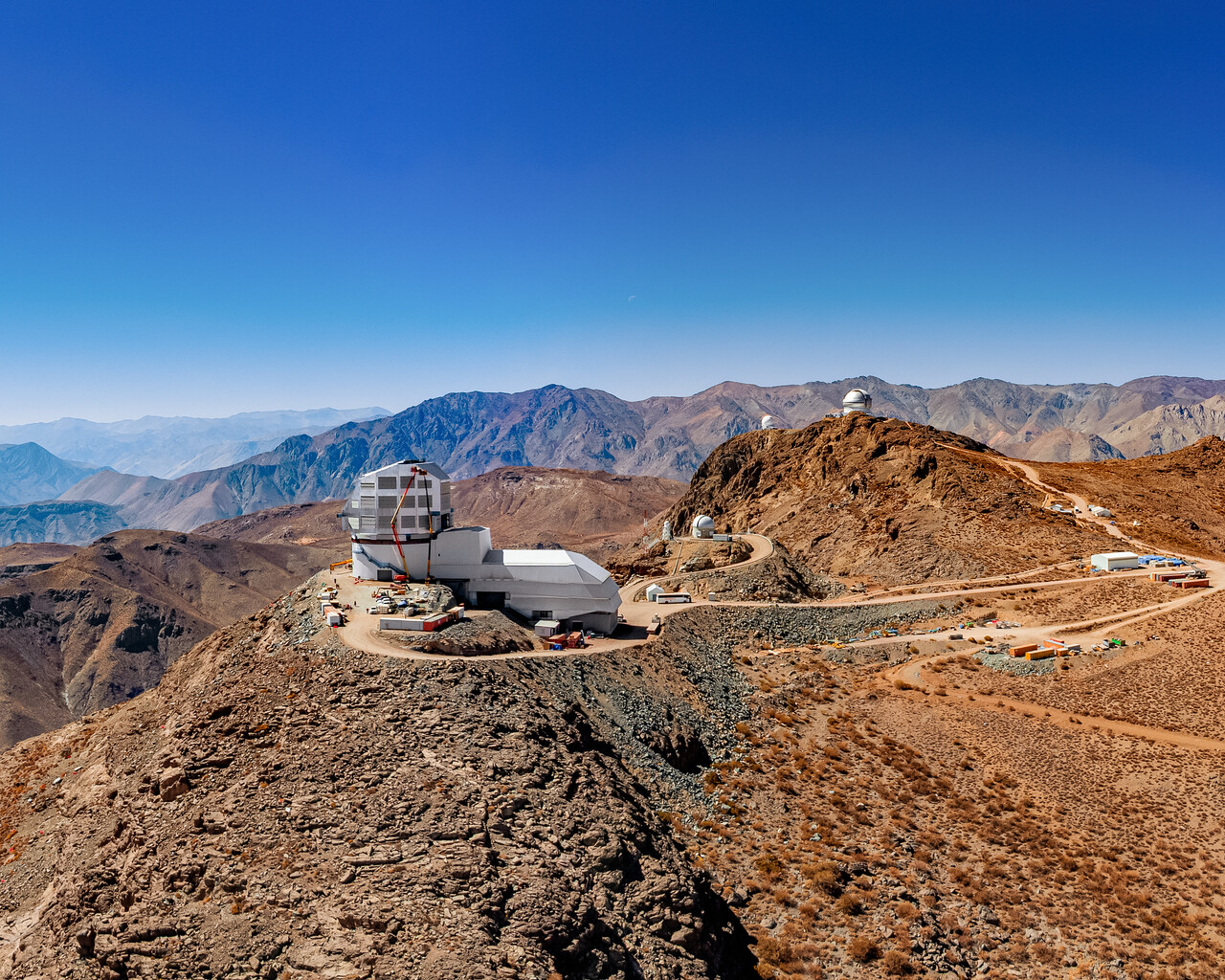
The Vera C. Rubin Observatory (previously referred to as the Large Synoptic Survey Telescope (LSST)) under construction on Cerro Pachón in Chile.
The Observatory's Simonyi Survey Telescope will photograph the entire available sky every few nights.
Primary mirror size: 8.4 m
FOV: 3.5°
Wavelength: 0.32–1.06 μm (visible)
CCD size: 3.2 gigapixel, the largest ever constructed.
First light in Dec 2023.
https://rubinobservatory.org/
Credit: NOIRLab/NSF/AURA/T. Matsopoulos
#VeraRubin #astronomy
2/n
AkaSci 🛰️ · @AkaSci
1469 followers · 1571 posts · Server fosstodon.org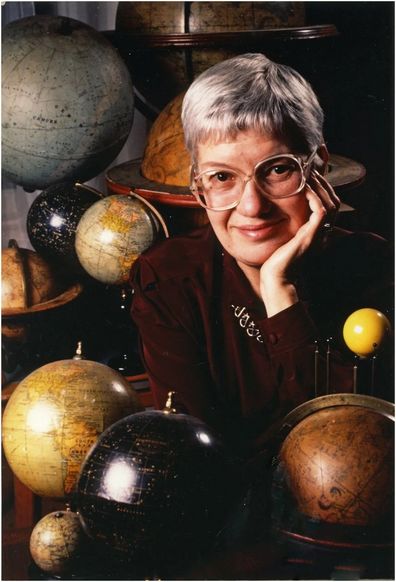
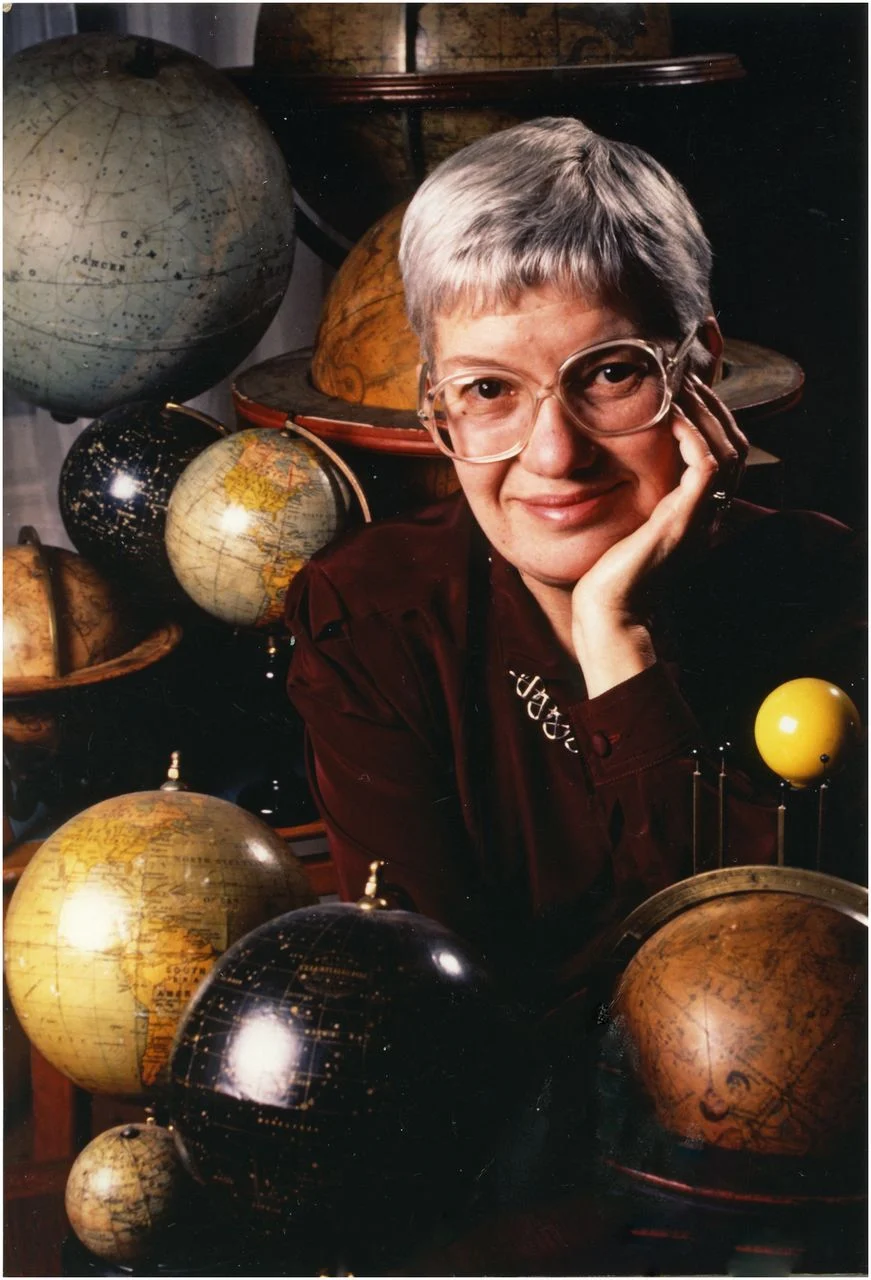
Happy Birthday to Vera Rubin (July 23, 1928 – December 25, 2016), whose work revolutionized our understanding of the universe by confirming the existence of dark matter.
"In a spiral galaxy, the ratio of dark-to-light matter is about a factor of ten. That's probably a good number for the ratio of our ignorance-to-knowledge. We're out of kindergarten, but only in about third grade."
https://www.pnas.org/doi/10.1073/pnas.1701066114
https://en.wikipedia.org/wiki/Vera_Rubin
#VeraRubin
1/n

Penguinflight · @Penguinflight
107 followers · 2399 posts · Server mastodon.online
AkaSci · @AkaSci
836 followers · 502 posts · Server fosstodon.org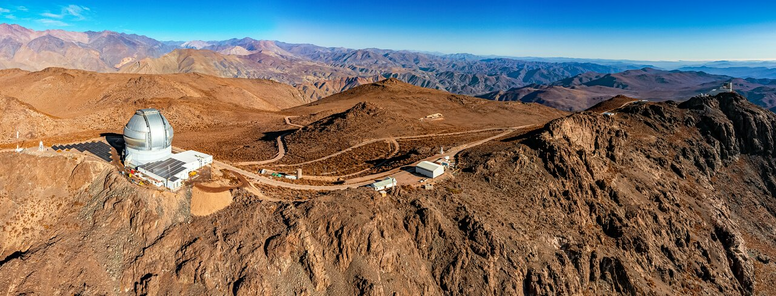
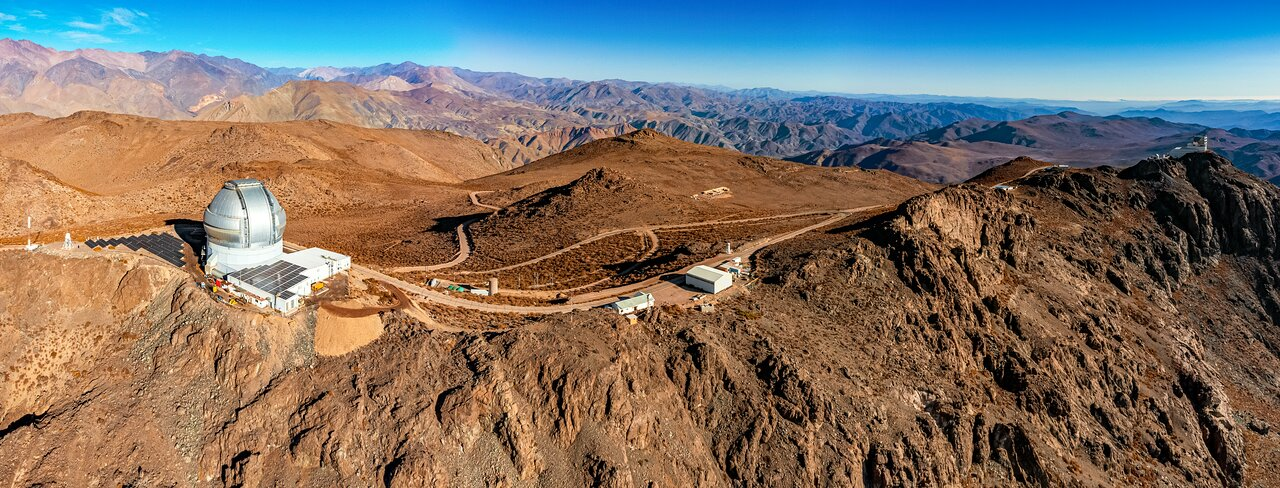
The Gemini South Observatory on Cerro Pachón in Chile at 2,737 meter elevation.
Primary mirror size: 8.1 m
FOV: arcminute
Wavelength: visible, near-IR and mid-IR (visible)
https://noirlab.edu/public/programs/gemini-observatory/gemini-south/
Credit: NOIRLab/NSF/AURA/T. Matsopoulos
#telescope #VeraRubin #astronomy
3/n
#telescope #VeraRubin #astronomy
AkaSci · @AkaSci
836 followers · 502 posts · Server fosstodon.org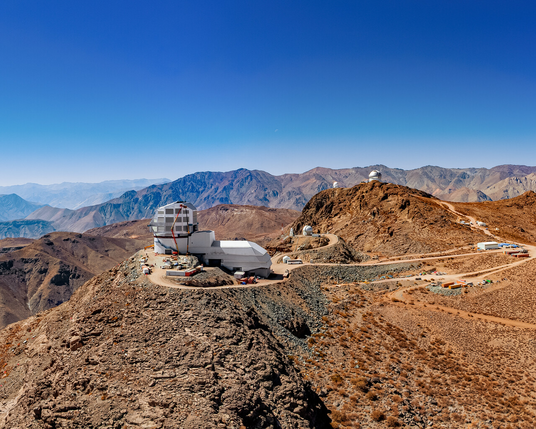
The Vera C. Rubin Observatory under construction on Cerro Pachón in Chile.
The Observatory's Simonyi Survey Telescope will photograph the entire available sky every few nights.
Primary mirror size: 8.4 m
FOV: 3.5°
Wavelength: 0.32–1.06 μm (visible)
CCD size: 3.2 gigapixel, the largest ever constructed.
First light in 2023.
https://noirlab.edu/public/images/archive/category/chile/
https://www.lsst.org/
Credit: NOIRLab/NSF/AURA/T. Matsopoulos
#telescope #VeraRubin #astronomy
2/n
#telescope #VeraRubin #astronomy

Matej Završnik · @matejpp
35 followers · 117 posts · Server mstdn.socialDay 3: we'll collide with Andromeda galaxy, sure. But did you know Andromeda was initially incorrectly classified as a nebula? It went under the name Andromeda nebula for a long time. For example, as recently as Vera Rubin's famous 1970 paper on galaxy rotations with which she discovered dark matter is titled Rotation of the Andromeda Nebula from a Spectroscopic Survey of Emission Regions. #Andromeda #VeraRubin #Galaxy #Nebula
#nebula #galaxy #VeraRubin #andromeda

Julien M. · @julm
486 followers · 4935 posts · Server framapiaf.org#Astronomy
> #Michigan State University’s #SethJacobson and colleagues in #China and #France have unveiled a new theory that could help solve a galactic mystery of how our #SolarSystem evolved. Specifically, how did the gas giants — #Jupiter, #Saturn, #Uranus and #Neptune — end up where they are, orbiting the sun like they do?
https://msutoday.msu.edu/news/2022/instability-at-beginning-of-solar-system
TIL
> The #VeraRubin Observatory, scheduled to be operational by the end of 2023, should be able to spot #Planet9 if it is out there.
#planet9 #VeraRubin #neptune #uranus #saturn #jupiter #solarsystem #france #china #SethJacobson #michigan #astronomy

massimo sandal e i suoi mammut · @massimosandal
82 followers · 9915 posts · Server mastodon.bida.im

RT @N_Tomassetti@twitter.com
Mi accorgo ora che oggi sono già passati 5 anni dalla scomparsa di Vera Rubin, l'astronoma che ha fornito evidenza di materia oscura nelle galassie a spirale
#DarkMatter #VeraRubin
🐦🔗: https://twitter.com/N_Tomassetti/status/1475172677296005128

Moutmout emmerde le RN · @Moutmout
492 followers · 5973 posts · Server framapiaf.orgLe dernier épisode de SpaceSheep est publié !
#vulgarisation #podcast #matièreNoire #VeraRubin
https://castopod.chaouane.xyz/@Spacesheep/episodes/le-mystere-de-la-matiere-noire
#vulgarisation #podcast #matièrenoire #VeraRubin

Blocktopus 🛼🛼 · @Moutmout
513 followers · 6414 posts · Server framapiaf.orgLe dernier épisode de SpaceSheep est publié !
#vulgarisation #podcast #matièreNoire #VeraRubin
https://castopod.chaouane.xyz/@Spacesheep/episodes/le-mystere-de-la-matiere-noire
#VeraRubin #matièrenoire #podcast #vulgarisation