
World History Encyclopedia · @whencyclopedia
1291 followers · 2477 posts · Server mstdn.social
Nara, located around 30 km south of modern Kyoto, was the capital of ancient Japan between 710 and 784 CE. https://www.worldhistory.org/Nara/ #History #AncientJapan #Horyuji #KasugaTaisha
#kasugataisha #Horyuji #ancientjapan #History

Hari Tulsidas :verified: · @haritulsidas
315 followers · 1576 posts · Server masto.ai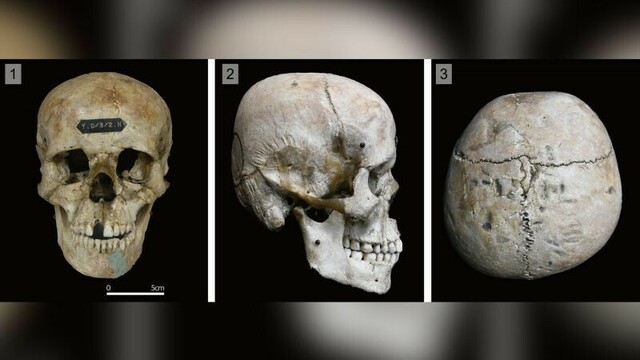
Some ancient Japanese people reshaped their skulls by moulding their babies’ heads, a new study confirms. The study analyzed the skulls of the Hirota people, who lived on an island from the third to the seventh century. The researchers found that the skull modification was a sign of collective identity and trade success, as the Hirota people exchanged shells with distant regions.
#skullmodification #hirotapeople #ancientjapan
World History Encyclopedia · @whencyclopedia
1253 followers · 2362 posts · Server mstdn.socialThe 'horse-rider theory' is a controversial proposal that Japan was conquered around the 4th or 5th century CE by a culture from northern Asia to whom the horse was especially important. https://www.worldhistory.org/article/1105/the-horse-rider-theory-in-ancient-japan/ #History #AncientJapan #Baekje #Gaya
#Gaya #baekje #ancientjapan #History
World History Encyclopedia · @whencyclopedia
1232 followers · 2332 posts · Server mstdn.social
The Nara Period (Nara Jidai) of ancient Japan (710-794 CE), so called because for most of that time the capital was located at Nara, then known as Heijokyo, was a short period of transition prior to the significant Heian Period. https://www.worldhistory.org/Nara_Period/ #History #AncientJapan #AsukaPeriod #HeianPeriod
#heianperiod #asukaperiod #ancientjapan #History
World History Encyclopedia · @whencyclopedia
1191 followers · 2230 posts · Server mstdn.social
The diet of ancient Japan was heavily influenced by its geography as an archipelago, foodstuffs and eating habits imported from mainland Asia, religious beliefs, and an appreciation for the aesthetic appearance of dishes, not just the taste. https://www.worldhistory.org/article/1082/food--agriculture-in-ancient-japan/ #History #AncientJapan #AsukaPeriod #Food
#Food #asukaperiod #ancientjapan #History
World History Encyclopedia · @whencyclopedia
1085 followers · 1971 posts · Server mstdn.social
Prince Shotoku (574-622 CE) ruled as regent of Japan from 594 to 622 CE and is one of the most celebrated figures in all of Japanese history. https://www.worldhistory.org/Prince_Shotoku/ #History #AncientJapan #AsukaPeriod #EmperorofJapan
#emperorofjapan #asukaperiod #ancientjapan #History
World History Encyclopedia · @whencyclopedia
999 followers · 1864 posts · Server mstdn.social
Ancient Japan has made unique contributions to world culture which include the Shinto religion and its architecture, distinctive art objects such as haniwa figurines, the oldest pottery vessels in the world, the largest wooden buildings anywhere at their time of construction, and many literary classics including the world's first novel. https://www.worldhistory.org/Ancient_Japan/ #History #AncientJapan #AsukaPeriod #Daigoji
#daigoji #asukaperiod #ancientjapan #History
World History Encyclopedia · @whencyclopedia
999 followers · 1864 posts · Server mstdn.social
The Nara Period (Nara Jidai) of ancient Japan (710-794 CE), so called because for most of that time the capital was located at Nara, then known as Heijokyo, was a short period of transition prior to the significant Heian Period. https://www.worldhistory.org/Nara_Period/ #History #AncientJapan #AsukaPeriod #HeianPeriod
#heianperiod #asukaperiod #ancientjapan #History
World History Encyclopedia · @whencyclopedia
963 followers · 1754 posts · Server mstdn.social
Buddhism was introduced to ancient Japan via Korea in the 6th century CE with various sects following in subsequent centuries via China. https://www.worldhistory.org/article/1080/buddhism-in-ancient-japan/ #History #AncientJapan #Buddhism #Byodo-in
#byodo #buddhism #ancientjapan #History
World History Encyclopedia · @whencyclopedia
942 followers · 1705 posts · Server mstdn.social
Insei or 'cloistered government' describes the strategy of emperors during the late Heian Period (794-1185 CE) in ancient Japan where they abdicated in favour of a chosen heir yet still ruled in some capacity, typically after retiring to a Buddhist monastery, hence the reference to a cloister. https://www.worldhistory.org/article/1106/insei-cloistered-government-in-ancient-japan/ #History #AncientJapan #EmperorofJapan #HeianPeriod
#heianperiod #emperorofjapan #ancientjapan #History

Archaeology News :verified: · @archaeology
101 followers · 75 posts · Server mstdn.social
1800-year-old ritual mask discovered in Japan
A ritual mask that dates back 1800 years has been found by archaeologists in the Osaka Prefecture, Japan.
The discovery occurred while excavating the Nishi-Iwata ruins in Higashi-Osaka.
Constructed from cedar, the mask is human-like with two holes for eyes and one for the mouth, measuring 30 cm in length and 18 cm in width.
Continue Reading: https://archaeologymag.com/2023/04/ritual-mask-discovered-in-japan/
.
Follow @archaeology
.
#archaeology #archaeologynews #ritualmask #ancientjapan
#ancientjapan #ritualmask #archaeologynews #archaeology
World History Encyclopedia · @whencyclopedia
910 followers · 1529 posts · Server mstdn.social
The 'horse-rider theory' is a controversial proposal that Japan was conquered around the 4th or 5th century CE by a culture from northern Asia to whom the horse was especially important. https://www.worldhistory.org/article/1105/the-horse-rider-theory-in-ancient-japan/ #History #AncientJapan #Baekje #Gaya
#Gaya #baekje #ancientjapan #History
World History Encyclopedia · @whencyclopedia
857 followers · 1366 posts · Server mstdn.social
The “Ancient Japan” initiative at Ancient History Encyclopedia arose as there is a dearth of open access and digitally curated information concerning early Japanese history available online and in English. https://www.worldhistory.org/article/1172/ancient-history-encyclopedia-in-japan/ #History #AncientJapan #Ginkakuji #Inari
#inari #ginkakuji #ancientjapan #History

Óscar Perea Rodríguez · @OPR_71
74 followers · 1334 posts · Server mastodon.world
RT @whencyclopedia
The medieval Ryukyu castles on the island of Okinawa, Japan are impressive testimony to the kingdom's power and wealth from the 12th to 16th century CE. #History #AncientJapan #MedievalCastle #RyukyuKingdom https://www.worldhistory.org/article/1399/the-ryukyu-castles-of-okinawa/?
#history #ancientjapan #medievalcastle #ryukyukingdom
World History Encyclopedia · @whencyclopedia
783 followers · 1204 posts · Server mstdn.social
The medieval Ryukyu castles on the island of Okinawa, Japan are impressive testimony to the kingdom's power and wealth from the 12th to 16th century CE. https://www.worldhistory.org/article/1399/the-ryukyu-castles-of-okinawa/ #History #AncientJapan #MedievalCastle #RyukyuKingdom
#ryukyukingdom #medievalcastle #ancientjapan #History
World History Encyclopedia · @whencyclopedia
749 followers · 1056 posts · Server mstdn.social
Buddhism was introduced to ancient Japan via Korea in the 6th century CE with various sects following in subsequent centuries via China. https://www.worldhistory.org/article/1080/buddhism-in-ancient-japan/ #History #AncientJapan #Buddhism #Byodo-in
#byodo #buddhism #ancientjapan #History
World History Encyclopedia · @whencyclopedia
739 followers · 1012 posts · Server mstdn.social
The diet of ancient Japan was heavily influenced by its geography as an archipelago, foodstuffs and eating habits imported from mainland Asia, religious beliefs, and an appreciation for the aesthetic appearance of dishes, not just the taste. https://www.worldhistory.org/article/1082/food--agriculture-in-ancient-japan/ #History #AncientJapan #AsukaPeriod #Food
#Food #asukaperiod #ancientjapan #History
Archaeology News :verified: · @archaeology
26 followers · 33 posts · Server mstdn.social
Giant 2.3-meter dakoken sword discovered In Japan
Japanese archaeologists have uncovered a giant 2.3 meter-long sword about 40 kilometers south of the city of Kyoto. The iron sword, which dates back more than 1,500 years, is believed to have been used to protect the deceased on their journey to the afterlife.
Read More: https://archaeologymag.com/2023/01/giant-2-3-meter-dakoken-sword-discovered-in-japan/
.
.
Follow @archaeology
.
#archaeology #archaeologynews #kofunperiod #ancientjapan
#ancientjapan #kofunperiod #archaeologynews #archaeology
Archaeology News :verified: · @archaeology
26 followers · 33 posts · Server mstdn.socialGiant 2.3-meter dakoken sword discovered In Japan
Japanese archaeologists have uncovered a giant 2.3 meter-long sword about 40 kilometers south of the city of Kyoto. The iron sword, which dates back more than 1,500 years, is believed to have been used to protect the deceased on their journey to the afterlife.
Read More: https://archaeologymag.com/2023/01/giant-2-3-meter-dakoken-sword-discovered-in-japan/
.
.
Follow @archaeology
.
.
#archaeology #archaeologynews #kofunperiod #ancientjapan
#ancientjapan #kofunperiod #archaeologynews #archaeology
Alo Japan · @alojapan
28 followers · 2009 posts · Server masto.ai


Usuki Tour / Japan wonders https://www.alojapan.com/722419/usuki-tour-japan-wonders/
Usuki town and the famous Stone Buddhas, world heritage monument Music: GadeaPlanet on GarageBand
#ancientjapan #beppu #buddha #englishguidetourjapan #guidetour #Japan #japancastle #japanmonuments #japantown #Kagoshima #Kagoshimadestinations #Kagoshimatour #Kagoshimatravel #Kagoshimatrip #Kagoshimavacation #Kyushu #stonebuddhaguidetourinenglish #StoneBuddhas #Usuki #usukicastle #WorldHeritage #鹿児島
#ancientjapan #beppu #buddha #englishguidetourjapan #guidetour #japan #japancastle #japanmonuments #japantown #kagoshima #kagoshimadestinations #kagoshimatour #kagoshimatravel #kagoshimatrip #kagoshimavacation #kyushu #stonebuddhaguidetourinenglish #stonebuddhas #usuki #usukicastle #worldheritage #鹿児島