Roland Meyer · @bildoperationen
805 followers · 197 posts · Server tldr.nettime.orgLast Tuesday, @lscherff and Matthias Grund invited me to Cologne at the KISD to talk about #imageneration, #artificialnostalgia and #imagearchives. I am very thankful for their kind hospitality! My talk, titled »The Gaps in the Archive. Synthetic Images and the Nostalgic Impulse« is now online, in case you are interested. https://vimeo.com/834138675
#imageneration #artificialnostalgia #imagearchives

𝚛𝚊𝚠𝚡 · @rawx
200 followers · 1297 posts · Server sigmoid.social
RT @bildoperationen
AI-generated videos are a thing now, and not surprisingly, they're used to create memories that never existed. As yet, they're not »indistinguishable from reality« – but could become indistinguishable from our already mediated past
#ArtificialNostalgia
https://twitter.com/0xgaut/status/1650867275103174660
Roland Meyer · @bildoperationen
723 followers · 115 posts · Server tldr.nettime.org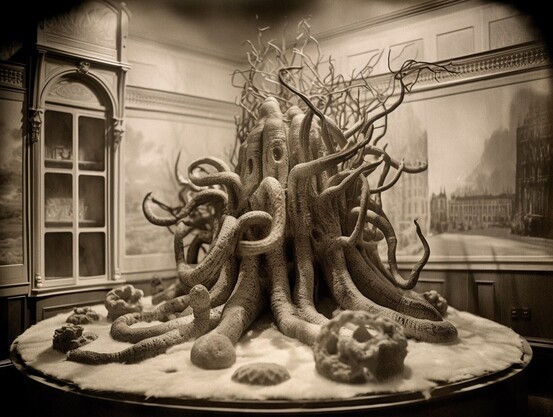
Parallel to the »fluffy glamour glow« typical of commercial #ImageGeneration, one can also observe the emergence of a distinguished aesthetic that characterizes many of the more artistically ambitious applications of AI: a specific blend of the nostalgic and the weird. I've written before about the relationship between AI image generation and #ArtificialNostalgia, particularly in relation to non-existent movies, and the more I think about it, the less arbitrary the connection seems: AI in its current form is nostalgic by design.
AI image generation models depend on vast amounts of images scraped from online sources. The virtual archive of images from the past thus becomes a resource of patterns that feeds the generation of future images while at the same time defining their space of possibility. Image generation is a kind of memory work: in the latent spaces of these models, every possible image appears as an interpolation of already existing images, fills a gap in the archive, so to speak, supplements and completes it and yet remains entirely dependent on it.
So if nostalgia is the urge to revisit and relive the past, then in a sense that is exactly what image generation does: it conjures up memories that never existed in the first place, except as (statistical) possibilities in the virtual archive of what has already become an image. Understood as artificial, even prosthetic memories, AI images are inherently weird in the very sense that Mark Fisher has given the term: »the weird is that which does not belong,« something »so strange that it makes us feel that it should not exist, or at least it should not exist here«. Beyond the more superficial artifacts of current AI models, the weird hands and letters, bodies and perspectives, this fundamental weirdness is what haunts a lot of AI generated imagery – and, to some at least (including myself), seems to be their most attractive aesthetic quality.
#imagegeneration #artificialnostalgia
Roland Meyer · @bildoperationen
706 followers · 98 posts · Server tldr.nettime.orgApparently, non-existent movies and #ArtificialNostalgia are so much of a thing now that the phenomenon is ready to be parodied. And this one is actually quite funny: »›I’m all for adaptation and artistic freedom, but let me be clear when I say I always intended my movies to reflect the exact year they were made, and also for the characters to have a maximum of 10 fingers,‹ said [director Brett] Leonard after reviewing a few of the images.«
#ImageGeneration
https://hard-drive.net/hd/entertainment/breathtaking-ai-reimagines-movie-made-in-1995-as-movie-made-in-1994
#artificialnostalgia #imagegeneration
Roland Meyer · @bildoperationen
656 followers · 91 posts · Server tldr.nettime.orgThinking about non-existent movies and #ArtificialNostalgia, I remembered that I once in the 1990s saw a movie on German TV and for years I didn't quite know if I'd really seen it or if my mind had made it up. The story, as far as I remembered, was so all over the place that it actually felt like a dream: It involved a secret society of tramps living in the New York underground, and retirees going on a booze cruise to the moon in a space bus driven by Bill Murray.
Only later did I find out that the movie was aptly called »Nothing Lasts Forever« (1984), that it never had a cinematic release and was hardly ever shown at all due to legal difficulties. I'd love to see it again, but it seems almost impossible.
https://www.imdb.com/title/tt0087817/
Roland Meyer · @bildoperationen
656 followers · 89 posts · Server tldr.nettime.orgIn his fascinating »Theory of vibe« (https://www.glass-bead.org/article/a-theory-of-vibe), Peli Grietzer has elaborated on this world-describing, indeed world-creating quality of aesthetic ›vibes‹ by theorizing the vibe as an »abstractum that cannot be separated from its concreta.« In my view, it’s this historical concreteness, its rootedness in the specifics of a certain cultural moment in space and time, which defines ›vibe‹ in contrast to style, and which also distinguishes from the similar ›mood‹. Aesthetic ›moods,‹ such as those visualized in mood boards, are also atmospheric qualities that go beyond the purely visual. But compared to ›vibes‹ they seem to be much less concrete and specific: ›gloomy‹ is a mood, ›1980s cyberpunk fiction‹ more of a vibe. ›Moods‹ in this sense refer not to the concrete worlds conjured up by images but to the abstract atmospheres they evoke, and their authenticity is based on a certain emotional tunedness, not a sense of historicity. Atmospheres, then, have much less to do with nostalgia. What’s more, ›vibes‹ are always mediated, and while they seem inextricably bound to historical media and their visual qualities, these specific qualities have been the object of remediation and simulation, long before AI.
Indeed, much of 2010s pop culture, from »Stranger Things« to the films of Luca Guadagnino, seems obsessed with recreating the vibe associated with historical worlds as conveyed by movies from the 1970s and 80s. What is different with non-existent movies created by AI is that they recreate the vibe without any content, they conjure up worlds that are fascinating to look at but are not inhabited by characters – they are both a purer and emptier form of #ArtificialNostalgia
Roland Meyer · @bildoperationen
656 followers · 88 posts · Server tldr.nettime.org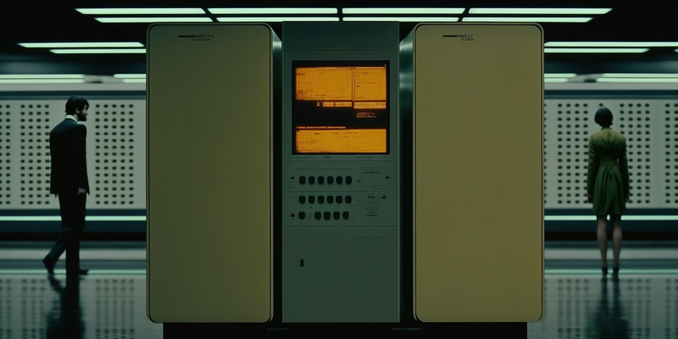
Playing around with AI #ImageGeneration, non-existent movies and the idea of #ArtificialNostalgia, I started thinking about the notion of ›vibe,‹ how it might describe what I'm looking for in these generated film stills and what distinguishes it from concepts like ›style‹ or ›mood‹. Much of the discussion around AI-generated images has involved questions of style, and for good reason. »In the style of ...« is maybe the most common phrases used in prompts, as #DallE, #Midjourney, and #StableDiffusion promise to produce images in any possible style.This category of style transcends cultural hierarchies: Style can mean the brushstroke of a painter, the visual qualities of historical technical media, or the look of certain games & TV shows: Van Gogh, Polaroid, Unreal Engine, or Southpark – everything becomes a ›style‹. Now that styles can seemingly be detached at will from individual artworks to create ever new images ›in the style of ...‹, it's no wonder that the debate about AI images as a form of plagiarism boils down to the question of how to protect individual styles from being copied.
But now let’s take a look at these Midjourney generated stills from »Return to Alphaville« (1969). They can hardly be said to copy Godard's style, even if such a thing would be possible in a few stills. Rather, what makes them interesting to me is a certain ›Alphaville vibe‹ they allude to. However broadly defined, style always denotes a mode of representation seperable from what is being represented, e.g. van Gogh's style can be stripped away from sunflowers and cornfields and applied to other subjects – and the same goes for the Unreal game engine ›style‹. ›Vibe‹, however, is conveyed as much by what is represented as by how it is represented: It’s in the hairstyles, clothes, and faces; in the cars, architecture, and furniture; in the colors, surfaces, and textures; in the graininess of the film stock or the blurriness of old VHS tapes.
#imagegeneration #artificialnostalgia #dalle #midjourney #StableDiffusion
Roland Meyer · @bildoperationen
655 followers · 86 posts · Server tldr.nettime.org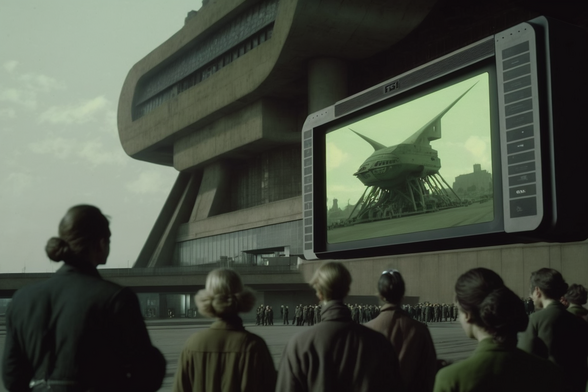
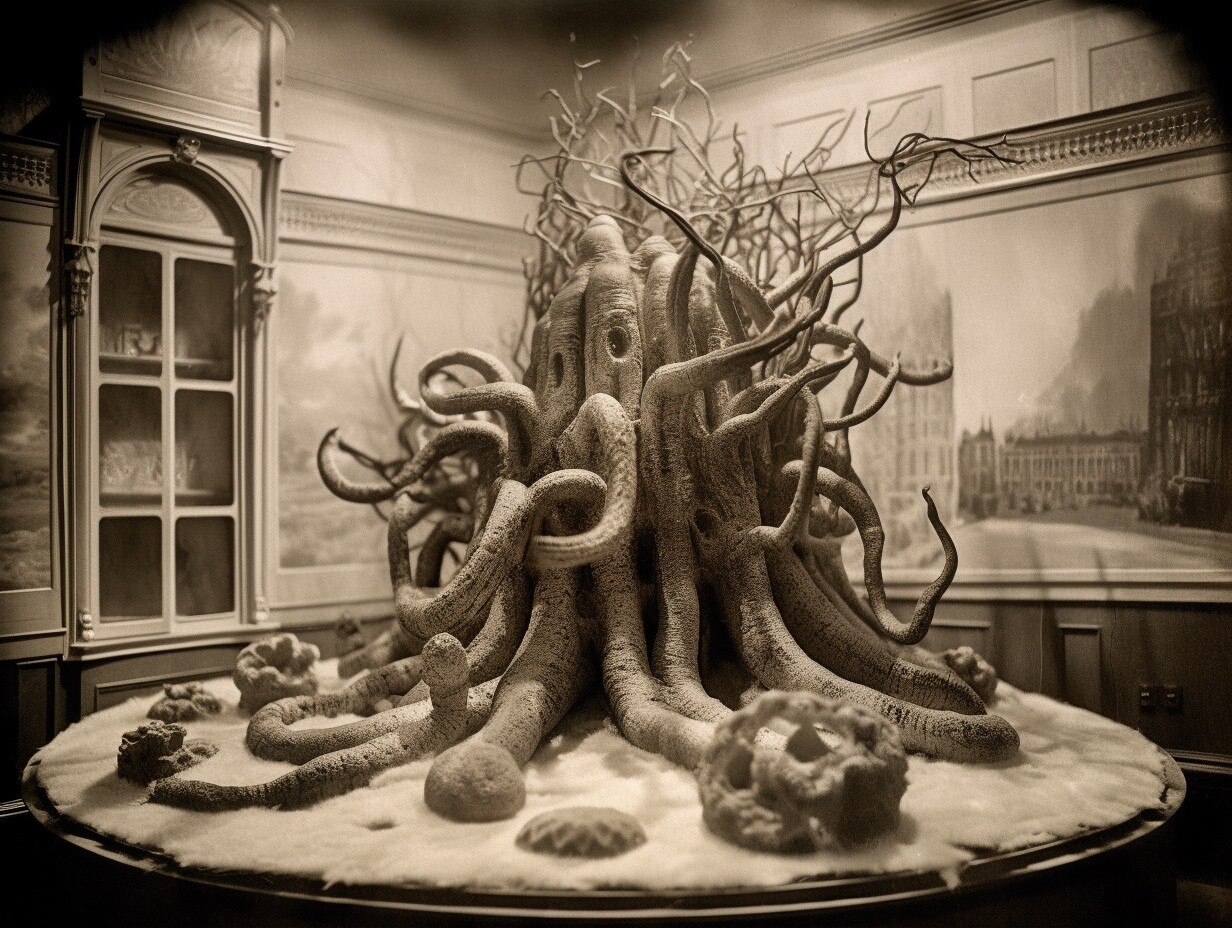
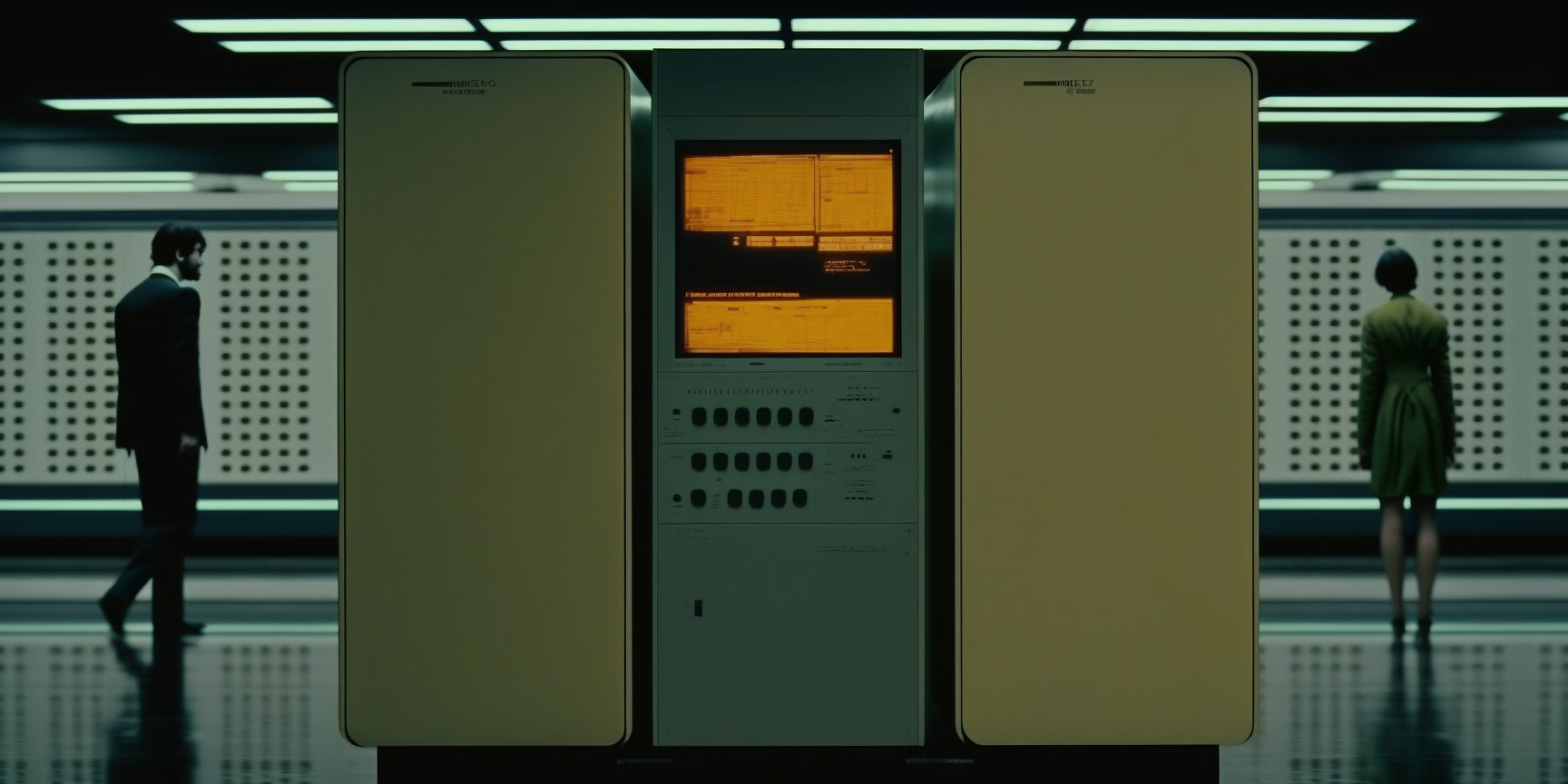
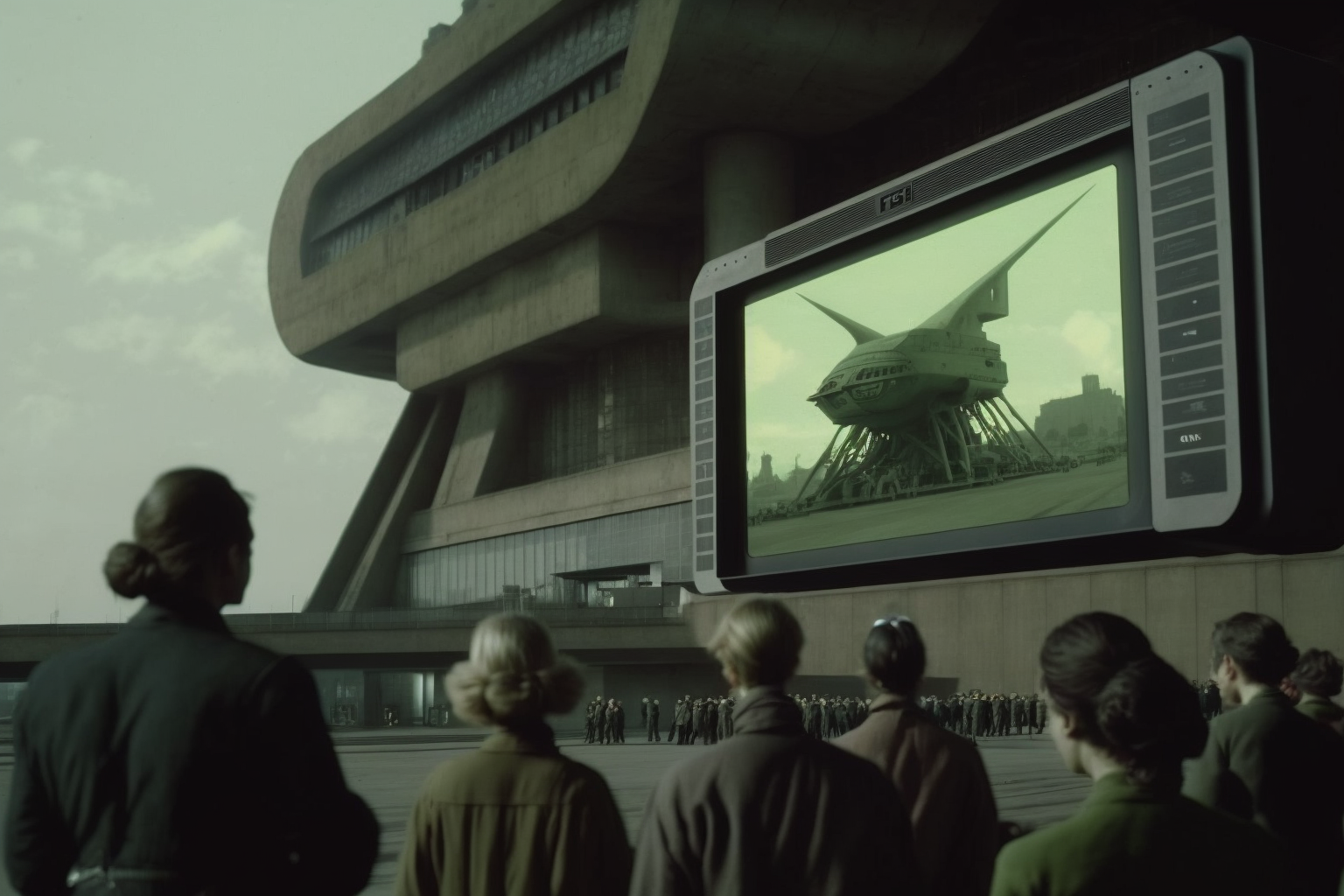
Once we used analog media to imagine a future that never came. Now we feed those images into digital machines to hallucinate a past that never was
#ArtificialNostalgia #imagegeneration
#artificialnostalgia #imagegeneration