
Mr.Trunk · @mrtrunk
3 followers · 2923 posts · Server dromedary.seedoubleyou.meGizmodo: Journey Into the Past: Webb’s Trippy 3D Animation Guides You to an Ancient Galaxy https://gizmodo.com/webb-trippy-3d-animation-guides-ancient-galaxy-ceers-1850626041 #chronologyoftheuniverse #jameswebbspacetelescope #technologyinternet #extendedgrothstrip #physicalcosmology #stevefinkelstein #ceers93316 #ursamajor #galaxies #bootes #gnz11 #webb #hd1
#chronologyoftheuniverse #jameswebbspacetelescope #technologyinternet #extendedgrothstrip #physicalcosmology #stevefinkelstein #ceers93316 #ursamajor #galaxies #bootes #gnz11 #webb #hd1

ialberdilza ♏ :vf: · @ialberdilza
250 followers · 1270 posts · Server masto.es
𝐄𝐋 #𝐂𝐒𝐈𝐂 𝐂𝐎𝐌𝐏𝐋𝐄𝐓𝐀 𝐋𝐀 𝐏𝐑𝐈𝐌𝐄𝐑𝐀 𝐑𝐄𝐃 𝐃𝐄 𝐓𝐄𝐋𝐄𝐒𝐂𝐎𝐏𝐈𝐎𝐒 𝐑𝐎𝐁Ó𝐓𝐈𝐂𝐎𝐒 𝐏𝐑𝐄𝐒𝐄𝐍𝐓𝐄 𝐄𝐍 𝐋𝐎𝐒 𝐂𝐈𝐍𝐂𝐎 𝐂𝐎𝐍𝐓𝐈𝐍𝐄𝐍𝐓𝐄𝐒
ᴇꜱᴘᴀñᴀ ꜱᴇ ᴄᴏɴᴠɪᴇʀᴛᴇ ᴇɴ ᴇʟ ᴘʀɪᴍᴇʀ ᴘᴀíꜱ ᴅᴇʟ ᴍᴜɴᴅᴏ ᴇɴ ᴅɪꜱᴘᴏɴᴇʀ ᴅᴇ ᴜɴᴀ ʀᴇᴅ ɢʟᴏʙᴀʟ ᴅᴇ ᴏʙꜱᴇʀᴠᴀᴛᴏʀɪᴏꜱ ᴀᴜᴛóɴᴏᴍᴏꜱ
_________
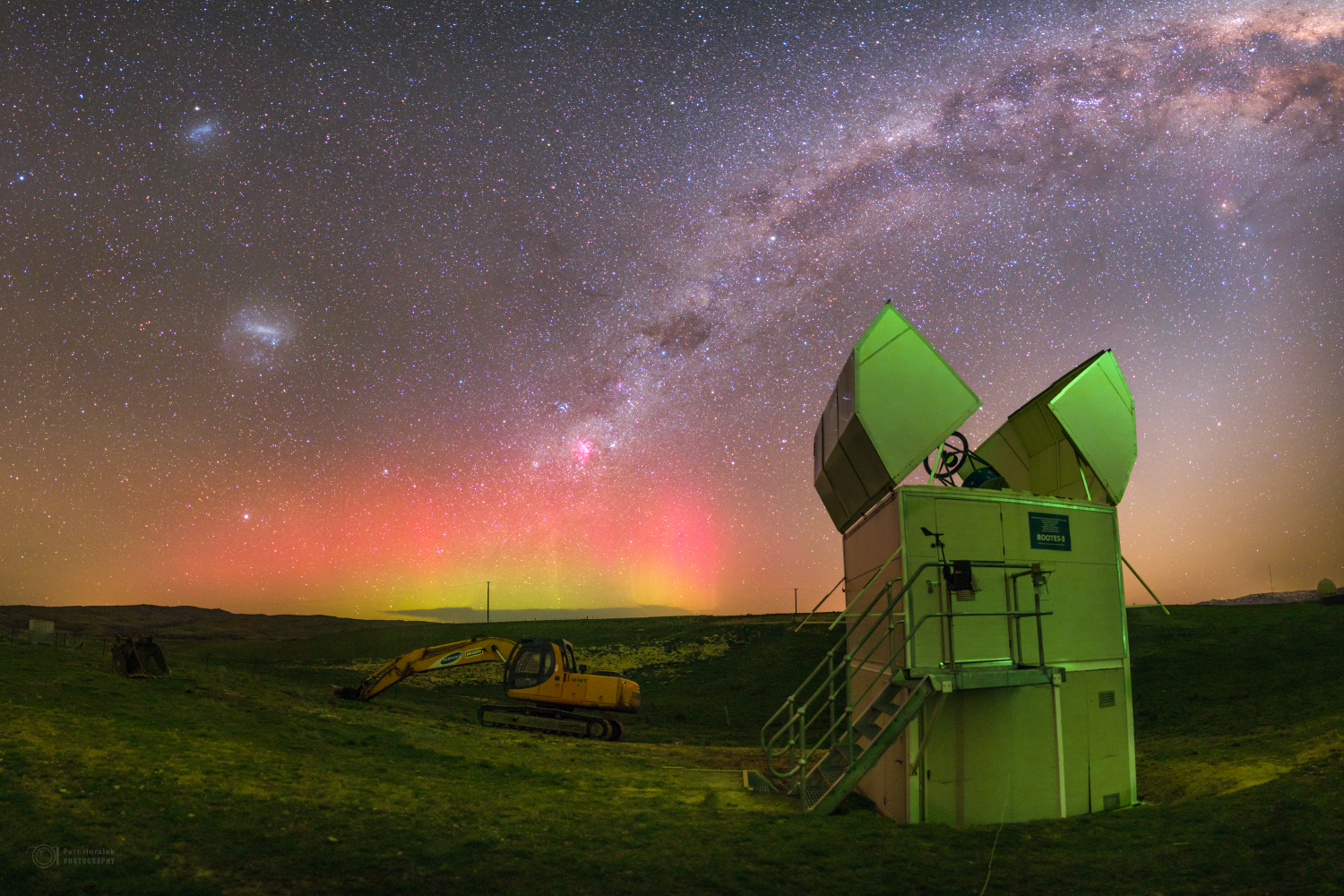
El Instituto de Astrofísica de Andalucía (IAA) del 𝙲𝚘𝚗𝚜𝚎𝚓𝚘 𝚂𝚞𝚙𝚎𝚛𝚒𝚘𝚛 𝚍𝚎 𝙸𝚗𝚟𝚎𝚜𝚝𝚒𝚐𝚊𝚌𝚒𝚘𝚗𝚎𝚜 𝚌𝚒𝚎𝚗𝚝í𝚏𝚒𝚌𝚊𝚜 ha culminado el desarrollo de la red #BOOTES (acrónimo en inglés de Observatorio de estallidos y Sistema de exploración de fuentes esporádicas ópticas), la primera red de telescopios robóticos con estaciones en los cinco continentes.
Con instalaciones en España (dos estaciones), Nueva Zelanda, China, México, Sudáfrica y Chile, es la red más completa de su clase y un recurso único y totalmente automatizado para combinar datos de instrumentos de todo el mundo, vigilar el cielo y apoyar las observaciones de misiones y satélites.
#Ciencia #Tecnología #Science #Technology #Astronomía #Astronomy #Astrofísica #Astrophysic #Telescopio #Telescope #España #Spain
#csic #bootes #ciencia #tecnologia #science #technology #astronomia #astronomy #astrofisica #astrophysic #telescopio #telescope #espana #spain

LA SENDA DE APOLO · @lasendadeapolo
902 followers · 13 posts · Server mast.lat
La primera red de telescopios robóticos https://lasendadeapolo.blog/2023/02/21/8102/ El Instituto de Astrofísica de Andalucía (IAA) del Consejo Superior de Investigaciones científicas (CSIC) ha culminado el desarrollo de la red BOOTES (acrónimo en inglés de Observatorio de estallidos y Sistema de exploración de fuentes esporádicas ópticas), la primera red de telescopios robóticos con estaciones en los cinco continentes. Con instalaciones en España (dos estaciones), Nueva Zelanda, China, México, Sudáfrica y Chile, constituye la red más completa de su clase y un recurso único y totalmente automatizado para combinar datos de instrumentos de todo el mundo, vigilar el cielo y apoyar las observaciones de misiones y satélites.
BOOTES es el resultado de casi veinticinco años de esfuerzo continuado, desde que en 1998 se instaló la primera estación en el INTA (Arenosillo, Huelva), institución que apoyó inicialmente el proyecto. El despliegue completo supone un hito científico ya que se trata de la primera red robótica con presencia en todos los continentes. Ello la ha situado en el tiempo por delante de las redes americana, cuya estación asiática se halla en construcción, y rusa, que carece de instalación en Oceanía #ciencia #observatorios #estrellas #astronomia #bootes
#ciencia #observatorios #estrellas #astronomia #bootes

Runa Press · @runapress
3 followers · 13 posts · Server home.socialMe pregunto si esta noticia que nos ofrece #AgenciaSINC sobre #BOOTES aparecerá en los medios generalistas estos días... https://www.agenciasinc.es/Noticias/Espana-completa-la-primera-red-global-de-telescopios-roboticos-del-mundo

Dr. Alexandre Santerne 🌍 · @AlexSanterne
2229 followers · 834 posts · Server astrodon.social
The #comet ZTF is getting brighter, as it comes closer to the #Sun, and should soon be visible to the #NakedEye under a clear, unpolluted and northern #sky. It is currently located in the constellation of Coma Berenice (between #Hercules and the #Bootes). Today's #APOD is a #picture of #ZTF revealing its long tail.
Tails of Comet ZTF
Image Credit & Copyright: Jose Francisco Hernández
Read more: https://apod.nasa.gov/apod/ap230109.html
#comet #sun #nakedeye #sky #hercules #bootes #apod #picture #ztf #astronomy #space

Ethan Teng 🏳️🌈🏳️⚧️🇹🇼 · @citizen_astro
528 followers · 849 posts · Server mastodon.lolI observed the newly discovered Type I supernova SN2022oqm a few nights ago!
SN2022oqm is located in the nearby galaxy NGC 5875. It was discovered on July 11, 2022 at an initial magnitude of ~17 but is getting brighter.
#astronomy #citizenscience #supernova #ngc5875 #bootes
Ethan Teng 🏳️🌈🏳️⚧️🇹🇼 · @citizen_astro
528 followers · 849 posts · Server mastodon.lol
Mu Boötis (Alkalurops)
Magnitude 4.3 and 7.1 pair of double stars located 121 light-years away in the constellation Boötes. The pair makes a revolution once in 260 years.
#astrophotography #astronomy #space #unistellar #citizenscience #mubootis #star #bootes
#astrophotography #astronomy #space #unistellar #citizenscience #mubootis #star #bootes
Ethan Teng 🏳️🌈🏳️⚧️🇹🇼 · @citizen_astro
528 followers · 849 posts · Server mastodon.lol
Xi Boötis
Binary star located 22.0 light-years away in the constellation Boötes. The brighter, primary star of the pair is a yellow-white star much like our own Sun and has a visual magnitude of 4.70. The secondary is a smaller and cooler orange-red star with a magnitude of 7.0.
#astrophotography #astronomy #space #unistellar #citizenscience #xi #star #bootes
#astrophotography #astronomy #space #unistellar #citizenscience #Xi #star #bootes
Ethan Teng 🏳️🌈🏳️⚧️🇹🇼 · @citizen_astro
528 followers · 849 posts · Server mastodon.lol
Iota Boötis
Double star located 94.8 light-years away in the constellation Boötes. The primary star is a variable star that varies in brightness between magnitude 4.73 to 4.78. The companion star, HD 234121, has a magnitude of 8.27.
#astrophotography #astronomy #space #unistellar #citizenscience #iota #star #bootes
#astrophotography #astronomy #space #unistellar #citizenscience #iota #star #bootes
Ethan Teng 🏳️🌈🏳️⚧️🇹🇼 · @citizen_astro
528 followers · 849 posts · Server mastodon.lol
Kappa Boötis
Magnitude 6.69 double star located 155 light-years away in the constellation Boötes.
#astrophotography #astronomy #space #unistellar #citizenscience #kappabootis #star #bootes
#astrophotography #astronomy #space #unistellar #citizenscience #kappabootis #star #bootes
Ethan Teng 🏳️🌈🏳️⚧️🇹🇼 · @citizen_astro
528 followers · 849 posts · Server mastodon.lol
Epsilon Boötis (Izar)
Magnitude 2.37 to 5.12 binary star system located 236 light-years away in the constellation Boötes. The primary star is a yellow-orange giant, and the secondary star a white main sequence star. The pair revolves around each other every 1,000 years.
#astrophotography #astronomy #space #unistellar #citizenscience #izar #star #bootes
#astrophotography #astronomy #space #unistellar #citizenscience #izar #star #bootes
Ethan Teng 🏳️🌈🏳️⚧️🇹🇼 · @citizen_astro
528 followers · 849 posts · Server mastodon.lol
Arcturus
Magnitude -0.05 star located 36.7 light-years away in the constellation Boötes. It is the brightest star in the northern celestial hemisphere and the 4th brightest in the sky. Arcturus is a single red giant around 7.1 billion years old. It has the same mass as the Sun but has expanded to 25 times its size and is 170 times as luminous.
#astrophotography #astronomy #space #unistellar #citizenscience #arcturus #star #bootes
#astrophotography #astronomy #space #unistellar #citizenscience #arcturus #star #bootes
Ethan Teng 🏳️🌈🏳️⚧️🇹🇼 · @citizen_astro
528 followers · 849 posts · Server mastodon.lol
NGC 5466
Magnitude 10.5 global cluster located 51,900 light-years away in the constellation Boötes. It's low surface brightness gives it an etheral, ghostly glow.
#astrophotography #astronomy #space #unistellar #citizenscience #ngc5466 #cluster #bootes
#astrophotography #astronomy #space #unistellar #citizenscience #ngc5466 #cluster #bootes
Ethan Teng 🏳️🌈🏳️⚧️🇹🇼 · @citizen_astro
528 followers · 849 posts · Server mastodon.lol
NGC 5466
Magnitude 10.5 globular cluster located 51,800 light-years away in the constellation Boötes. It was discovered by William Herschel in 1784.
#astrophotography #astronomy #space #unistellar #citizenscience #ngc5466 #galaxy #bootes
#astrophotography #astronomy #space #unistellar #citizenscience #ngc5466 #galaxy #bootes
Ethan Teng 🏳️🌈🏳️⚧️🇹🇼 · @citizen_astro
528 followers · 849 posts · Server mastodon.lol


NGC 5248
Magnitude 10.97 compact intermediate spiral galaxy located 59 million light-years away in the constellation Boötes.
#astrophotography #astronomy #space #unistellar #citizenscience #ngc5248 #galaxy #bootes #caldwell45
#astrophotography #astronomy #space #unistellar #citizenscience #ngc5248 #galaxy #bootes #caldwell45