[REDACTED]™, Sweater Unraveler · @quasirealsmiths
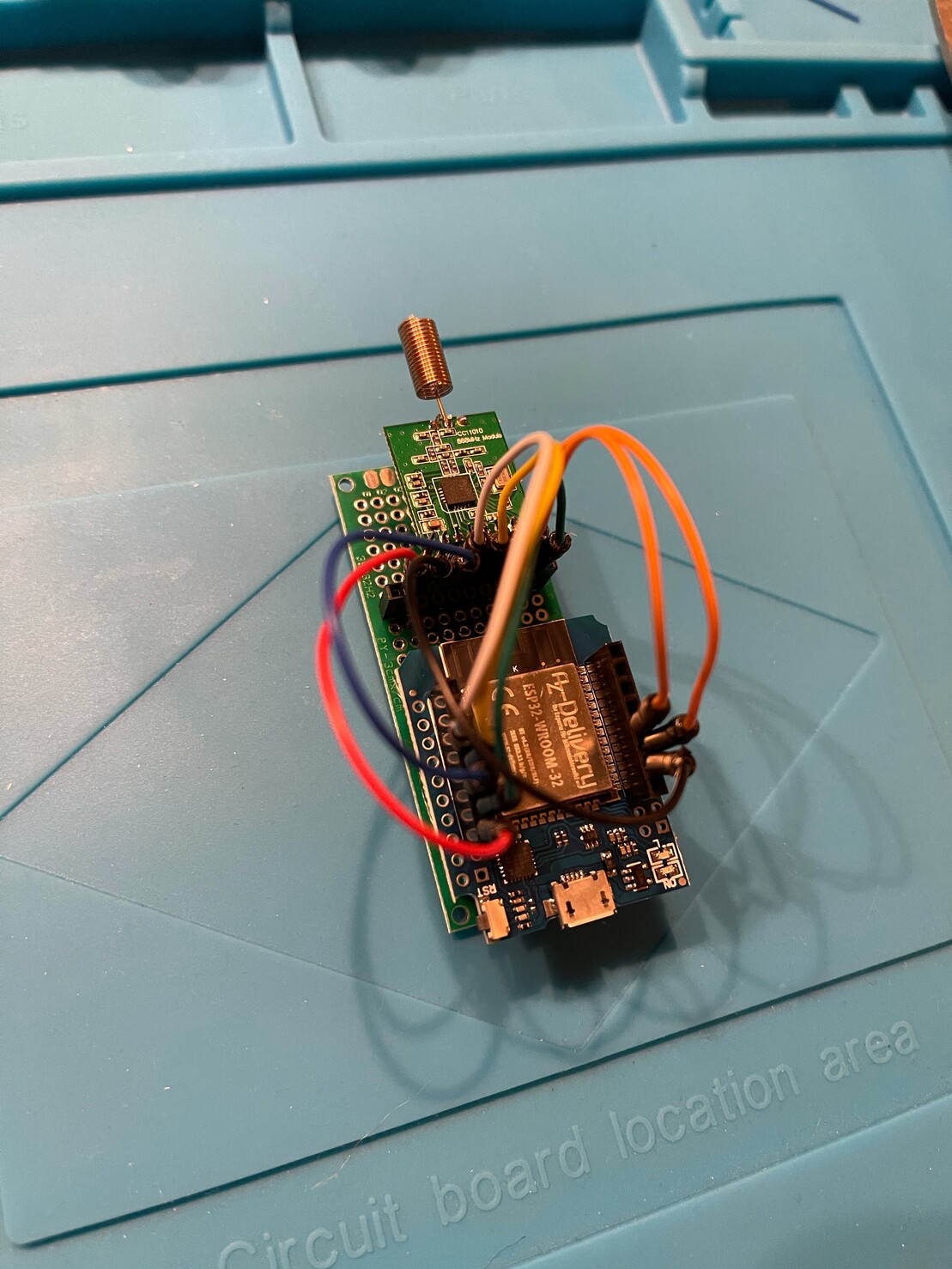
359 followers · 522 posts · Server beige.partynext #esp32 project is to turn a stupid ceiling fan that can only be controlled by a remote (because the previous homeowner was an idiot) into a "smart" one.
going to try two approaches since I'm seeing projects using both and why not?
Ordered a #FS1000A transmittion/receiver kit that operates at 315MHz, but since the fan remote operates at ~304MHz I also threw in an order of 303.875MHz quartz resonators so I can try out a little desolder/swap/solder on it in order to try out the project here: https://randomnerdtutorials.com/rf-433mhz-transmitter-receiver-module-with-arduino/
Also threw in an order for a #CC1101 module, based off the project here: https://github.com/patrickdk77/hampton-bay-fan-mqtt
The second one seems simpler, but I'm trying to get back into #soldering and when you're drunk on aliexpress it doesn't really hurt to throw $6 toward the communist regime for some electronic doohickeys to play with.
#ESP32 #fs1000a #cc1101 #soldering

pelzvieh · @pelzi
31 followers · 762 posts · Server mastodon.flying-snail.deSo ein #CC1101 hat doch ein SPI-Interface. Warum behaupten denn so viele Foren, man bräuchte einen Controller (Arduino Nano) davor, oder einen speziellen „CUL“-USB-Stick, um ihn an einen Raspi zu schließen? Sowohl #RaspberryPi als auch #BananaPi haben doch SPI-Unterstützung an Bord?
Oder wie lest ihr so eure Wasserzähler aus?
#cc1101 #raspberrypi #bananapi

Marco Mornati :ve: · @mmornati
110 followers · 278 posts · Server techhub.socialDoes anyone know how to correctly debug (with Arduino ide) a #CC1101 device... Or even just a code running on an #ESP32? Reading some doc I did not understand if it is something requiring an added wiring and board or if I can do it directly via USB. I'm a pragmatic engineer (this recall me something 😅) and I need to understand where the problem really is... In any other way I think just trying to guess an answer (and lose my time).