
Tyler R. Sizemore · @tsizzle_
73 followers · 47 posts · Server drosophila.socialAfter a brief hiatus from this place, I’m elated to announce WE HAVE A NEW PUB, Y’ALL 🔥🚨🔥🚨 !!!! 1/n #neuroscience #neuropeptides #neuromodulation #drosophila #connectomics #physiology https://www.nature.com/articles/s41467-023-41012-3
#neuroscience #neuropeptides #neuromodulation #drosophila #connectomics #physiology

Albert Cardona · @albertcardona
2023 followers · 3910 posts · Server mathstodon.xyzFollowing from Collinson's paper, here is my take on scaling up volume electron microscopy for connectomics in the #UK or any country willing to commit about 10 to 20 million a year:
"Growing and nurturing a research base in connectomics"
https://albert.rierol.net/tell/20230823_connectomics_research_base.html
From the humble #Drosophila to the #mouse brain, passing through the mosquito, honeybee, gecko lizards and the Etruscan shrew.
It's possible, it's feasible, it's timely: therefore we must.
#vem #volumeem #connectomics #neuroscience #mouse #drosophila #uk
Albert Cardona · @albertcardona
2018 followers · 3871 posts · Server mathstodon.xyz
Amusing that the piece includes optical microscopy methods unrelated to neural function, such as STED, PALM, expansion microscopy and CLARITY, but ignores electron microscopy methods key to the current boom in #connectomics. In particular, Denk and Horstmann 2004 for SBEM https://journals.plos.org/plosbiology/article?id=10.1371/journal.pbio.0020329 , Knott et al. 2008 for first application of FIBSEM to neuronal tissue https://www.jneurosci.org/content/28/12/2959 , Schalek et al. 2011 for the ATUM serial section tape-collecting system https://academic.oup.com/mam/article-abstract/17/S2/966/6947317 , Xu et al. 2017 for e-FIBSEM and Graham et al. 2019 for GridTape TEM https://www.biorxiv.org/content/10.1101/657346.abstract
#vem #volumeem #microscopy #neuroscience #connectomics
Gaspar Jekely · @jekely
428 followers · 12 posts · Server biologists.social
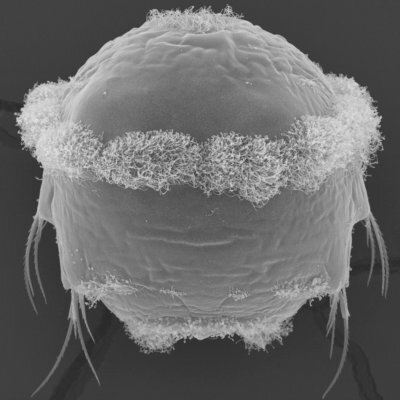
In the paper we managed for the first time to combine #connectomics, calcium #imaging from all neurons of a fully-mapped circuit, genetic perturbations, behaviour and computational modelling. #Platynereis for systems #neuroscience
#connectomics #imaging #platynereis #neuroscience
Albert Cardona · @albertcardona
1972 followers · 3533 posts · Server mathstodon.xyz
Dissecting neural circuits for cold nociception in the #Drosophila larva, by Atit Patel in D. Cox lab: http://biorxiv.org/content/10.1101/2023.07.31.551339v1
Atit was a visitor of my former lab at #HHMIJanelia. Took years to map the circuit, identify GAL4 lines, design and run behavioral assays and make sense of it all. Atit, a PhD student, did all the mapping and all the experiments and wrote most of the paper, and did a great job at it.
For the insiders: this is about class III md (multidendritic) somatosensory neurons in the fly larva, and their synaptic connectivity, primarily onto various Basin neurons (Ohyama, Schneider-Mizell et al. 2015 https://www.nature.com/articles/nature14297 , Jovanic, Schneider-Mizell et al. et al. 2016 https://www.sciencedirect.com/science/article/pii/S0092867416312429 ) but also other neurons such as Down-and-Back (Burgos et al. 2018 https://elifesciences.org/articles/26016 ) and PNs of the class IV mds (Gerhard et al. 2017 https://elifesciences.org/articles/29089 ).
In other words, how somatosensoty neurons for cold nociception (class III mds) feed into the local circuits that process nociception (class IV mds) and mechanoreception (chordotonals).
Note this work is unrelated to how the larva senses and responds to cold and warm stimuli (Hernandez-Nunez et al. 2021 https://www.science.org/doi/abs/10.1126/sciadv.abg6707 )
#connectomics #nociception #neuroscience #HHMIJanelia #drosophila
Gaspar Jekely · @jekely
373 followers · 2 posts · Server biologists.socialHere is my #introduction. I am a biologist interested in #neuroscience and the #evolution of cells and nervous systems. My research group studies #ciliated marine larvae from a whole-organism perspective, combining behaviour, #connectomics, #imaging, #CRISPR, #modelling and other approaches. We love marine #larvae, their #neurons, #cilia, and #neuropeptides.
#introduction #neuroscience #evolution #ciliated #connectomics #imaging #crispr #modelling #larvae #neurons #cilia #neuropeptides

flypapers · @flypapers
403 followers · 1188 posts · Server botsin.space📰 "Unveiling the Odor Representation in the Inner Brain of Drosophila through Compressed Sensing"
by 🔬 Choi, K., Kim, W. K., Hyeon, C.
http://biorxiv.org/content/10.1101/2023.07.19.549810v1?rss=1 #Connectomics
#Drosophila
Albert Cardona · @albertcardona
1920 followers · 3329 posts · Server mathstodon.xyz
The #neuroscience #connectomics and #Drosophila hashtags do it for me. A nice way—presently, could be misused eventually—to slice out scientific content from the whole user enchilada. There are also neuroscience groups, and entire neuroscience communities like https://neuromatch.social (where you are!) and https://synapse.cafe
In other words follows don’t mean quite the same thing here. That’s an expectation from another place and time.
#drosophila #connectomics #neuroscience
Albert Cardona · @albertcardona
1906 followers · 3298 posts · Server mathstodon.xyz“we here report the discovery of neurons in the Drosophila optic lobe with hue selective properties. Using the connectivity graph of the fly brain, we construct a connectomics-constrained circuit model that accounts for this hue selectivity. Unexpectedly, our model predicts that recurrent connections in the circuit are critical for hue selectivity. Experiments using genetic manipulations to perturb recurrence in adult flies confirms this prediction. Our findings reveal the circuit basis for hue selectivity in color vision.”
Christenson et al. 2023 (Behnia lab).
#connectomics #colorvision #drosophila #neuroscience

Ko-Fan Chen 陳克帆 · @kofanchen
192 followers · 916 posts · Server drosophila.socialA nice new preprint from Matthias Christenson and Alvaro Sanz Diez (Rudy Behnia lab) properly reminded me of our conversation on #connectomics - guided circuital behaviour investigation 👆 in #Drosophila
This is how it is done👇
Albert Cardona · @albertcardona
1900 followers · 3264 posts · Server mathstodon.xyz
“This work investigates the theoretical and experimental background for extending this rule [EDR: exponential distance rule] to the brain connectomes of other species, including Drosophila, mouse, macaque and human. Our mathematical formulation of brain region level coarse-graining observed in the experimental data indicates the existence of the EDR rule for all species. We find that the simplest distance minimization scheme reproduces the EDR rule.”
Jozsa et al. 2023 https://arxiv.org/abs/2307.06061
#drosophila #connectomics #neuroscience
Albert Cardona · @albertcardona
1860 followers · 3156 posts · Server mathstodon.xyz
The big caveat is that the connectome isn’t stable specifically, only statistically. Individual morphological synapses may have a defined half-life. Overall a neuron preserves a certain amount (or rather, proportion [1]) of synapses with another. Or am I missunderstanding you perhaps?
#neuroscience #synapse #connectomics
[1] Gerhard et al. 2017 https://elifesciences.org/articles/29089
#connectomics #synapse #neuroscience
Albert Cardona · @albertcardona
1860 followers · 3156 posts · Server mathstodon.xyzThe trans-tango and retro-tango trans-synaptic gene expression tools for Drosophila can e.g., express GCaMP or CsChrimson on post- or presynaptic neurons. May turn out to be excellent tools for bridging the connectome with behaviour.
#connectomics #drosophila #neuroscience
Albert Cardona · @albertcardona
1860 followers · 3156 posts · Server mathstodon.xyzBack in 2015 when we published our first work featuring a connectome, many in the #Drosophila community told me, now you’ve raised the bar, further functional and behavioural studies on the nervous system will have to be on the basis of #connectomics.
And indeed the contrast was immediately stark between studies based on the connectome and studies in the old style of a “circuit” consisting of a stimulus, a GAL4 line, and a behavioural readout; the latter appeared obsolete overnight. A bit afterwards Larry Abbott coined the new BC/AC divide: before and after the connectome. Because the connectome isn’t sufficient but it is necessary for progress in understanding brain function.
Drosophila #neuroscience is well into the AC era. #Zebrafish is very close to entering—#VolumeEM for the whole larval zebrafish already exists and dimensions are tractable with current technology. One wonders whether the effect will spread onto mouse studies soon; there, the cost of mapping the connectome is presently measured in billions of dollars. Amusingly, the mouse field is hiring heavily from fly labs. I’m cheering for them all.
#volumeem #zebrafish #neuroscience #connectomics #drosophila
Albert Cardona · @albertcardona
1846 followers · 3079 posts · Server mathstodon.xyz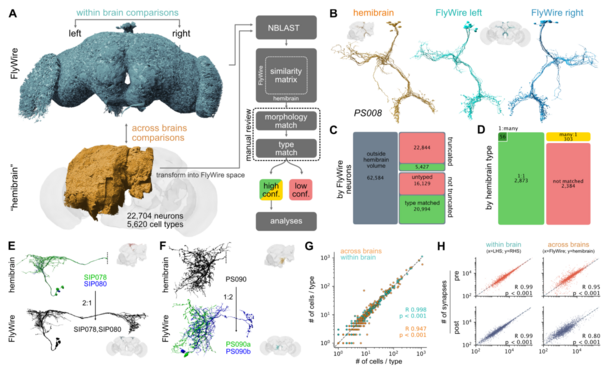
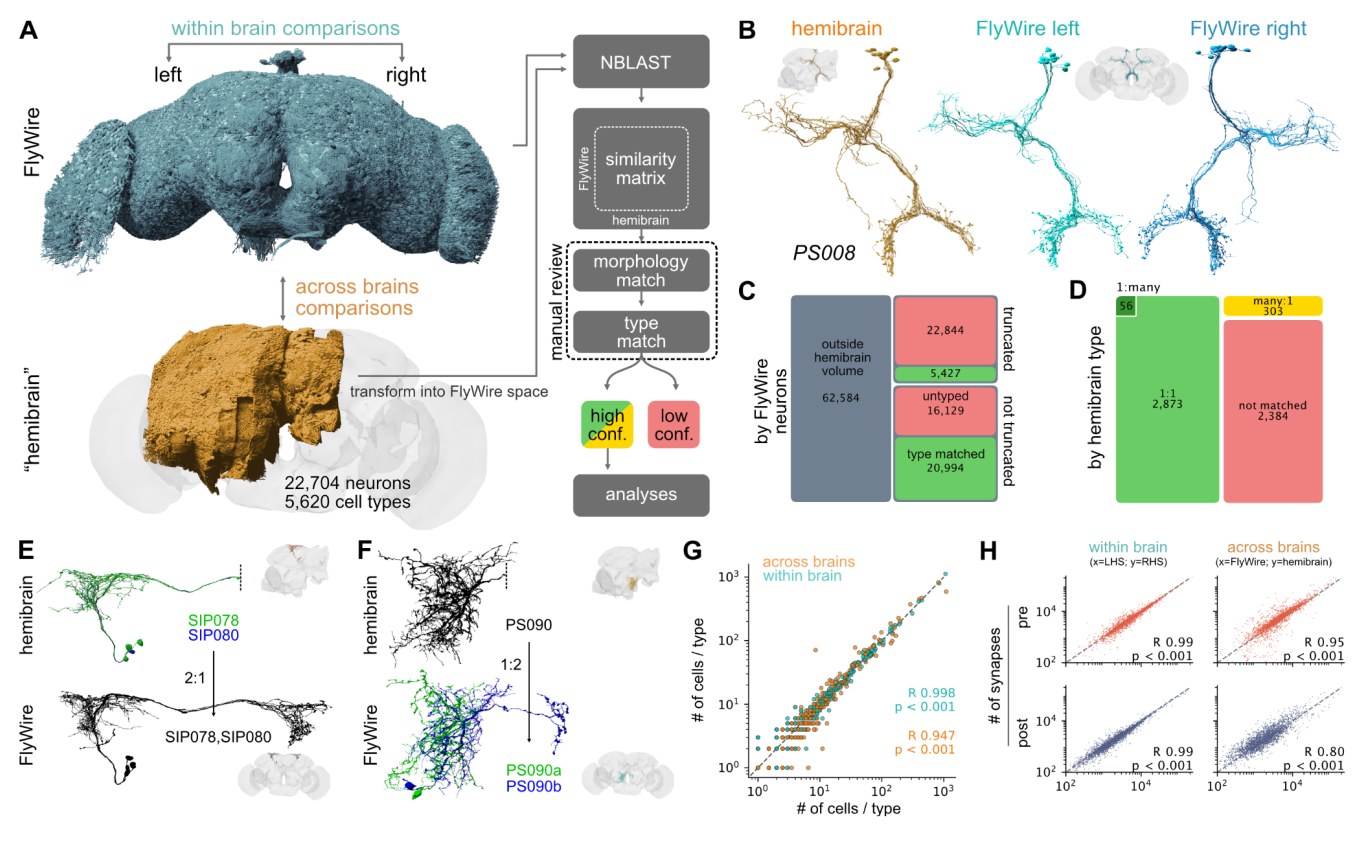
Very important for the field of #connectomics is the measurement of stereotypy in neuronal number and morphology within identified cell types–most neurons in the #Drosophila brain are uniquely identifiable and stereotyped.
The stereotypy is very strong across brains – these are excellent news for experimental robustness, i.e., mapping circuits in one brain and performing behavioral and functional experiments in many others.
#devbiol #neuroscience #drosophila #connectomics
Albert Cardona · @albertcardona
1846 followers · 3078 posts · Server mathstodon.xyz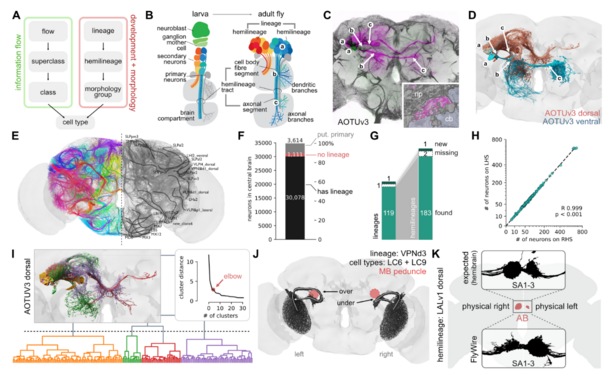
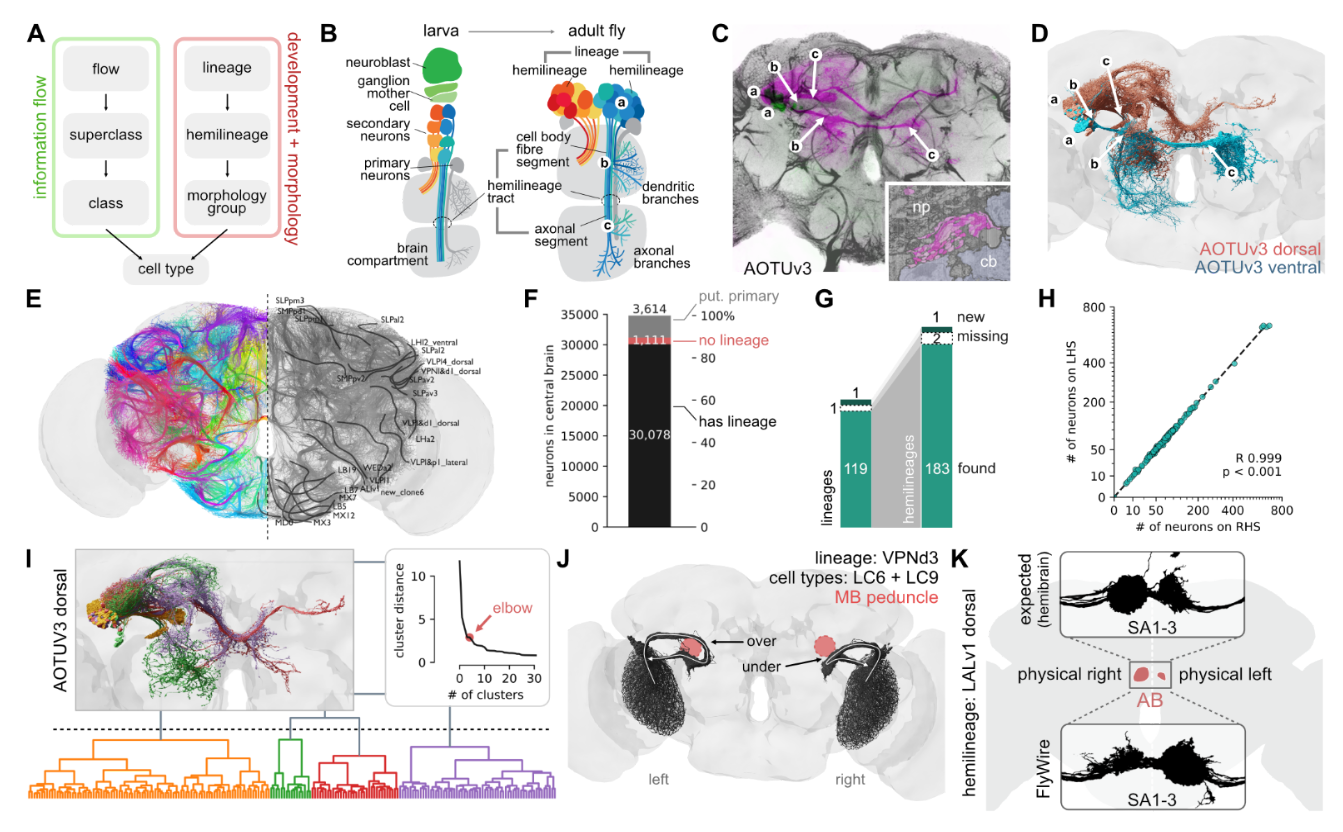
"A consensus cell type atlas from multiple connectomes reveals principles of circuit stereotypy and variation", by Schlegel et al. 2023 (Greg Jefferis lab at #MRCLMB in collaboration with the Bock, Murthy, and Seung labs, and also Volker Hartenstein)
Interesting to me in particular, and here I see the hand of Volker Hartenstein (my postdoc adviser!), is the annotation of developmental units: the neuronal lineages (Fig 2 below).
#devbiol #neuroscience #connectomics #drosophila #MRCLMB
Albert Cardona · @albertcardona
1846 followers · 3077 posts · Server mathstodon.xyz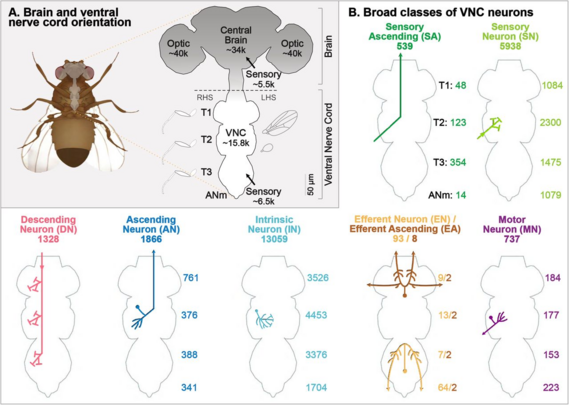
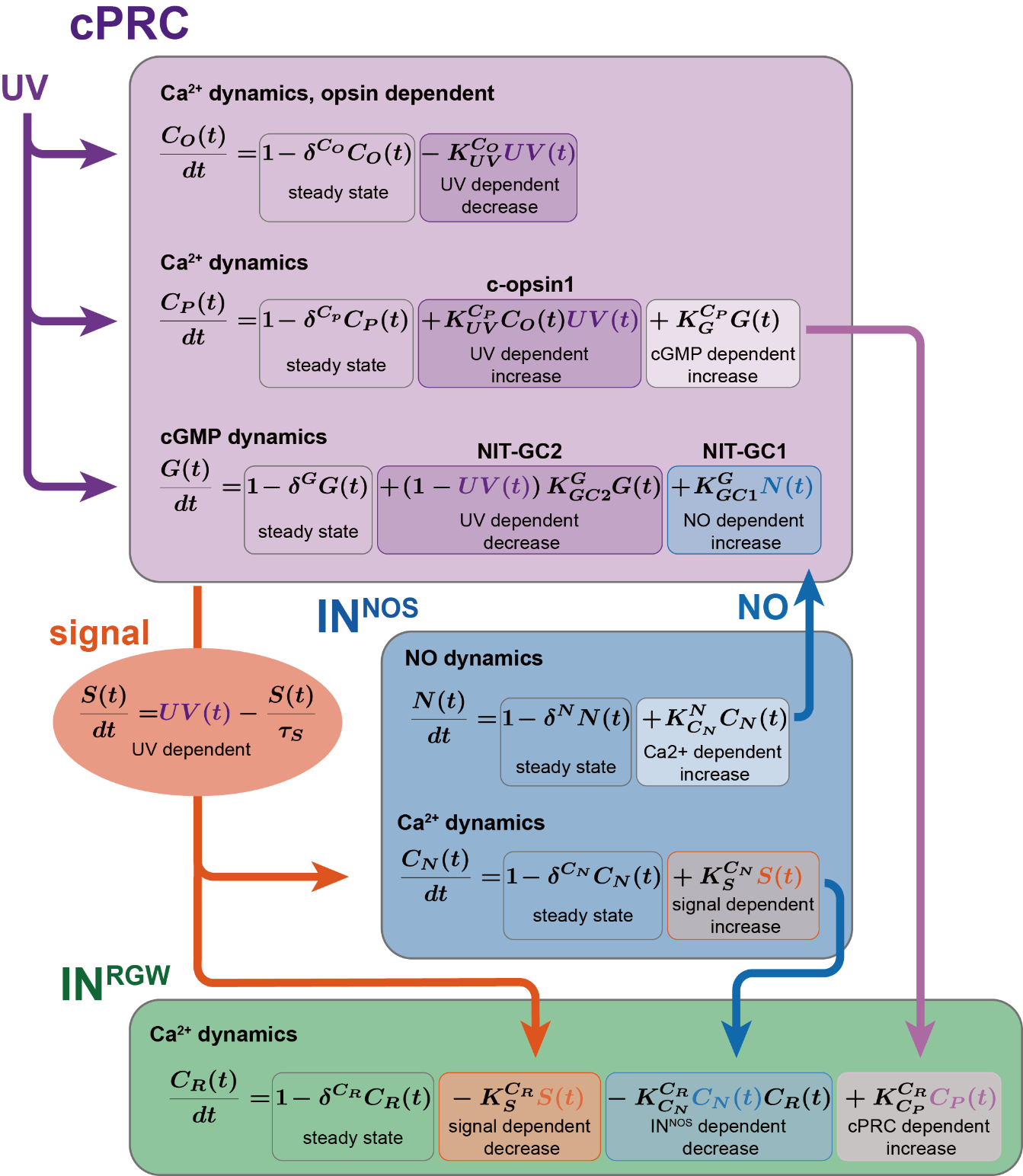
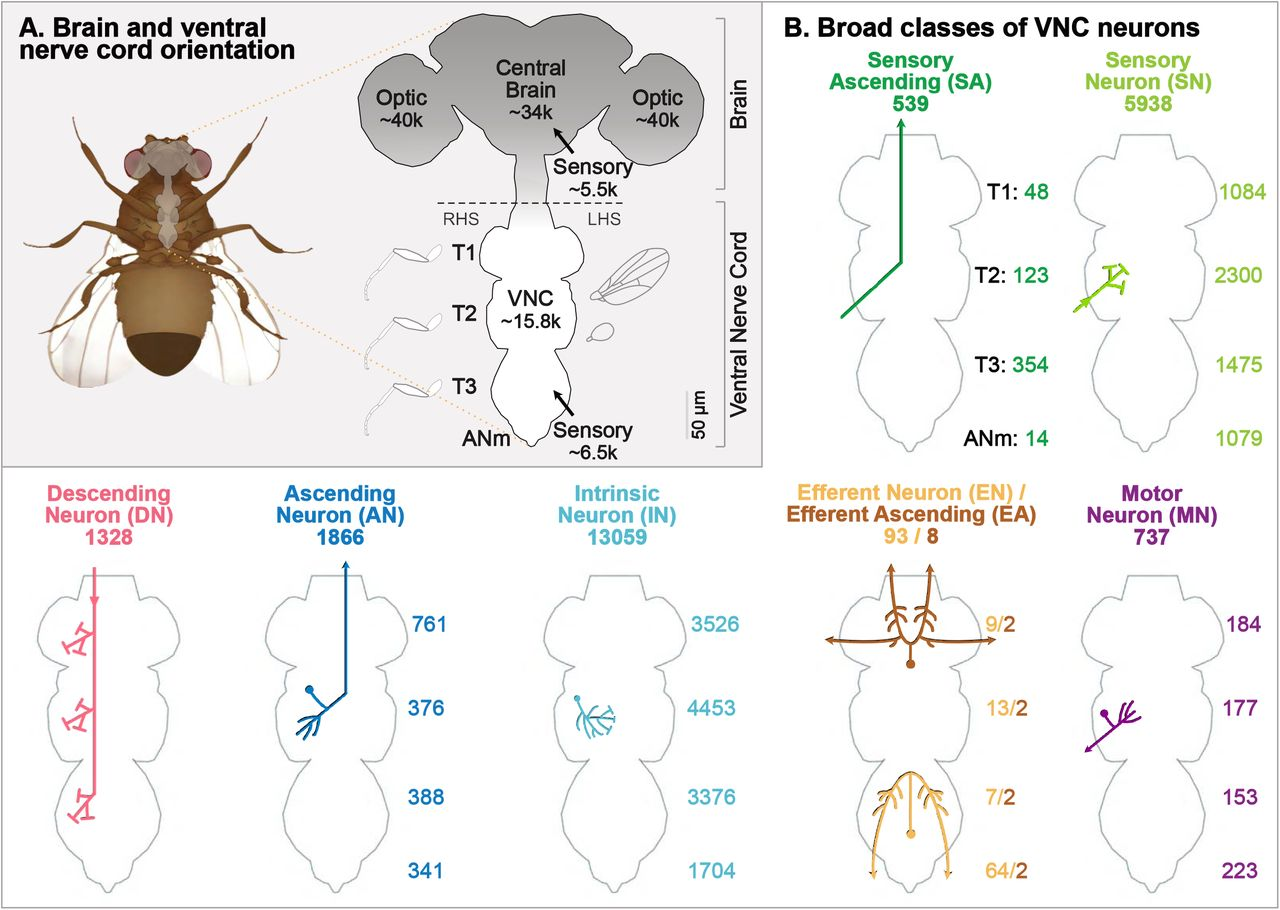
"Systematic annotation of a complete adult male Drosophila nerve cord connectome reveals principles of functional organisation", by Marin et al. 2023 (Greg Jefferis lab at #MRCLMB in collaboration with #HHMIJanelia and others).
https://www.biorxiv.org/content/10.1101/2023.06.05.543407v1
On the analysis of the #Drosophila male adult nerve cord (#MANC), reconstructed from #VolumeEM by Takemura et al. 2023 (preprint still pending to come out).
#connectomics #neuroscience #volumeem #manc #drosophila #HHMIJanelia #MRCLMB
Albert Cardona · @albertcardona
1840 followers · 3031 posts · Server mathstodon.xyz@ginapoe Welcome! Note that here hashtags can be followed, for example #neuroscience, #fMRI or #connectomics. And since search is mostly limited to usernames or hashtags, it's customary to add hashtags to posts so as to make them discoverable.
#connectomics #fmri #neuroscience
Albert Cardona · @albertcardona
1836 followers · 3016 posts · Server mathstodon.xyzThanks very much. Now I have to find samples of Harpegnathos saltator gamergate ants at the 3 stages of brain size for whole brain comparative #connectomics!
If someone wants to join in as a PhD or postdoc on this topic I am game.
#entomology #ants #neuroscience #connectomics

Philipp Schlegel · @uni_matrix
78 followers · 110 posts · Server qoto.orgWe are hiring! The fly connectomics group is looking for up to 2 new research assistants and up to 2 new postdocs. Come join us in beautiful #Cambridge - we have a great team and exciting new #neuroscience projects in the pipeline! #connectomics #opensource #drosophila
For details please see these links:
Closing date is July 6th.
Boosts would be very much appreciated!
#neuroscience #Drosophila #cambridge #connectomics #opensource