
Colin M. Ford · @colinmford
692 followers · 1673 posts · Server typo.socialSo what is the consensus on if you have combining accents in a monospace typeface... should they be zero width, or does EVERY glyph need to be the mono width? #fontdev
Colin M. Ford · @colinmford
564 followers · 911 posts · Server typo.socialSo I've heard overlapping components in a hinted TT font is a big No — this comes up a lot in, for example, the `ç`, which usually has a `cedilla` component overlapping the `c` — but I've never seen an issue caused by overlapping components! But maybe I haven't been paying close enough attention.
Does anyone have an example of when overlapping components caused some sort of rendering issue?
Colin M. Ford · @colinmford
541 followers · 798 posts · Server typo.socialQuestion, should the x/y min/max values found in a #VariableFont <head> table only match the min/max values of the default instance (i.e. the font whose outlines are in the <glyf> table), or should it reflect the min/max values of the whole variable font?

JTD Type :verified: :verified: · @JTDType
151 followers · 30 posts · Server typo.social#fontdev question for everyone. Is the standard now to have the hhea values and the OS/2 values match?
I know it used to be common to have the OS/2 ascender value be the same as the value we but as the glyph dimension but this results in inconsistencies between mac and windows, right?
Colin M. Ford · @colinmford
464 followers · 600 posts · Server typo.social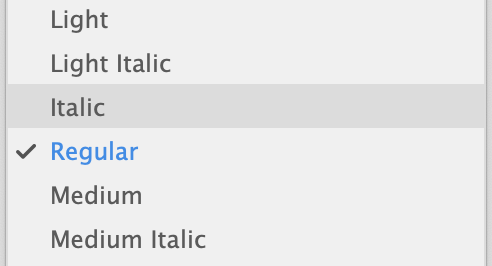
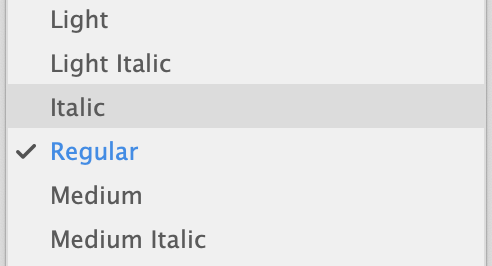
For some reason the Regular and Italic in the font I'm working on are in reversed order in Adobe apps... name tables are normal, pretty much the same as other fonts which are working, italic bits are set, all tests passing... any idea of other things to check?
JTD Type :verified: :verified: · @JTDType
138 followers · 23 posts · Server typo.socialCan anyone who’s familiar with Designspace 5.0 tell me how I can get an upright master and an italic (oblique) master to generate a single variable font? It seems using <axis-subset /> it’s an either/or situation.
Colin M. Ford · @colinmford
458 followers · 539 posts · Server typo.socialCan someone please update me on CFF2? Is it… usable/stable? Can it be used realistically outside of Adobe apps? Any reason not to offer it to customers (alongside typical VF-TTFs of course)? Is it better to use AFDKO or FontMake for CFF2 fonts? Anything else I should know?
For some reason I’ve been sleeping on CFF2 fonts, would appreciate a schooling!
#font #engineering #fontdev #adobe #cff2 #variablefonts