
GeofCox · @GeofCox
463 followers · 2172 posts · Server climatejustice.socialThis sounds like an interesting event for anyone that liked #GraeberandWengrow 's #DawnOfEverything ...
#graeberandwengrow #DawnOfEverything
GeofCox · @GeofCox
318 followers · 1741 posts · Server climatejustice.social"the sheer size and brutal power of the capitalist behemoth is bewildering"
It is - from one perspective. But there is another.
I know I'm odd, having for many years been immersed in history - not the dates and battles and kings and queens kind, but the how people thought and felt and looked at the world and won their livelihood kind of history.
So I was thinking about an old oral history study - 'Quarry Roughs' by Raphael Samuel - that is about how part of an Oxfordshire UK village, right up to the First World War, refused to get into wage labour, and instead carried on getting a living from growing and grazing on the remaining common land, poaching and collecting seasonal wild foods (literally 'hunting and gathering'), and doing casual work for cash in hand. Just the sort of mixture, in fact, that #graeberandwengrow see as typical of human life for thousands of years (as opposed to agriculture suddenly replacing hunter-gatherers). But this was in the very heart of British Imperialism at its absolute height.
So I've been wondering if capitalism really is that strong. Do we naturally take to its exchange relations, wage labour, etc, in our family life, with our friends and neighbours and local communities? Or is our 'natural' inclination to freely share and co-operate?
But apart from this businesses are everywhere, aren't they?
I agree – but ‘the private sector’ is not one thing. Mainly, it’s small businesses (around 95% of all UK businesses have less than 10 employees, and 75% have no employees at all); it’s also anti-capitalist but market-oriented organisations like co-operatives and social enterprises; and it’s civil society, much of which also trades. Oh, and comparatively few middle-sized, and even fewer enormous ‘shareholder value’ capitalist behemoths.
And here’s the thing: most small business is not really ‘capitalist’ at all – it is not very different from traders, artisans, musicians, etc, that worked in pre-capitalist economic systems. In the small business development/investment world, practitioners always try to distinguish ‘growth’ and ‘lifestyle’ businesses – they are looking for the actually rare ‘growth businesses’ that will repay their input. But most small businesses are in fact ‘lifestyle businesses’ – people that want to make a living doing something they love, and hopefully are good at, that serves and is pretty integrated in a local (or online) community, and has no desire to either grow too big or make vast fortunes. Such businesses would be sustainable in an economy where money actually had the ‘means of exchange’ function most people think it has. Many of these 'lifestyle businesses' are really rejecting capitalism - the discipline of wage-labour, the elevation of profit above enjoying your work, your life - just as surely as the 'Quarry Roughs' consciously rejected it.
Yes - there are a few thousand 'shareholder value' capitalist behemoths in the world, and they own many politicians - and they have in many places succeeded in marketising our social lives with their mass media and cloned high streets - and our own bodies with their 'you don't look right but this product will fix you' propaganda - but everywhere, many of us see through it, refuse it - and we have proven - and are proving ourselves strong too.
GeofCox · @GeofCox
304 followers · 1698 posts · Server climatejustice.socialThe thing about the Enlightenment - apart from the contention of #graeberandwengrow that it was partly inspired precisely by Europeans' encounters with indigenous peoples - is that it was primarily the expression of the ideology of nascent capitalism - not of democracy and human rights in themselves, but only insofar as they opposed the old order of feudalism (monarchy, aristocracy, church, etc).
The great European Enlightenment thinkers like Locke and Voltaire, as well as the US Founding Fathers, accepted slavery. Locke was involved in drafting a state constitution which rejected universal suffrage - actually even white male 'universal' suffrage.
When enlightenment writers refer to democracy or free speech or human rights in general they don't mean everybody - what they really mean is the rights of a certain class and colour and sex - property-owning white men. Hence the American electoral college system was quite openly - explicitly - designed to prevent any power passing to the people in general.
And it's still easy to expose this partiality of Enlightenment 'liberal democracy', by asking why its supposed core values only extend to parliamentary elections, not to say the insides of firms and other organisations?
The fight for real democracy and human rights, both in government and other areas of life (the co-operative movement, etc) has been carried on for the last 250 years, by people like Fanon, largely AGAINST the defenders of Enlightenment ‘liberal democracy’.
ombra · @ombra
79 followers · 482 posts · Server mstdn.social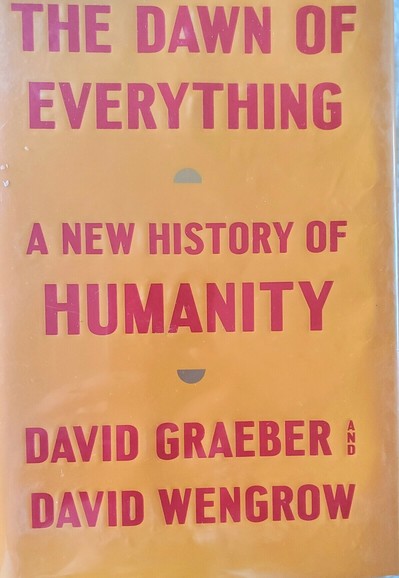
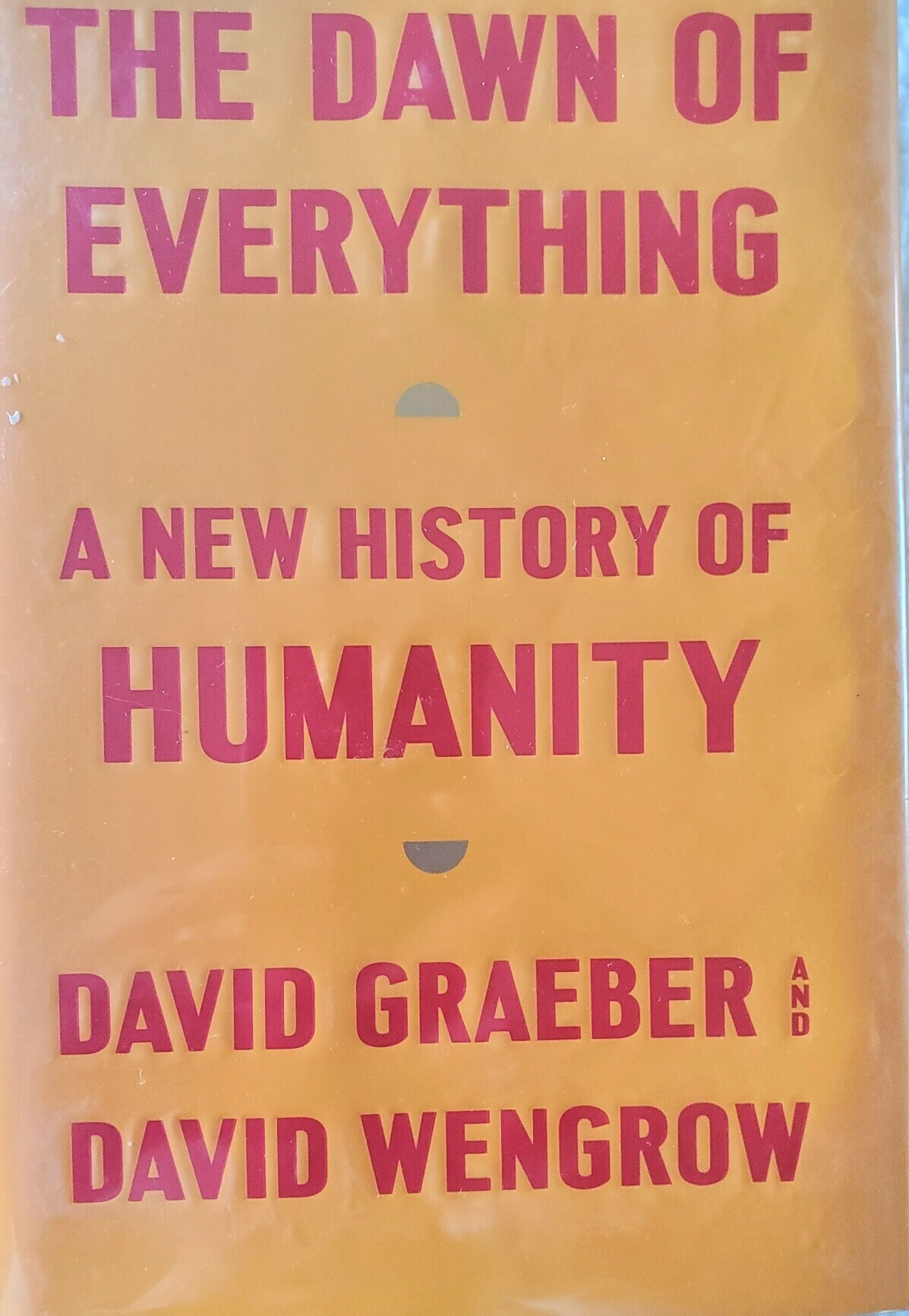
@SallyStrange @jamiestl They wrote some kind of summary at the end of each chapter. Maybe starting with these it's easier😉
#graeberandwengrow