
Thib · @thibaultamartin
749 followers · 2167 posts · Server mamot.frAs discussed earlier, and according to @kylerankin, Pursim plans to use an OpenPGP sim-sized smartcard to perform some of the protections and functions of an HSM or Secure Enclave, but in a way that users can control (because you can swap cards yourself).
For other protections like for system integrity, Purism team is discussing the best way to incorporate a system like Heads on the Librem 5.
Thib · @thibaultamartin
749 followers · 2167 posts · Server mamot.frErratum: I initially published that the phone would sport an OLED screen, but it is a LCD screen.
The error is mine, and not Purism's.
Thib · @thibaultamartin
749 followers · 2167 posts · Server mamot.frLinux 4.18 with a fully free software graphics stack on imx8 using #etnaviv.
Video courtesy of Purism's Guido Günther.
Thib · @thibaultamartin
749 followers · 2167 posts · Server mamot.frPurism chose to support @matrix as its Ent-to-End-Encrypted Instant Messaging of choice for the Librem 5.
@matrix's server software Synapse is currently being audited by the @ANSSI (National Cybersecurity Agency of France).
The ANSSI contributes to Matrix as it was also chosen as a base for governmental E2EE messaging.
Thib · @thibaultamartin
749 followers · 2167 posts · Server mamot.frSince the Librem 5 uses modules for baseband and WiFi and these take up significant space and since the iMX8M is not available as POP (package on package) the PCB will become pretty large.
The Librem 5 battery will likely be kind of sandwiched between display and PCB so the full area is available for the battery
It will be a user replaceable battery: not soldered to the board nor glued into the case, but will probably involve a couple minutes and a tool to replace it.
Thib · @thibaultamartin
749 followers · 2167 posts · Server mamot.fr
Early mockups of the Librem 5 screens. Those are work in progress, and can still change
Thib · @thibaultamartin
749 followers · 2167 posts · Server mamot.frTravel related threat-models are considered seriously for the Librem 5.
The Librem 5 developer kit will have 3 slots:
- one for a smartcard (containing the GPG keys)
- one for a SIM card (linked to the user's identity)
- one for a SD card (containing personal data).
While there is no commitment to it, it is envisioned that those will be removable on the actual phone, which would lower the risk when traveling.
Thib · @thibaultamartin
749 followers · 2167 posts · Server mamot.frPurism will host its own flatpak repository to keep the FSF's endorsement for #PureOS: only Libre (Free) Software will be distributed through this repository.
Thib · @thibaultamartin
749 followers · 2167 posts · Server mamot.frBasedband support for the Librem 5 will be performed through ModemManager for its ease of integration with GNOME, although oFono was toyed with too.
Thib · @thibaultamartin
749 followers · 2167 posts · Server mamot.fr
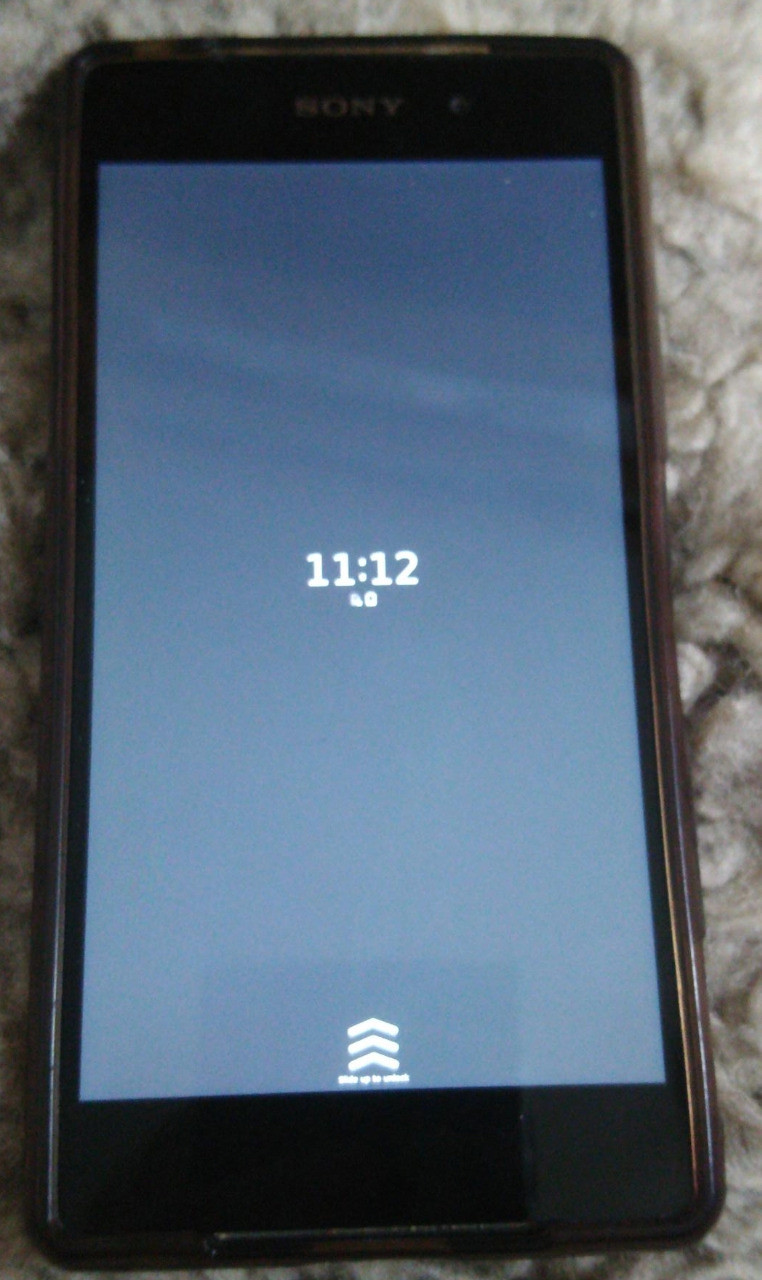
Early images of @Purism Librem 5's prototype OS are based on Debian testing. This means phones supported by mainline Linux can run it.
It is to be noted that Purism will focus on FSF-endorsed PureOS and RYF-certified hardware, and does not support non-free hardware. This is not the intended used of those dev images.
Here the Librem 5 developer images running on Xperia Z2. @opendata@niu.moe who ran it expects it to run on the Xperia Z2 tablet, Z3, Nexus 5 and probably @Fairphone 2 too.
Thib · @thibaultamartin
749 followers · 2167 posts · Server mamot.frThe Librem 5's thickness will be around 14mm, but this has yet to be confirmed
Thib · @thibaultamartin
749 followers · 2167 posts · Server mamot.frThe i.MX.8M board used for the Librem 5 sports a hardware decoding and encoding device. Whether it requires non-free firmware or driver is being studied. If it required a proprietary driver, the device would not be used, as it would prevent the RYF certification.
Thib · @thibaultamartin
749 followers · 2167 posts · Server mamot.frNFC is being considered for the Librem 5. This would require a plastic body instead of an aluminium one, as initially planned. This is being discussed, and the Librem 5 may end up without NFC support.
Thib · @thibaultamartin
749 followers · 2167 posts · Server mamot.fr


Latest Librem 5 design to date.
The camera is a bit higher as compared to what was previously designed, and the Librem 5 branding is now on the side for discretion.
Thib · @thibaultamartin
749 followers · 2167 posts · Server mamot.fr@Purism is confirming hardware component availability with its manufacturers. Once everything is finalized there will be a fairly firm Librem 5 delivery date.
The current and most important component, the i.MX8 CPU, has a silicon bug. Purism is working with NXP to pin down dates.
Thib · @thibaultamartin
749 followers · 2167 posts · Server mamot.frThe applications on the Librem 5 will be distributed both through Flatpacks and Debian packages.
The recommended way will be through Flatpacks, but PureOS being debian-based, .deb packages will be supported. Docs are incoming for developers. A GUI for end-users will be designed later: no 'App store' has been designed so far
Thib · @thibaultamartin
749 followers · 2167 posts · Server mamot.frThe Librem 5 is likely to support disk encryption through LUKS from day 1 according to @Purism 's @kylerankin The virtual keyboard would not be a problem: one of rooston, sdl or plymouth will be used to gather the user input.
Thib · @thibaultamartin
749 followers · 2167 posts · Server mamot.frThe big steps of the Librem 5 hardware making consist of:
1. Early hardware selection and proto to confirm the choices. Resulted in narrowing the choice to the iMX6.m and iMX8.m boards
2. Further testing on the selected board. Resulted in selecting the iMX8.m board
3. Modules selection to fit on the board, with the Freedom, power usage, and availability constraints
4. Design and wiring of the hardware
5. Production and shipping
The dev kit is between 4&5, and the phone between 3&4
Thib · @thibaultamartin
749 followers · 2167 posts · Server mamot.frAndroid support on the Librem 5 is low on the list: @Purism intends to drive to a different approach. There is true interest from the community in coding native apps.
Any GNU/Linux app will be able to run on the Librem 5: the only issue will be the GUI. For GTK+ 3 based apps, @Purism offers a lib, called libhandy, with new GTK+ widgets to ease the transition. The long term goal is to get libhandy merged in GTK+ 4
Thib · @thibaultamartin
749 followers · 2167 posts · Server mamot.frThe Librem 5 developers docs now have a FAQ page: https://developer.puri.sm/FAQ.html