
Gladwyn d’Souza · @godsouza
171 followers · 3056 posts · Server sfba.social#EmbodiedCarbon: Sand and gravel makes up half of all the materials #mined in the world. Globally, 50bn tonnes of sand and gravel are used every year – the equivalent of a wall 27 metres high and 27 metres wide stretching round the equator. It is the key ingredient of #concrete and #asphalt.
#DeterioratingCarbonSinks #RemoveRoads #CarFreeCityCentersPlease #UnbundleParking
#embodiedcarbon #mined #concrete #Asphalt #deterioratingcarbonsinks #removeroads #carfreecitycentersplease #unbundleparking

Spaceflight 🚀 · @spaceflight
1632 followers · 1487 posts · Server techhub.social
#LAtimes 📆 Sept. 4, 2022 "Two #asteroids in the belt between #Mars and #Jupiter 🪐 have more #iron, #nickel and #cobalt than exists on #Earth. Ultimately these products could be not only #mined ⛏️ but also #processed in #space, reducing #pollution of both the #air and #water on #Earth" https://www.latimes.com/opinion/story/2022-09-04/commercialization-space-earth
"Both #NEAs have surfaces with 85% #metal such as iron and nickel and 15% silicate material, which is basically #rock" https://news.arizona.edu/story/mini-psyches-give-insights-mysterious-metal-rich-near-earth-asteroids
Picture: #RASSOR on #Ceres https://commons.wikimedia.org/wiki/File:Prototype-d%27excavateur-de-la-NASA--RASSOR.jpg
#latimes #asteroids #Mars #jupiter #iron #nickel #cobalt #earth #mined #processed #space #pollution #air #water #neas #metal #rock #rassor #ceres #asteroidMining #spacemining #spacerobot

DoomsdaysCW · @DoomsdaysCW
598 followers · 5825 posts · Server kolektiva.socialThere is precedent for #ThackerPass resistance!
Navajo and Hopi tribes campaign to remain on Black Mesa lands and protect it from coal mining, United States, 1993-1996
"The land on the Big Mountain reservation has been disputed by the U.S. Government and the Navajo and Hopi tribes since 1882. This area in Black Mesa, Arizona, which was extremely rich in sulfur coal deposit, attracted mining companies and the government due to the potential profit. Mining began on the Navajo and Hopi land and started to increase greatly by the 1970s. Congress signed a relocation act in 1974, which would allow one company, Peabody Coal, to mine this area uninhibited. The reservation lands of Black Mesa were then to be used as strip mining sites for private U.S. mining companies.
"Since 1974, Navajo and Hopi peoples received a lot of pressure from the government and mining companies, Peabody Coal in particular, to relocate. The U.S. government issued laws reducing Navajo and Hopi ability to keep livestock on their land. They also offered $5000 to those who willingly gave up their homes and moved elsewhere. Despite all the government pressure, by the 1990s, there still remained about 300 Navajo and Hopi families who had refused to leave.
"Despite the government pressure, #Navajos and #Hopis, already sharing government protected land, lived amicably and struggled beside one another in order to protect the land their people shared. The struggle between the government and the #indigenous tribes continued through the '90s but escalated on 5 August 1993 when a federal judge ordered the remaining Navajo to either relocate or sign a lease that would give them squatter’s rights on the land for the next 75 years. The Navajo ignored the order and continued living on the land—neither relocating nor signing a lease.
"From 1993 to 1996, the 300 Navajo families stood their ground and occupied their land against government wishes. They also ignored the continued orders demanding that they either choose to relocate or to forfeit their rights to the land and become squatters. In response, in November of 1993, the Bureau of Indian Affairs (BIA) began daily raids of livestock in order to push out the remaining Navajo and charged increasingly large sums to release the livestock.
"In the meantime, #PeabodyCoal had #mined the area since 1968 and continued to do so as the tribes fought to stay on their land. To transport the coal, Peabody created a slurry pipeline that used natural reserves belonging to the natives. This act dried up fifty springs and #poisoned water, killing livestock and threatening the lives of the Navajo. Navajo elders took actions in order to combat the advancing mining. El Elders Pauline Whitesinger and Roberta Blackgoat, in particular, were known for their decades of resistance, for tearing down fences, for confronting the BIA, and for ignoring official demands and turning away government workers who tried to persuade them off their lands.
"In 1993, Peabody bulldozed at least four Navajo #burial grounds. The Navajo blocked bulldozers with their bodies, tore down fences, turned away government officials, wrote numerous letters and emails, lobbied for government attention, and raised awareness among the Navajo people using the internet and frequent meetings. It is unclear when several of these tactics were employed. In addition, Navajo peoples filed several lawsuits in response to unfair land use by Peabody, for water rights, and against Peabody’s violation of federal #mining laws. Peabody carried on with their normal practices despite objections. Peabody Coal cited studies backed by their own funding that indicated that their mining practices were in no way damaging the environment.
"On 11 March 1996, a federal judge ruled the activity of Peabody as an infringement on human and environmental rights of local residents. Peabody’s pipeline was found guilty of violating the National Environmental Policy Act and the Surface Ming Control Act. Thus, the judge revoked Peabody's mining permit. He found that the tribal councils, the OSMRE, and BIA were disregarding the basic rights of the people in this area for profit's sake. Peabody appealed the decision and continued fighting for reestablishing mining access after this ruling.
"When the deadline, 1 April 1996, finally arrived most of the remaining families had not complied with the courts. The Navajo remained in their original homes, though as many as fifty families had accepted the proposal by the government. The courts took no action against the remaining families.
"On 26 September 1996, the U.S Congress passed the Navajo-Hopi Settlement Act, which would require all Navajo to relocate by 2000. In 1996, a group of Hopi and Navajos travelled to the London Stockholders meeting of Hanson’s ltd. to protest Peabody Coal’s presence in Black Mesa. Lord Hanson ordered his security guards to throw out the tribe representatives. Before doing so, resistance leader, Roberta Blackgoat offered a prayer. Today, families still refuse to acknowledge the various land acts. In regard to Peabody Coal, the Department of Interior Office of Surface Mining (IOSM) granted a permit to Peabody Coal to allow the continuation of operations in Black Mesa on 22 December 2008. However, after reevaluation due to an appeal from Navajo and Hopi peoples, the Department of IOSM withdrew this permit granted to Peabody on 8 January 2010. This was a success for the tribal and environmental organizations."
#EnvironmentalRacism #CulturalGenocide #NativeAmericans
#ThackerPass #navajos #hopis #indigenous #peabodycoal #mined #poisoned #burial #mining #environmentalracism #culturalgenocide #nativeamericans

Johan Roux 🏳️🌈 · @RouxJ
2080 followers · 3041 posts · Server convo.casa
#Ukraine has become the most #mined country in the world - #Sky_News
More than 40% of the entire territory of #Ukraine is mined as a result of hostilities. These are anti-tank and anti-personnel mines, unexploded ordnance.
"It can't even be compared to #Syria or #Afghanistan," Mines Advisory Group spokeswoman #KaterinaTempleton said.
#ukraine #mined #sky_news #syria #afghanistan #katerinatempleton

Crypto Whale · @CryptoWhale
635 followers · 113 posts · Server mastodon.social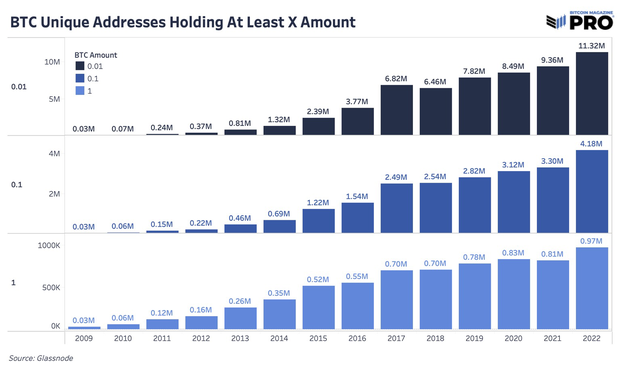
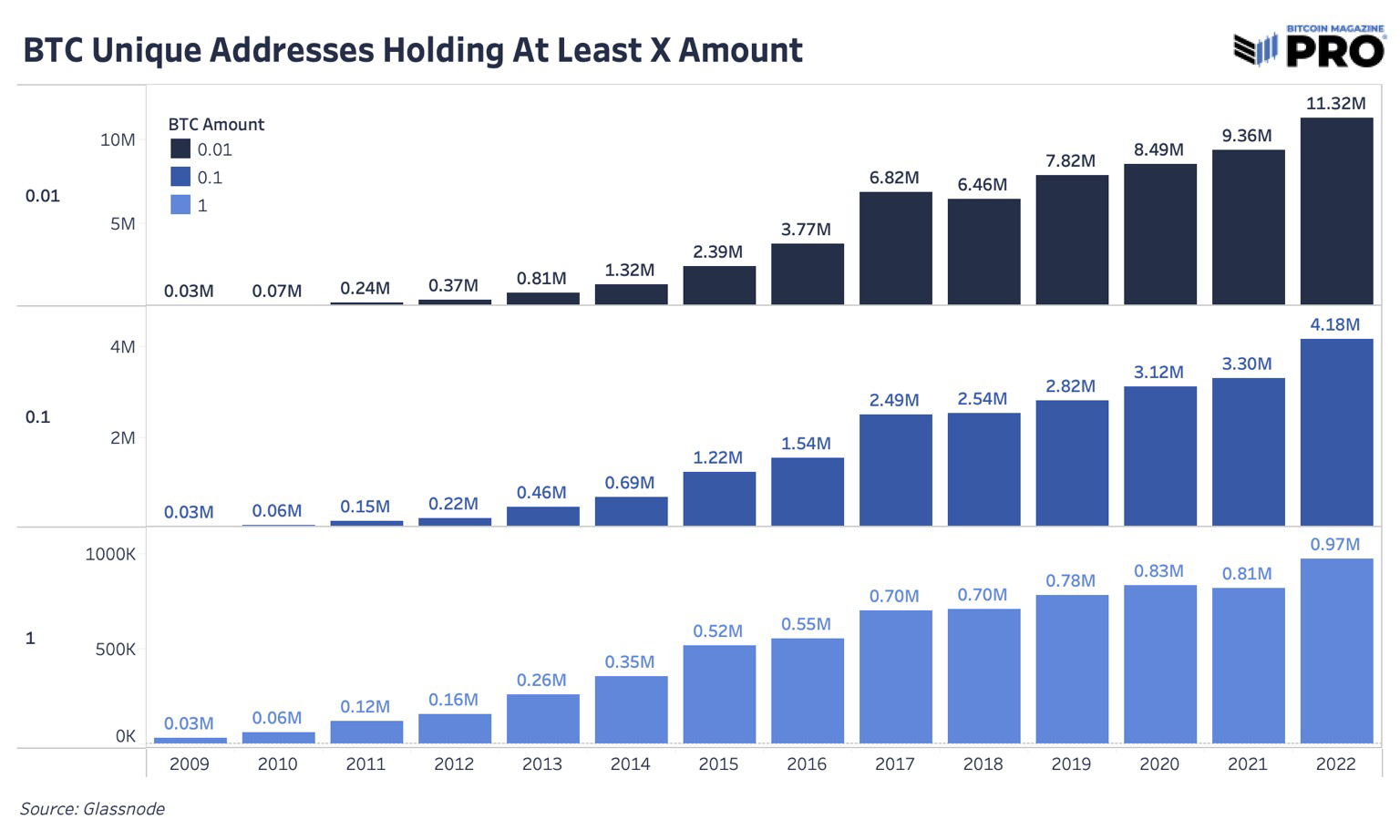
With each passing #day and #block #mined , #bitcoin is more widespread and inclusive. A greater #number of #individuals and #addresses around the #world are #hodling #btc as we move closer to a #future where #wealth and #financial access is more fairly distributed
#day #block #mined #bitcoin #number #individuals #addresses #world #hodling #btc #future #wealth #financial

Anton Gerashchenko 🇺🇦 Backup · @Anton_GerashchenkoBckp
1166 followers · 271 posts · Server mas.to08.12.2022, video:
#Kherson region is one of the most heavily #mined areas in #Ukraine and, I think, the world.
Brave (@tipofthespear42) Ryan #Hendrickson is helping @SESU_UA (The State Emergency Service of Ukraine) to de-mine our land. The job is further complicated by frost.
Thank you, Hero!
📹: tipofthespear42
#hendrickson #Ukraine #mined #Kherson

Unperson ❌ · @WinstonSmith
59 followers · 485 posts · Server techhub.social@zazzoo I don't know what to call it but you're right about #Mastodon being a weak point with a single codebase.
The other thing that is concerning in terms of being a target is lack of #encryption and #public posts being #mined easily either by an #instance set up to do that or externally.
Whatever it is, i hope it's #encrypted and verifiable / audited to be #secure. That's the only future worth investing in IMO.
#Mastodon #encryption #public #mined #instance #encrypted #secure #datasecurity #SocialMedia
Spaceflight 🚀 · @spaceflight
429 followers · 147 posts · Server techhub.social
#LAtimes 📆 Sept. 4, 2022 "Two #asteroids in the belt between #Mars and #Jupiter have more #iron, #nickel and #cobalt than exists on #Earth. Ultimately these products could be not only #mined but also #processed in #space, reducing #pollution of both the #air and #water on #Earth" https://www.latimes.com/opinion/story/2022-09-04/commercialization-space-earth
"Both #NEAs have surfaces with 85% #metal such as iron and nickel and 15% silicate material, which is basically #rock" https://news.arizona.edu/story/mini-psyches-give-insights-mysterious-metal-rich-near-earth-asteroids
Picture: #RASSOR on #Ceres https://commons.wikimedia.org/wiki/File:Prototype-d%27excavateur-de-la-NASA--RASSOR.jpg
#latimes #asteroids #Mars #jupiter #iron #nickel #cobalt #earth #mined #processed #space #pollution #air #water #neas #metal #rock #rassor #ceres

emi · @fanda0808
10 followers · 244 posts · Server mstdn.jp




Johan Roux · @RouxJ
745 followers · 768 posts · Server mstdn.socialAbout 30% of the territory of #Ukraine is #mined - #SerhiyKruk, head of the State Emergency Service.
Spaceflight 🚀 · @spaceflight
297 followers · 120 posts · Server techhub.social#LAtimes 📆 Sept. 4, 2022 "Two #asteroids in the belt between #Mars and #Jupiter have more #iron, #nickel and #cobalt than exists on #Earth. Ultimately these products could be not only #mined but also #processed in #space, reducing #pollution of both the #air and #water on #Earth" https://www.latimes.com/opinion/story/2022-09-04/commercialization-space-earth
"Both #NEAs have surfaces with 85% #metal such as iron and nickel and 15% silicate material, which is basically #rock" https://news.arizona.edu/story/mini-psyches-give-insights-mysterious-metal-rich-near-earth-asteroids
Picture: #RASSOR on #Ceres https://commons.wikimedia.org/wiki/File:Prototype-d%27excavateur-de-la-NASA--RASSOR.jpg
#latimes #asteroids #Mars #jupiter #iron #nickel #cobalt #earth #mined #processed #space #pollution #air #water #neas #metal #rock #rassor #ceres