Alfred R. Baudisch · @alfredbaudisch
784 followers · 1927 posts · Server mastodon.gamedev.place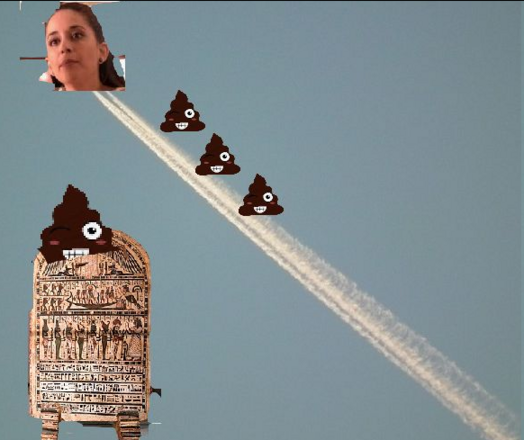
IMO, the best part of language learning is creating mnemonics and memory palaces.
But, they only make sense for you, the creator, because you assign them to a very specific context and personal experience.
Pictured my mnemonics for #Spanish:
- dejando una estela
- dar as largas
#spanish #languages #mnemonic #memory #languagelearning
celery · @celrydoor
38 followers · 405 posts · Server lingo.lolmy friend uses "worm blood" as a #mnemonic for верблюд (verblyud), the Russian word for camel
Alun Kirby · @cyanotype
482 followers · 486 posts · Server zirk.us


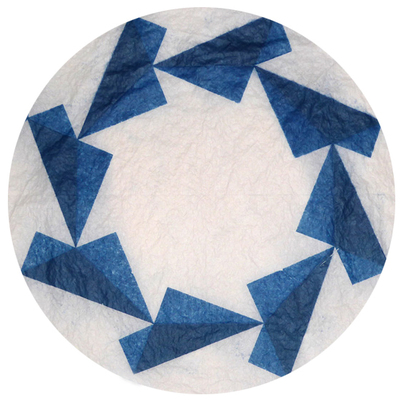
Cyanotype can reveal beautiful detail. The 'grain' is, with the right subject, very fine indeed.
This is a rose leaf. It has been 'scarred' by the visit of a leaf miner.
Physical scars act as mnemonics etched on our bodies, which remind us of certain events.
A scar means we survived and, physically, healed.
What happens to the memory? Does it fade with the scar?
#cyanotype #blueprint #Rose #RoseLeaf #LeafMiner #details #porto #Scar #Mnemonic #Memory #PhilosophyOfMemory
#cyanotype #blueprint #rose #roseleaf #leafminer #details #porto #scar #mnemonic #memory #PhilosophyOfMemory
Tim Mills · @TimPhon
105 followers · 583 posts · Server lingo.lolWent through a unit on animals a while back. For some reason, павук /pavuk/ "spider" was no problem. But the word for "dog", собака /sobaka/ gave me grief.
Nothing like #English
Nothing like #French
Until I realized that it sounds remarkably close to "Chewbacca". Now I'm good. 🐕
#English #French #learningukrainian #mnemonic
Tim Mills · @TimPhon
102 followers · 492 posts · Server lingo.lolWord: далеко
Pronunciation: /daleko/
Meaning: far away
Because that's where you want the Daleks to be: very far away!
#learningukrainian #mnemonic #DoctorWho
Tim Mills · @TimPhon
103 followers · 482 posts · Server lingo.lolThe word "небо" /nebo/ means "sky".
I'm going with "nebula", one of the more magical-looking types of celestial phenomenon, as my reminder.
Tim Mills · @TimPhon
101 followers · 456 posts · Server lingo.lolHere's a new type of memory trick. For the word площа /ploʃt͡ʃa/ "square", I first noticed the letter shapes.
The п and щ are all right angles and straight lines, and even л is squarish.
The dictionary tells me this word covers the geometrical sense too, but Duolingo has so far only introduced the "town square" sense, so I'm also drawing on the /pl/ onset, like in "plaza", to help.
Glyph shape as well as phonotactic mnemonics. Fun! 🤓
Tim Mills · @TimPhon
101 followers · 450 posts · Server lingo.lolHere's a trifecta that Duolingo just pointed out to me:
друзі, дружба, дружина
/druzi druʒba druʒɪna/
friends, friendship, wife
This by way of teaching me the word for "friendship" - I already had the other two.
😍 It's just so sweet! So perfect!
(If only the word for "husband", чоловік /t͡ʃolovik/, followed a similarly romantic line. It's just the word for "man".)

Brood Tea · @hinano
16 followers · 788 posts · Server mstdn.ioeasy #mnemonic to remember #semanticversioning #development
~ = water/river = patch
^ = mountain = minor
* = stars/sky = major
#mnemonic #semanticversioning #development
Tim Mills · @TimPhon
99 followers · 392 posts · Server lingo.lol@celrydoor It feels like Ukrainian is giving my English brain better mnemonics for those. I get грім = /grim/, and then кіт = /kit/ for kitty (cat). I think it'd be more work with гром and кот.
But then, Ukrainian has кішка /kiʃka/ for a specifically female cat, and I think коти /kotɪ/ for cats, and I don't have an easy memory trick for either of those. 🤷♂️
Tim Mills · @TimPhon
98 followers · 386 posts · Server lingo.lolI thought this would take forever, but it just hit me. The word is народне /narodne/ (adjective, so that last vowel changes to match the noun). It means "folk", as in народне пісня "folk song".
And it just hit me: it sounds something like part of the folksy song lyric "o{n the road} again". Yes, I know it's a stretch, but it hit me so strongly that I think it might stick.
I'll take my mnemonics where I can get them!
Tim Mills · @TimPhon
98 followers · 385 posts · Server lingo.lolI think that грім /grim/ is a good word for "thunder", based on our dog's reaction to the recent thunderstorms we've had.
Tim Mills · @TimPhon
97 followers · 255 posts · Server lingo.lol@celrydoor Although, since you mentioned apples, I have to point out the names of the two most common fruit in my household.
I have no problem with апельсин /apelʲsɪn/ 🍊 - it's memorably contrary for my English ears.
But I keep forgetting the word яблуко /jabluko/ 🍎. Any suggestions for a memory trick there are welcome!
(Third most common fruit in our house is банан /banan/ - no problem at all!)
Tim Mills · @TimPhon
96 followers · 243 posts · Server lingo.lolWorking in the months of the year now. Here goes ...
Червень /t͡ʃervenʲ/ "June".
Sounds a bit like "cherry" at the start. We get cherries in June. 🍒 (Please don't @ me about the actual season - I'm doing language learning, not horticulture.)
I use the same mnemonic for червоне /t͡ʃervone/ "red".
Tim Mills · @TimPhon
96 followers · 239 posts · Server lingo.lol@Neverfadingwood Cool! I didn't know that about Polish. Thanks for the tip!
I believe the letter "г" represents /g/ in Russian too. So for a Ukrainian verb like фотографувати /fotohrafuvati/ "to take pictures", the stem is easier to remember as /fotograf/. I then think of a Ukrainian "accent" turning /g/ to /h/.
There are other examples of this that I've come across, so this is a useful strategy more generally.
Tim Mills · @TimPhon
95 followers · 226 posts · Server lingo.lolHere's the first Ukrainian word that I have (sort of) also encountered in Russian: машина /maʃɪna/ "car".
The mnemonic I use is "machine".
The kind-of-Russian connection is that in one of the John Wick movies, Keanu Reeves says something in Russian that sounds like машина and gets subtitled as "car". Very exciting to notice that!
Tim Mills · @TimPhon
94 followers · 221 posts · Server lingo.lolI've enjoyed finding mnemonics for remembering words in Ukrainian. One of the earliest ones was шапка /ʃapka/ "hat".
What helps me there is French chapeau /ʃapo/.

Grammargeddon Angel · @GramrgednAngel
244 followers · 1205 posts · Server zirk.us#Mnemonic for WEIRD and WIELD
WE are WEIRD
WIELD it WILDLY
I learned those from a former editor of DRAGON Magazine during my years at TSR, Inc. Never forgot them. Use them often.

Jesse Meyerson · @JesseMeyerson
2 followers · 7 posts · Server mstdn.social