Kanold lab · @kanoldlab
283 followers · 12 posts · Server mastodon.worldNew preprint: Didhiti shows that there is crossmodal plasticity in the pre-critical period. Early enucleation in mice leads to changes in the auditory cortex before ear opening.
https://www.biorxiv.org/content/10.1101/2023.02.21.529453v1
#neuroscience #crossmodal #blind #hearing #neuronewpaper #auditory #cortex
#neuroscience #crossmodal #blind #Hearing #neuronewpaper #auditory #cortex

Serge Dumoulin · @dumoulin
277 followers · 58 posts · Server neuromatch.socialNull-findings are important, but more difficult to prove and publish. Here is a null-finding #NewPaper / #NeuroNewPaper.
Line-scanning functional #MRI has both high spatial and high temporal resolutions, about 200 micrometers and 200 milliseconds. This is achieved by sacrificing spatial coverage, akin to a virtual BOLD electrode through the brain. Previously, we implemented a human line-scanning sequence using gradient-echo #BOLD #fMRI at 7T.
Spin-echo MRI sequences offer several advantages over gradient-echo MRI sequences, for example much improved spatial line-selection and microvascular specificity. However, despite many efforts, especially from the lead-author Luisa Raimondo, spin-echo line-scanning currently lacks adequate sensitivity for #neuroscience applications.
https://link.springer.com/article/10.1007/s10334-022-01059-7
#newpaper #neuronewpaper #mri #bold #fmri #neuroscience

Albert Cardona · @albertcardona
1523 followers · 1034 posts · Server mathstodon.xyz@summerfieldlab Welcome! Good places to start are these hashtags (which can be followed, just like following people): #neuroscience #NeuroNewPaper #NeuroPaperThread ... and so many more. Tags are the way to discover what's going on without following a thousand people.
#neuropaperthread #neuronewpaper #neuroscience

Ramon Nogueira · @RNogueiraNeuro
29 followers · 11 posts · Server neuromatch.social@chrisXrodgers @StefanoFusi #NeuroPaperThread #NeuroNewPaper
11) Also, I am on the job market this year, so please do not hesitate to reach out if you think I could be a good fit for a theoretical/computational faculty position in your department!
#neuropaperthread #neuronewpaper
Ramon Nogueira · @RNogueiraNeuro
29 followers · 10 posts · Server neuromatch.social@chrisXrodgers @StefanoFusi #NeuroPaperThread #NeuroNewPaper
10) Thanks for reading until the end. Many more details in the main article and supplementary figures. Thanks for the support from our many funding agencies and to the
Center for Theoretical Neuroscience, and the Zuckerman Brain at Columbia University. Please reach out if you have any questions or suggestions!
#neuropaperthread #neuronewpaper
Ramon Nogueira · @RNogueiraNeuro
29 followers · 9 posts · Server neuromatch.social
@chrisXrodgers @StefanoFusi #NeuroPaperThread #NeuroNewPaper
9) Finally, we fit RNNs to perform an artificial equivalent of the task and found that the geometry of the representations is determined by the difficulty of the task, and RNNs trained on complex tasks can still form representations that can generalize to unseen conditions
#neuropaperthread #neuronewpaper
Ramon Nogueira · @RNogueiraNeuro
29 followers · 8 posts · Server neuromatch.social@chrisXrodgers @StefanoFusi #NeuroPaperThread #NeuroNewPaper
8) This organization was not a simple consequence of somatotopy because all whiskers were represented in all columns (see also Rodgers et al 2021). This representational geometry can be useful for balancing generalization and flexible behavior
#neuropaperthread #neuronewpaper
Ramon Nogueira · @RNogueiraNeuro
29 followers · 7 posts · Server neuromatch.social
@chrisXrodgers @StefanoFusi #NeuroPaperThread #NeuroNewPaper
7) We realized that instead of a random and disorganized mixed code, the geometry of representations in S1 was best characterized by a low-dimensional scaffold with small perturbations towards higher dimensions. An approximately disentangled representation in orthogonal subspaces
#neuropaperthread #neuronewpaper
Ramon Nogueira · @RNogueiraNeuro
29 followers · 6 posts · Server neuromatch.social
@chrisXrodgers @StefanoFusi #NeuroPaperThread #NeuroNewPaper
6) Populations of S1 neurons were fit with encoding models of varying degrees of flexibility. We found that S1 activity was best explained by models that allowed for non-linear mixed selectivity rather than pure or linear mixed selectivity
#neuropaperthread #neuronewpaper
Ramon Nogueira · @RNogueiraNeuro
29 followers · 5 posts · Server neuromatch.social
@chrisXrodgers @StefanoFusi #NeuroPaperThread #NeuroNewPaper
5) We built a simulation of the task and changed the general parameters of the shapes. Linear integration was also sufficient for a variety of shapes, distances, angles, and sizes. Non-linear integration of touches was necessary for tasks with complex semantics of groups of shapes
#neuropaperthread #neuronewpaper
Ramon Nogueira · @RNogueiraNeuro
29 followers · 4 posts · Server neuromatch.social
#NeuroPaperThread
#NeuroNewPaper
@chrisXrodgers @StefanoFusi
4) We monitored whisker movement and contacts and used linear and non-linear classifiers to decode the identity of the shape and the choice of the animal on a trial-by-trial basis. We found that linear integration is sufficient for both shape’s identity and the animals’ choice
#neuropaperthread #neuronewpaper
Ramon Nogueira · @RNogueiraNeuro
29 followers · 3 posts · Server neuromatch.social
@chrisXrodgers @StefanoFusi #NeuroPaperThread #NeuroNewPaper
Shortly, mice were trained to discriminate between concave and convex shapes using only their whiskers. They accumulated touches across time and whiskers to perform the discrimination task
#neuropaperthread #neuronewpaper
Ramon Nogueira · @RNogueiraNeuro
29 followers · 2 posts · Server neuromatch.social@chrisXrodgers @StefanoFusi
#NeuroPaperThread #NeuroNewPaper
2) This deep dive into neural representations follows a previous study led by
@chrisXrodgers
at the Randy Bruno lab, where the task and neural recordings are described in depth, and very interesting results about task dependency are presented https://www.sciencedirect.com/science/article/pii/S089662732100372X
#neuropaperthread #neuronewpaper
Ramon Nogueira · @RNogueiraNeuro
29 followers · 1 posts · Server neuromatch.social
#NeuroPaperThread #NeuroNewPaper
1) Our article “The geometry of cortical representations of touch in rodents” with @chrisXrodgers Randy Bruno and @StefanoFusi is finally out! In brief, we found that whisker contacts in mice S1 are represented in approximately orthogonal subspaces https://www.nature.com/articles/s41593-022-01237-9 🧵👇
#neuropaperthread #neuronewpaper
Matteo Carandini · @MatteoCarandini
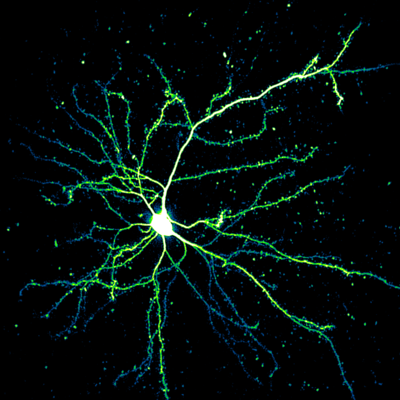
1464 followers · 374 posts · Server mastodon.socialVisual cortex is affected by sounds. Does this mean it is multisensory? Does it represent sounds?
Today in Nature #Neuroscience (https://doi.org/10.1038/s41593-022-01227-x) Célian Bimbard and team find otherwise.
Sound-evoked activity in visual cortex was similar across neurons. Even neurons in hippocampus. It persisted after we cut fibers from auditory cortex!
This activity was predicted by… subtle body movements evoked by the sounds. It reflects brainwide state and behavior signals.

Leon Lotter · @LeonDLotter
623 followers · 70 posts · Server neuromatch.socialI’d be in on #NeuroPaperThread and #NeuroNewPaper. Although I’d prefer #NewNeuroPaper bc grammar 😋.
And I am not sure how much sense it makes to let a single field „claim“ a very general tag such as #PaperThread. It would be more elegant to establish a convention for all fields, i.e., #PaperThread for field-independent use, #MLPaperThread or #AIPaperThread for the Sigmoidians. Sorry folks 👀
#neuropaperthread #neuronewpaper #newneuropaper #paperthread #mlpaperthread #aipaperthread

Ross Gayler · @RossGayler
95 followers · 315 posts · Server aus.social


@NicoleCRust field-specific hashtags for paper announcements and threads might not work so well for those of us with poor memories and interests across multiple fields, because we would have to remember the specific hashtags for each field.
The Mastodon advanced web interface allows you to follow combinations of hashtags (instructions here: https://blog.djnavarro.net/posts/2022-11-03_what-i-know-about-mastodon/#tracking-hashtags) but it doesn't appear to allow for (#neuroscience AND (#NewPaper OR #PaperThread)), plus I think I found a bug.
For now, I think I will follow (#PaperThread OR #NewPaper OR #NeuroPaperThread OR #NeuroNewPaper OR ...).
Plus, I'm copying in @cogsci #CogSci and #CompCogSci because this is an issue that needs to be discussed in all research communities.
#cogsci #compcogsci #neuroscience #newpaper #paperthread #neuropaperthread #neuronewpaper

Nicole Rust · @NicoleCRust
2878 followers · 420 posts · Server neuromatch.socialA big thanks to @kendmiller + for helping the #neuroscience community get its hashtag act together!
https://neuromatch.social/@kendmiller@qoto.org/109645950754401219
For neuro paper threads: sigmoid.social/about/more has already claimed #PaperThread and #NewPaper (the latter announcing a paper without a thread) for the AI community. I enjoy seeing their papers too, but we need a distinct tag for neuro papers. For a thread, ... maybe we want something simple like #NeuroPaperThread and #NeuroNewPaper?
Great idea Ken - let's do this.
➡️EVERYONE: BOOKMARK THIS! ⬅️ and follow those hashtags. And then don't hold back. After all, it's what we all show up here for: to hear what you've figured out and learn from you.
#neuroscience #paperthread #newpaper #neuropaperthread #neuronewpaper #neuroai #psychology