
Keir Rice ⬢ · @keir
184 followers · 270 posts · Server cloudisland.nz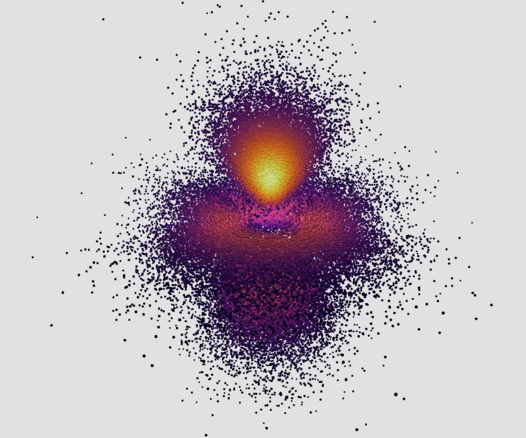
An online interactive viewer based on Minute Physics's video on atomic orbitals by @WagyxXygaw@twitter.com
https://asliceofcuriosity.pagesperso-orange.fr/assets/atom/orbitalsApp-1M.html
#orbitals #electrons #sphericalHarmonics # Atoms
#orbitals #electrons #sphericalharmonics
Keir Rice ⬢ · @keir
184 followers · 270 posts · Server cloudisland.nzAn online interactive viewer based on
@minutephysics
video on atomic orbitals
by @WagyxXygaw@twitter.com
https://asliceofcuriosity.pagesperso-orange.fr/assets/atom/orbitalsApp-1M.html
#orbitals #electrons #sphericalHarmonics # Atoms
#orbitals #electrons #sphericalharmonics
Alejandro Gallo · @cadr
29 followers · 26 posts · Server masto.ai
When I was at the University of Geneva I worked briefly with ROOT (https://root.cern).
Later when I entered the #CompChem and #MaterialsScience community I realised no one knew it, which seems to me like a pitty since much of some workloads for visualization and data analysis could be done there. Even replicating some functionalities of XCrysden or avogadro would be doable. It would be awesome to have found ROOT macros lying around about visualizing #orbitals or #molecules / #crystals.
#compchem #materialsscience #orbitals #molecules #crystals
NumeRe Devs :cpp_language: · @numeredevs
31 followers · 198 posts · Server fosstodon.org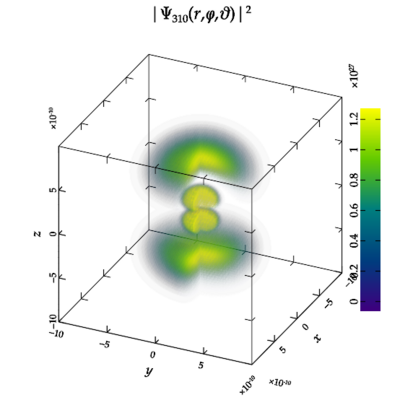
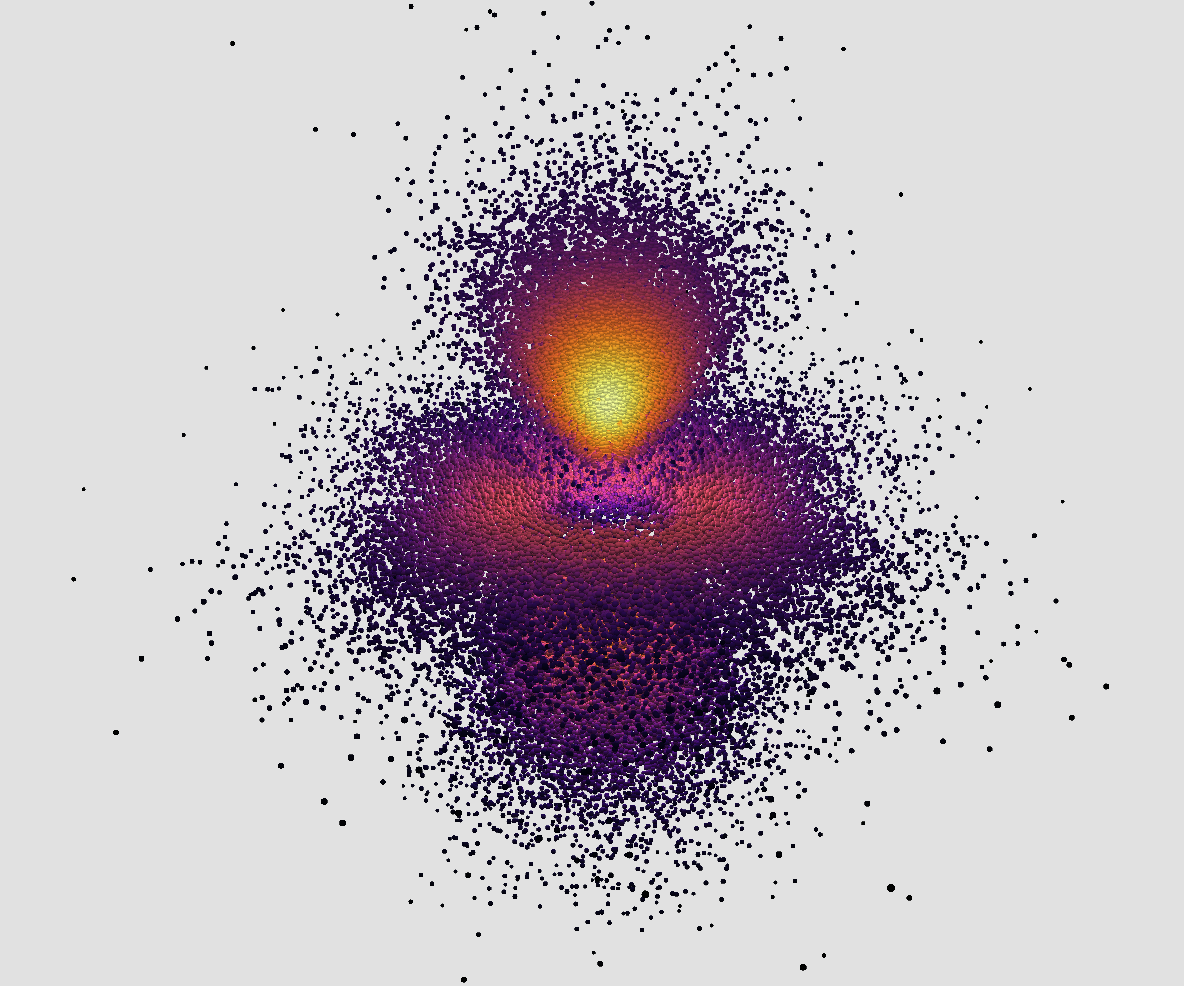
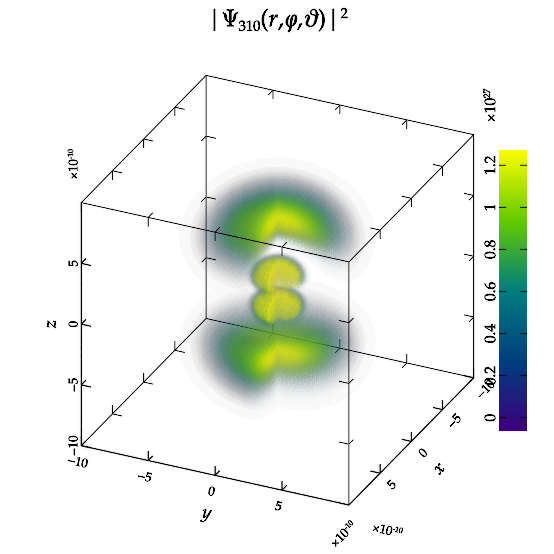
To visualizing the probabilty of an electron to appear in one of the #hydrogen's #atom #orbitals you'll need to use the so-called Spherical Harmonics. These are a set of orthogonal polynomials on a surface of a sphere. See here a #visualisation of one of the possible orbitals created by the cloudplot functionality of #NumeRe
#hydrogen #atom #orbitals #visualisation #NumeRe