
Dr. Evan J. Gowan · @DrEvanGowan
897 followers · 924 posts · Server fediscience.orgWeil-Accardo provide a new set of paleo sea level constraints from the Last Interglacial from Madgascar, collected using modern field techniques and measurements. They find that relative sea level in this location was relatively stable at about 3.4 m above present between 129 and 115 thousand years ago. There is no evidence of fluctuations or higher relative sea level at this location. #PaleoClimate #SeaLevel #ClimateChange #IceSheets https://www.sciencedirect.com/science/article/pii/S0277379123002457
#IceSheets #climatechange #sealevel #paleoclimate
Dr. Evan J. Gowan · @DrEvanGowan
897 followers · 922 posts · Server fediscience.orgShackleton et al reconstruct the Earth's energy balance for the past 150 thousand years from δ¹⁸O in benthic foraminifera by utilizing the fact that the amount of energy required to heat/cool the ocean and melt/freeze glacial ice is roughly the same. Their technique does not require a separation of the ice sheet and ocean temperature components of δ¹⁸O. #paleoclimate #IceSheets #ClimateChange https://www.nature.com/articles/s41561-023-01250-y
#climatechange #IceSheets #paleoclimate
Dr. Evan J. Gowan · @DrEvanGowan
897 followers · 922 posts · Server fediscience.orgToucanne et al investigate the history of the Marine Isotope Stage (MIS) 4 glaciation in Europe with proxy records from the Bay of Biscay. The nature of the sediments in this core indicates that it is unlikely that British Irish and Fennocandian ice sheets merged in the MIS 4 glaciation, and that the North Sea remained ice free. This is in contrast to what is shown in my ice sheet reconstruction, PaleoMIST, and therefore revision is necessary. #IceSheets #Paleoclimate https://www.sciencedirect.com/science/article/pii/S0921818123001947
Dr. Evan J. Gowan · @DrEvanGowan
881 followers · 912 posts · Server fediscience.orgHalsted et al review the glacial history of the northeastern United States. They could not precisely determine the timing of the Last Glacial Maximum extent, or the timing of the beginning of sustained retreat. They assume that the initial recession began between 24-20 ka, but this is based on proxy records. This problem is related to the lack of suitable material from that time to radiocarbon date, and inheritance of ¹⁰Be in boulders. #Paleoclimate #IceSheets https://onlinelibrary.wiley.com/doi/full/10.1002/jqs.3563
Dr. Evan J. Gowan · @DrEvanGowan
841 followers · 881 posts · Server fediscience.orgOne thing I have always considered doing is a climate science related podcast. I never went ahead with it, because it takes a lot of time to set something like that up. However, with my current bout of unemployment, this has crept back into my mind. The question is, is their an audience for a podcast that will undoubtedly be a very nerdy look at climate science? #ClimateChange #ClimateScience #PaleoClimate #SeaLevel #podcast
#podcast #sealevel #paleoclimate #climatescience #climatechange
Dr. Evan J. Gowan · @DrEvanGowan
838 followers · 870 posts · Server fediscience.orgHodder et al do a deep dive into the stratigraphy of the southern Hudson Bay Lowlands to investigate the claims of Marine Isotope Stage 3 (MIS 3 - 55-27 ka) nonglacial sediments. They find that it is unlikely that the lowlands were ice free during MIS 3, and that instead all pre-Last Glacial Maximum (>20 ka) nonglacial sediments are MIS 5e or older. They conclude that Hudson Bay remained ice covered throughout MIS 3. #PaleoClimate #ClimateChange #IceSheets https://www.cambridge.org/core/journals/quaternary-research/article/was-there-a-nonglacial-episode-in-the-western-hudson-bay-lowland-during-marine-isotope-stage-3/0DB7680C057CD02CBC721CCD7E6100A6
#IceSheets #climatechange #paleoclimate
Dr Micha Campbell · @michcampbell
578 followers · 1285 posts · Server fediscience.org
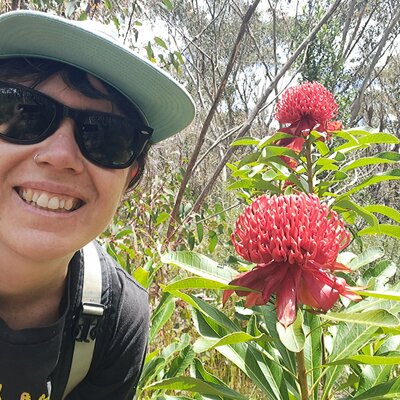
I bloody LOVE to see friends kicking goals! New paper out today from the brilliant Georgy Falster at #ANU "Forced changes in the Pacific Walker circulation over the past millennium"
#ECR #palaeoclimate #Climate #weather #paleoclimate #anu
Dr. Evan J. Gowan · @DrEvanGowan
816 followers · 851 posts · Server fediscience.orgRush et al propose, based on a high resolution sea level record from Scotland, that the 8.2 ka event was caused not by the catastrophic drainage of proglacial lake Agassiz-Ojibway, but rather from the collapse and disintegration of the ice saddle that covered Hudson Bay. The 8.2 ka event was a brief period of cooler temperatures during the relatively warm mid-Holocene period. #ClimateChange #PaleoClimate #SeaLevel https://www.sciencedirect.com/science/article/pii/S2666033423000515
#sealevel #paleoclimate #climatechange
Dr. Evan J. Gowan · @DrEvanGowan
816 followers · 849 posts · Server fediscience.orgZaretskaya et al present some preliminary results of dating last interglacial (MIS 5e, 130-115 ka) marine deposits from Zimnii Coast of the White Sea in northwestern Russia. They conclude these deposits represent a transgressive event, and some of the enviornmental indicators suggest that the peak sea level coincided with cold, Arctic climatic conditions. The ages they get are kind of young for MIS 5e, though. #SeaLevel #ClimateChange #PaleoClimate #LastInterglacial https://link.springer.com/article/10.1134/S1028334X23601360
#lastinterglacial #paleoclimate #climatechange #sealevel

Kau))) · @kau
268 followers · 207 posts · Server qoto.org
New article out in #Paleoceanography & #Paleoclimatology where we (Chris Maupin & myself) briefly recount how scientists have sought to understand past year-to-year (#interannual) temperature variations in the marine realm: https://agupubs.onlinelibrary.wiley.com/doi/abs/10.1029/2023PA004723
Mainly focusing on coral-derived records, we also highlight a recent article by Ong et al. (2022; https://agupubs.onlinelibrary.wiley.com/doi/full/10.1029/2022PA004483) who add a new #coral genus to the #paleoclimate toolkit.
#openaccess #climate #oceanography #mollusks #sclerochronology
#paleoceanography #coral #openaccess #climate #oceanography #mollusks #sclerochronology #paleoclimatology #interannual #paleoclimate
Dr. Evan J. Gowan · @DrEvanGowan
796 followers · 810 posts · Server fediscience.orgMy paper on the impacts of subglacial conditions on ice sheet evolution at glacial time scales is now published in the August issue of the Journal of Glaciology. #IceSheets #Paleoclimate #ClimateChange https://www.cambridge.org/core/journals/journal-of-glaciology/article/impact-of-spatially-varying-ice-sheet-basal-conditions-on-sliding-at-glacial-time-scales/16E8307D3768782F71186B66F1946553
#climatechange #paleoclimate #IceSheets
Kau))) · @kau
266 followers · 194 posts · Server qoto.orgA nice commentary in #NatureMagazine by @loopdlupien about a newly published article on eastern African paleoclimate change by Baxter & colleagues (link: https://www.nature.com/articles/s41586-023-06272-5) - can simulations of future climatic trends in eastern Africa be reconciled with modern trends?
Past climate unravels the eastern African paradox: https://www.nature.com/articles/d41586-023-02297-y
#naturemagazine #easternAfrica #africa #paleoclimate #climatechange
bse · @doktrock
357 followers · 2939 posts · Server toad.socialPal(a)eo PERCS is a weekly virtual seminar series featuring research in “Pal(a)eo” sciences (e.g., -ntology, -ecology, -oceanography, -climate)
To watch or get involved, go to https://paleopercs.com #geology #paleontology #paleoclimate
#geology #paleontology #paleoclimate

Santiago Gassó · @SanGasso
369 followers · 277 posts · Server airpollution.science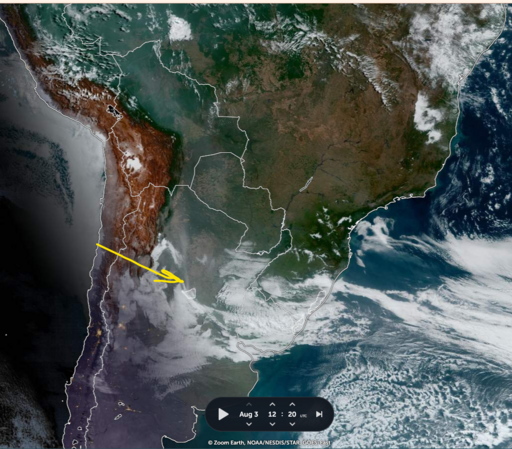
A cold front is bringing more winter-like temps in S. America.
High winds trigger #dust plumes (yellow) to the north , this is out of the normal as the normal patterns of dust and smoke transport are from north to south.
There is a chance that this dust can reach the Amazons, which is possible although unlike conventional wisdom since it is expected to have dust from the Sahara.
However it has happened in the past as reported here
https://www.nature.com/articles/s43247-020-00071-w
Dr. Evan J. Gowan · @DrEvanGowan
788 followers · 791 posts · Server fediscience.orgO'Connor et al present a temperature proxy from Saskatchewan, Canada, that spans a few 10s of thousands of years before and after the K-Pg impact event. They find no evidence of a long lasting impact winter, and in fact that the long term warming that was happening before the impact continued after the impact. #PaleoClimate #ClimateChange https://pubs.geoscienceworld.org/gsa/geology/article/51/5/486/621218/Steady-decline-in-mean-annual-air-temperatures-in
Santiago Gassó · @SanGasso
369 followers · 270 posts · Server airpollution.science
#Sunrise over #Patagonia today, with continuous #highlatitudedust activity (posted about it last 2 days) with abundant snow farther south.
This illustrates that dust storms (or more generally, dust activity) can happen in cold weather and during the winter.
#sunrise #patagonia #highlatitudedust #biogeochmicalcycles #paleoclimate
Santiago Gassó · @SanGasso
362 followers · 262 posts · Server airpollution.science
Sunrise in #Patagonia today and there is a very long plume of #highlatitudedust from dry lake Colhué Huapi.
The long plume indicates that activity started during nighttime and it's been active for several hours.
In color is the Aerosol Optical Depth , a proxy of concentration that it is used to derive particle matter amount (dust mass cannot be directly measured from space)
#patagonia #highlatitudedust #paleoclimate #biogeochemicalcycles #dust
Dr. Evan J. Gowan · @DrEvanGowan
779 followers · 765 posts · Server fediscience.orgHobart et al present a new Atlantic Ocean benthic δ¹⁸O stack, with a chronology tied to the Chinese speleothem record and associated ice rafted debris events that are correlated to the speleothem record. This new stack does not vary that much from the commonly used LR04 stack, which had a chronology tuned to orbital parameters. They conclude that glacial cycles are paced by precession. #PaleoClimate #IceSheets #ClimateChange https://www.nature.com/articles/s41561-023-01235-x
#climatechange #IceSheets #paleoclimate
Santiago Gassó · @SanGasso
344 followers · 236 posts · Server airpollution.science


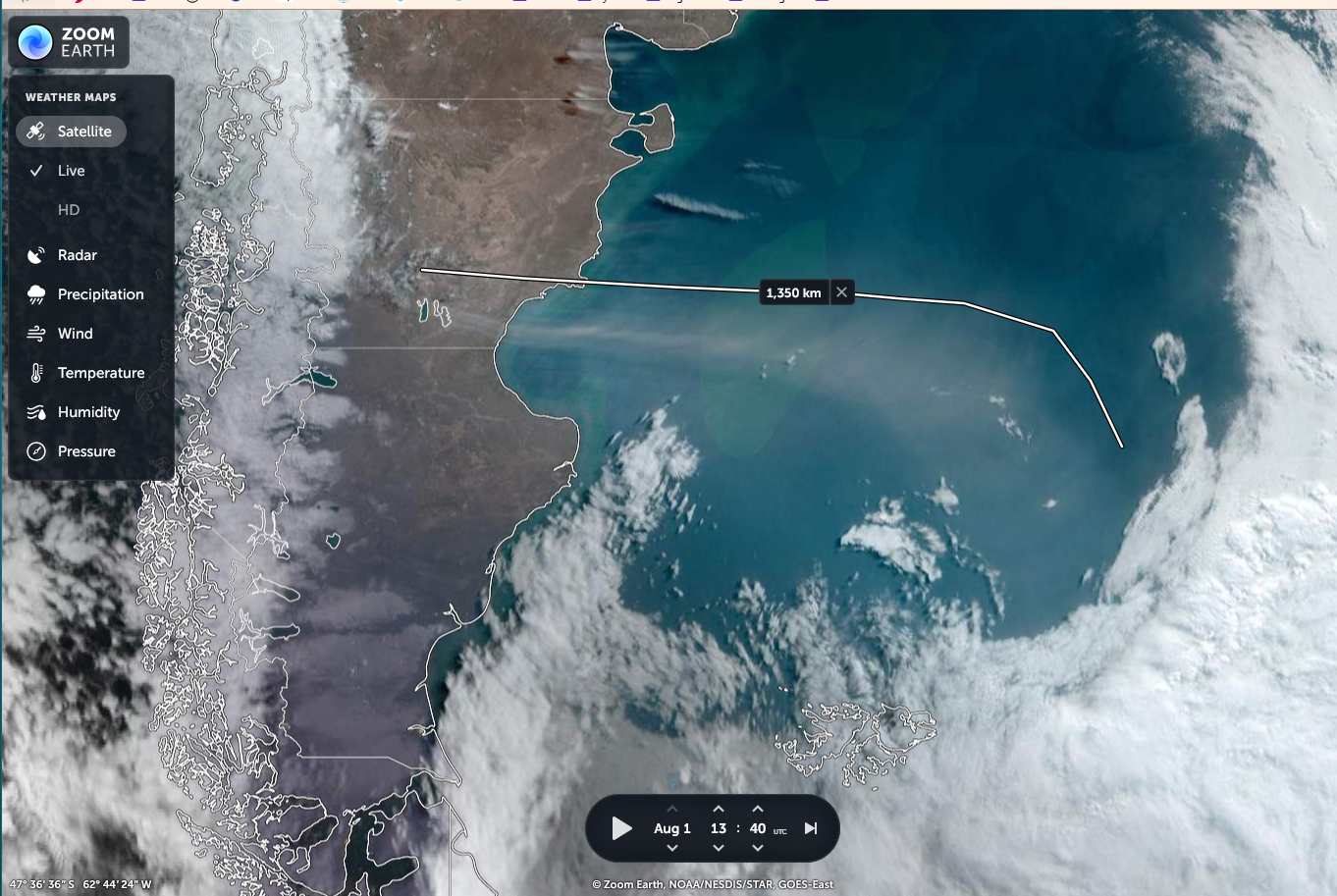
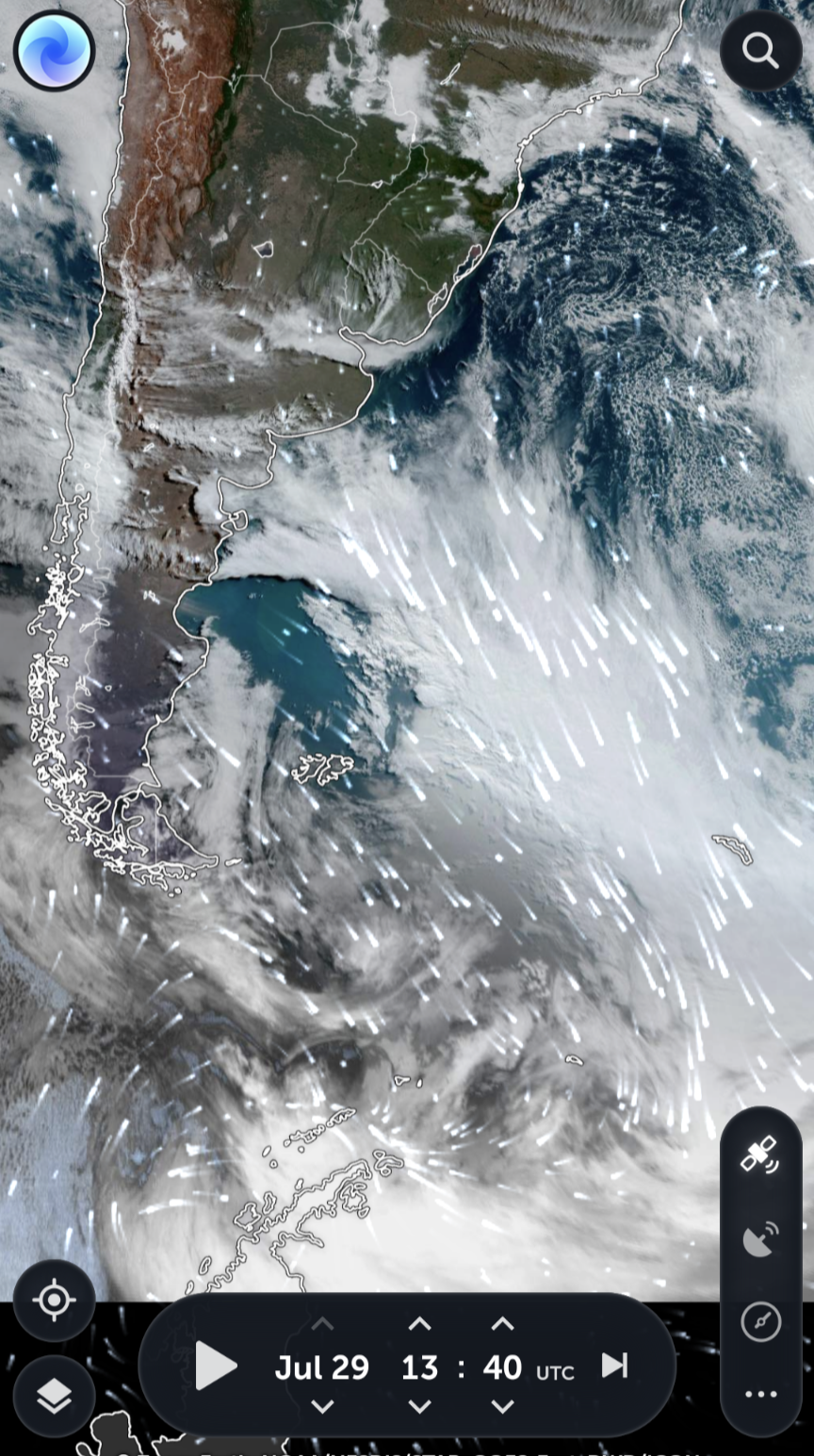
This morning in #Patagonia, #highlatitudedust activity from several dry lakes (including the large dry bed Colhué Huapi) . Long dust plumes.
The winds are such that dust initially moves east and then veers south making likely this dust will reach the #SouthernOcean and maybe #Antarctica.
This is a good example of dust activity in the middle of the winter (there is even snow not too far south , red circle)
#patagonia #highlatitudedust #southernocean #antarctica #paleoclimate #biogeochemicalcycles
Dr. Evan J. Gowan · @DrEvanGowan
729 followers · 741 posts · Server fediscience.orgThe paper by Ditlevsen and Ditlevsen about the possible imminent collapse of the Atlantic Meridional Overturning Circulation (#AMOC) is getting a lot of attention, and for a good reason. As #PaleoClimate scientists, we look back to the past for analogues. The AMOC regularly collapsed during the last glacial period (~25 times). Barker and Knorr published a hypothesis that there was a sweet spot of CO₂ concentrations and Laurentide Ice Sheet size that made this possible. https://www.nature.com/articles/s41467-021-22388-6