
Banjos & Such · @mayor
157 followers · 2116 posts · Server banjo.townOne year ago I was on a trad jazz kick, all fired up to learn a bunch of standards on #plectrumbanjo despite there being no local scene of any kind. I think maybe I thought I could manifest my own scene through sheer force of will; I definitely had visions of crafting the perfect craigslist post to find kindred spirits.
As usual, it did not take long for me to get thoroughly distracted by something else; in this case electric guitar, and then between my #cbg project and the coronavirus delta variant over the summer, and a general lack of self-confidence, the jazz thing petered out.
I'm mostly OK with that - if I *had* to make a resolution for this year, it would be to hold my tongue and post about things I've done instead posting declarations of intent.
Banjos & Such · @mayor
157 followers · 2117 posts · Server banjo.townThanks to various external stimuli, I might actually be able to wrangle my focus back to my short-lived attempt at actually *learning* #plectrumbanjo as solo instrument from earlier this year.
But, I think I'm going to work on scales rather than chord melody. Shout out to Ron Hinkle for putting his book out there for free:
http://box2257.temp.domains/~banjosno/wp-content/uploads/2019/08/Complete-Book.pdf
Banjos & Such · @mayor
157 followers · 2117 posts · Server banjo.town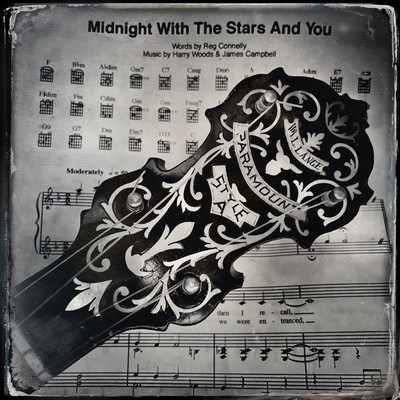
Alright, The Overlook Hotel July 4 1921 party photo has come across my timeline enough in the last couple of days that I got out my copy of the sheet music and started fooling around with it on #plectrumbanjo.
I have forgotten just about everything I learned about plectrum-style harmonizing earlier this year, but this would be a good exercise for it. Maybe I'll be able to play it by next July 4.
Banjos & Such · @mayor
157 followers · 2117 posts · Server banjo.townWhoa, rare sighting of a #plectrumguitar in a fantastic jam with a #plectrumbanjo: https://www.instagram.com/tv/CQRAraDA-7N/?utm_medium=copy_link
#plectrumbanjo #plectrumguitar
Banjos & Such · @mayor
157 followers · 2117 posts · Server banjo.town...TIL that DGBE on #plectrumbanjo feels and sounds very strange in the same way that a folk/country song played on a six-string banjo always sounds a little bit off to me; You get the plunky sound but my brain objects to the chord voicings because it's used to hearing them in C or open G tuning.
Banjos & Such · @mayor
157 followers · 2117 posts · Server banjo.townTwo other things about guitar, especially rock guitar:
1) There is a much greater sense of community to be found when poking around online.
2) While finding musicians who are on the same not-a-newbie-but-pretty-rusty wavelength remains a challenge, a few minutes poking around bandmix.com suggests that it would be a lot easier than finding people compatible with obscure banjo stuff.
As I dust off my pentatonic scales for guitar I'm thinking about giving so-called "Chicago Tuning" (AKA, DGBE like the top four strings of a guitar) a try on #plectrumbanjo for a while; I have tinkered with scales in standard CGBD banjo tuning over the years but the weird intervals are quite frustrating compared to the (mostly) fourths of EAGDBE guitar tuning; you get the big perfect fifth mandolin/tenor banjo interval between the 4th and 3rd strings, then an impractically short minor third between the 2nd and 1st strings; it works well for compact chord voicings, not so well for fluid/unambiguous scale shapes.
Banjos & Such · @mayor
157 followers · 2117 posts · Server banjo.town
#NGD! I bought this new "Kmise" brand tenor guitar from ebay for an absurdly low price.
at 30" long with a 21.25" scale length it's a little closer to an over-sized baritone ukulele, but it is indeed slightly larger than Kmise's bari uke model, and it's got a pin bridge with steel strings vs the usual ukulele nylon.
I'm pretty sure the body is all mahogany laminate.
It's a really well-made little instrument, absurdly well-made for about $70 shipped with a very nice gig bag. I haven't checked with a tuner but the intonation is spot-on and the action is nice and low all the way up the neck.
It sounds like you would expect a small-bodied laminate guitar to sound; not very loud and not a lot of low-end, but that's fine. I'll record something with a good mic once I've gotten to know it a little better.
I tuned it to #plectrumbanjo CGBD and it will be a lot of fun to noodle around with. Since the scale is something like 5" shorter than a typical plectrum, the strings feel very taut; plus they're steel, which my fingers are not used to. I'll have to research lighter strings.
#fediversemusic #mastomusic #musiciansofmastodon #newgearday #guitar #tenorguitar
#tenorguitar #guitar #newgearday #musiciansofmastodon #mastomusic #fediversemusic #plectrumbanjo #NGD
Banjos & Such · @mayor
157 followers · 2117 posts · Server banjo.townGot in a solid hour with the Mel Bay :mb: #plectrumbanjo method tonight, still on the first handful of exercises, trying to resist the temptation of pulling a "Ok, I read and played through that a couple of times, good enough", also used an honest to god metronome, which is something I should get better about.
Banjos & Such · @mayor
157 followers · 2117 posts · Server banjo.townBrute-force memorization of the fingerboard has never really worked for me as a strategy, although working on the Mel Bay :mb: #plectrumbanjo #chordmelody system I'm well on my way to knowing the 1st string; I'm slowly but surely burning the neural pathway to remember that the 1st string at the tippy-top 22nd fret (where you do see plectrum players go from time to time) is C.
Banjos & Such · @mayor
157 followers · 2117 posts · Server banjo.townYesterday I learned that CGBD #plectrumbanjo tuning sounds pretty nice on a baritone ukulele:
https://www.youtube.com/watch?v=jxRMkkjByAM
You don't get all the frets but I think you could get high enough for most basic chord melodies.
Unfortunately (or fortunately, depending how you look at it) bari ukes are not quite as commoditized as sopranos so it's harder to justify buying one as a pure impulse purchase
Banjos & Such · @mayor
157 followers · 2117 posts · Server banjo.townI've been applying the basic "Melody Chord Playing System" principals to St. James Infirmary, and it feels like maybe I'm unlocking some next-level stuff.
It's a long road to:
1. Memorizing chord spellings
2. Being able to sight-read a lead sheet and map the melody notes to the right chord, and the right shape for that chord
3. Getting a sense of common patterns in terms of picking the best/nearest shape to start with for non-chordal tones
4. Doing that all smoothly at speed
...but I've got that sense of having gotten past a conceptual hurdle.
Eddie Peabody's :ep: instructional record has some basic chord melody material and he mentions keeping the melody note on the 4th string, but doesn't get into how exactly you work those chords out; the Mel Bay :mb: book fills that in. #plectrumbanjo https://www.youtube.com/watch?v=HyADa6OpZ6c&list=PLblAdFPKwQmIBGq_E71J_A43hp3OEL0Jn&index=10
Banjos & Such · @mayor
157 followers · 2117 posts · Server banjo.townFollow-up on the Mel Bay :mb: "Plectrum Banjo Melody Chord Playing System" book, which I think is pretty much the only "how to play chord melody on #plectrumbanjo" book currently in print:
It's a good book if you're familiar with basic standard notation and know a little bit of theory, and have a general understanding of the *concept* of 'chord melody'.
It's frightfully terse in terms of instruction. I think it was probably written with the assumption that anyone reading it would have a teacher guiding them through.
And, there's not really a lot to instruct when it comes down to it; the titular "Melody Chord Playing System" itself is actually pretty simple. The bulk of the book walks you through the same concept applied to all twelve keys, gradually getting more complex rhythmically.
But yeah, not a book I'd recommend to a complete newbie.
I did a double-take when I looked at the last page and saw a January 2021 print date. Not quite on demand (printed a about a week before I ordered it) but probably "print in artisinal batches because we only sell 5 copies of it per year." The quality is as good as any other Mel Bay book I've bought over the years.
Banjos & Such · @mayor
157 followers · 2117 posts · Server banjo.townI hate the "may be too late" feeling when it comes to making a musical contact; there's an old-guard #plectrumbanjo player who has had arrangements and instructional materials for sale in the past, but their domain seems to have lapsed and searching for contact info mostly turns up "has anyone been able to get hold of him" posts for the last year or two. He's in his 80s now, so nobody would fault him for putting the online hustle aside, but in purely selfish terms I would like to have gotten hold of his extensive collection of arrangements.
Banjos & Such · @mayor
157 followers · 2117 posts · Server banjo.townI'm finally checking out Ron Hinkle's book "Beyond Chord Melody: A New Approach to Advancement" and it's giving me whiplash... whereas most 4-string (and early 5-string) books begin with a pretty standard "rudiments of music" section (here's the staff, here are the notes on the staff, here's how the notes on the banjo neck correspond to the notes on the staff,) Ron's book has a "rudiments of tablature" section.
It's also written with the assumption that readers are coming to the material never having done any single-string playing, and that's blowing my mind a little bit; I know that chord melody is the predominant playing style for #plectrumbanjo but I wouldn't have guessed that it was so firmly entrenched as to require a book to couch the introduction of single-string playing like it's controversial or heretical.
Anyway - Ron is a fine player who's made it his mission to elevate plectrum banjo beyond Eddie Peabody/stale dixieland mode, and this looks like the modern method book that the instrument has been missing. (I'll be interested to compare it to the early 20th century Grimshaw book; Ron worked on the revised modern edition of that one.)
"Beyond Chord Melody" and many additional resources and writings can be found at his web site, https://banjosnob.com
Banjos & Such · @mayor
157 followers · 2117 posts · Server banjo.townPLECTRUM BANJO HELLTHREAD
I'm back on my #earlyjazz bullshit and revisiting helpful links I've found over the years, and as links like this have a tendency to disappear I'm going to try and download copies of these materials as I add them here.
Plectrum banjo is a four-string, 22-fret instrument with a ~26-inch or so scale, more or less the same as a modern 5-string banjo, but lacking the short drone string it's typically played with a plectrum (hence the name, which was originally used to distinguish them from 5-string instruments. Tenor banjos came along slightly later.) They're tuned CGBD, also inherited from 5-string banjos as they were originally tuned. (Some people will also tune them DGBE like the top four strings of a guitar.)
I don't know who andy(at)olive13.net is, but I've had a print-out of their enormously helpful, public domain collection of chord shapes kicking around my desk for over a year now, and refer to it pretty much every time I'm working through a song.
http://13olive.net/chords/plectrum_inversions.html
The deal with jazz banjo "chord melody" is that as you play a tune, you try to map the melody to the highest string and find the chords that map most closely to it; so the goal is to
1) Memorize the different movable chord shapes in terms of which note of the chord falls on the 4th string (I, III, V etc)
2) Memorize the I, III/iii, V, and vii notes of the most commonly-played chords, so you can easily figure out which chord shape to play and where
#banjo #chords #jazz #plectrumbanjo #earlyjazz
Banjos & Such · @mayor
157 followers · 2117 posts · Server banjo.town
Spent good bit of time today working on a cover of a #Christmas tune that won't hold a candle to the original, but has been on my "gonna record that one of these days" pile for literally years.
I've been fooling around with #plectrumbanjo, #tenorbanjo, and #bandomandolin for various parts and I don't think any of them are going to work for this one, which is too bad as I've spent a lot of time getting some extended chord shapes under my fingers.
On the plus side, I seem to have developed an almost passable tremolo, which is a bit of a surprise; It's not something I've really actively worked on, but I guess several years of half-assed screwing around with it on and off has finally clicked.
Nice to get reacquainted with my #mandolin. The progression is usually "pick up the banjo-mando and plunk around and remember how incredibly loud, strident and utterly un-nuanced it sounds, then remember I have an actual mandolin that plays and sounds much nicer."
#mandolin #bandomandolin #tenorbanjo #plectrumbanjo #christmas
Banjos & Such · @mayor
157 followers · 2117 posts · Server banjo.townextended chord forms are pretty limited on #plectrumbanjo; once you get beyond sevenths you're lucky if there's more than one place on the neck to play them
Banjos & Such · @mayor
157 followers · 2117 posts · Server banjo.town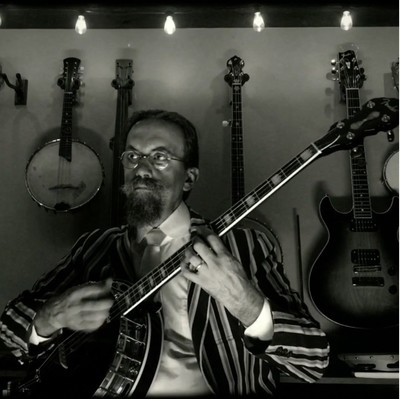


The worst part of this pandemic is having even fewer occasions than usual on which to wear this blazer (there were basically no occasions to begin with) #plectrumbanjo #rowingblazer
Banjos & Such · @mayor
157 followers · 2117 posts · Server banjo.townI have so many musical irons in so many fires right now, but I got bitten by the plectrum/jazz bug tonight; I acquired this wonderful Paramount Style A last year and earlier this year I put LaBella 17 nylon strings on it, which was a game changer. I've been playing on nylon strings for so long that any calluses I had from my clawhammer days are long gone.
Just a week or so before the pandemic really started to hit my neck of the woods, I found out about a jug band open session near me and I was super-excited to finally have a chance to work on my plectrum chops, but then of course everything went sideways.
The @magicians project will give me more of an excuse to tinker with early jazz/blues plectrum banjo, but I need to get some other stuff cleared off my metaphorical desk before I can really dig into it.
Meanwhile, here's the verse of 'Louisiana Fairytale', marginally played.
#jazzbanjo #plectrumbanjo #banjo #jazz https://peertube.social/videos/watch/c329d457-8b69-4a80-ae42-f5982a39eec1
#jazz #banjo #plectrumbanjo #jazzbanjo
Banjos & Such · @mayor
157 followers · 2118 posts · Server banjo.townThis week's #earlybanjototw is "Pea Nut Girl" by W.H. Gassner, from James Buckley's 1868 banjo guide. I gave it more of an #earlyjazz treatment here with #plectrumbanjo and #parlorguitar:
#banjo #earlybanjo #arcanebanjo #classicstylebanjo #4stringbanjo #5stringbanjo
#earlybanjototw #earlyjazz #plectrumbanjo #parlorguitar #banjo #earlybanjo #arcanebanjo #classicstylebanjo #4stringbanjo #5stringbanjo