
· @seeteegee
86 followers · 1087 posts · Server social.afront.orgTIL about how the ssh group was working on a replacement to x.509 pki and ca's that we stuck with in large part because of the web. Maybe it's time for from fresh thinking about this with sold new and old ideas.
· @seeteegee
86 followers · 1087 posts · Server social.afront.org@nixCraft this ssh -G option can be used to make sure that a site-specific public key is used to avoid inter-site tracking. This is also why http://supertxt.net recommends using the “nobody” user, which can also be checked in this way. Unlike the web, ssh gives the user much more control over their identity.
· @seeteegee
86 followers · 1074 posts · Server social.afront.orgThe #supertxt team finally released the server implementations (ssh and http) that they use for the http://supertxt.net site. There's more details in the readme for the st-int repo.
``` .sh
git archive --remote=nobody@supertxt.net:git/st-int HEAD README.md | tar -xOf -
```
#supertxt #postweb #SSH #linux
· @seeteegee
86 followers · 1070 posts · Server social.afront.orgThe http://supertxt.net site got a redesign making it look much more like it would in the browsing shell. It’s run using a tool called “deserv” and the code is included in the supertext integrations git repo on the site. #postweb
· @seeteegee
83 followers · 1052 posts · Server social.afront.org@kdorse this is why I like that http://supertxt.net only allows conventional comments and they are only visible on demand instead of every page view, kinda like wikipedia. The bottom of each page explains how to do that.
· @seeteegee
83 followers · 1050 posts · Server social.afront.orgThere's a new #supertxt specification for pathname2, which are the sort of paths that you use with sshla tools like git, scp, and the cats tool.
There's some interesting comparisons with URL's at the bottom. The paths are almost equivalent to hyperlinks, but are only independently sharable with the full command-line. The paths themselves can be re-used to create new command lines referencing a file.
#supertxt #postweb #unix #linux
· @seeteegee
82 followers · 1030 posts · Server social.afront.orgIn a world where we have installed tools to provide rich experiences for internet services, here's an article about how this can work. Also, there's examples about how to integrate with site-independent commands.
#supertxt #postweb #unix #linux
· @seeteegee
82 followers · 1025 posts · Server social.afront.orgIn the web/http world, the verbs are set by the protocol to get, put, post, head, etc. In the Unix world the verb is the command, or sometimes the sub-command, which can be virtually anything that we want. Even the end user can customize these verbs with their own scripts on their PATH.
· @seeteegee
82 followers · 1022 posts · Server social.afront.orgIn the web/http world, the verbs are set by the protocol to get, put, post, head, etc. In the Unix world the verb is the command, or sometimes the sub-command, which can be virtually anything that we want. Even the end user can customize these verbs with their own scripts on their PATH.
John-Mark Gurney · @encthenet
439 followers · 3696 posts · Server flyovercountry.socialJust need to ignore POSIX and actually get together and agree to implement the same things. The BSDs + illumous + Plan9 would probably work fine together.
· @seeteegee
82 followers · 1016 posts · Server social.afront.orgWhat will it take for the remaining Unixes and Plan 9 to get together and modernize POSIX and other Unix standards? The web is at a crossroads and some leadership from the OS community would be really good right now. #postweb
· @seeteegee
82 followers · 1015 posts · Server social.afront.orgThere’s been a bunch of exciting new feature development going on at http://supertxt.net I hope to do a new youtube video shortly. Meanwhile, you can give it a try yourself. There’s two git repos, both Go. #supertxt #postweb
``` .sh
git clone nobody@supertxt.net:git/cats && (cd cats; go install ./…)
git clone nobody@supertxt.net:git/st-int && (cd st-int; go install ./…)
```
If your ~/go/bin is on the path then I recommend trying brsh (browsing shell). It has a help command to get you started.
· @seeteegee
80 followers · 978 posts · Server social.afront.org
@blinry This is is a really cool tool for browsing json apis. It reminds me of the browsing shell tool for browsing text apis over ssh. https://youtu.be/mL1C1V3c3js #supertxt #postweb
· @seeteegee
80 followers · 978 posts · Server social.afront.org@ethanschoonover if only fediverse could drop the tangled, inconsistent web stack for something more grassroots and cleaner. The web makes it so that large cashflows are needed for infrastructure, such as web browsers. Until that changes we’re reliant on the big companies’ continued support. Why not go punk rock with something simple, such as project gemini or http://supertxt.net ? #postweb
· @seeteegee
79 followers · 934 posts · Server social.afront.orgOne of the things that web 1 missed in the beginning was search. I remember it was sorely missing, even had an early “internet phone book.” Possibly because there was no index and search for file systems or ftp at the time. #postweb
· @seeteegee
80 followers · 900 posts · Server social.afront.orgNow that http://supertxt.net has released the source code for the search tool (srch) I can use it to index and query for files on my own machine. Also, it supports the command reflection so that the browsing shell (brsh) can pretty print the search results and navigate to the hits. It's all coming together quite nicely.
· @seeteegee
80 followers · 900 posts · Server social.afront.org
· @seeteegee
78 followers · 863 posts · Server social.afront.orgI got up to some more #supertxt adventures and recorded a video about it. This time the focus is on hyperlinks and the way that it works. The command line tool itself participates using “reflection.” The browsing shell doesn’t yet have a stable version, but it’s starting to become more interesting
· @seeteegee
78 followers · 857 posts · Server social.afront.org@eevee I hope that we can start thinking about the #postweb. Technologies like [:@supertxt] give me hope for a punk rock re imagining of the internet.
=> (supertxt) http://supertxt.net
There's the beginnings of a browser/shell.

Alex Saum · @alexsaum
262 followers · 59 posts · Server hcommons.social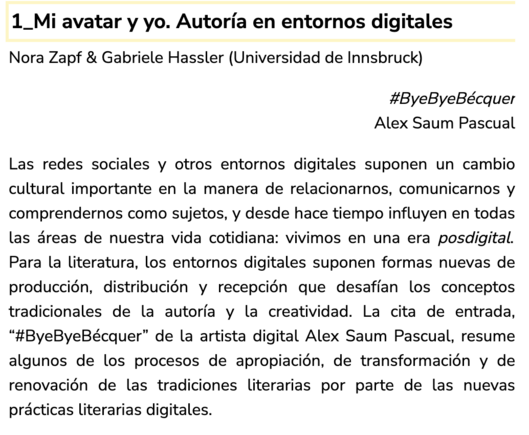
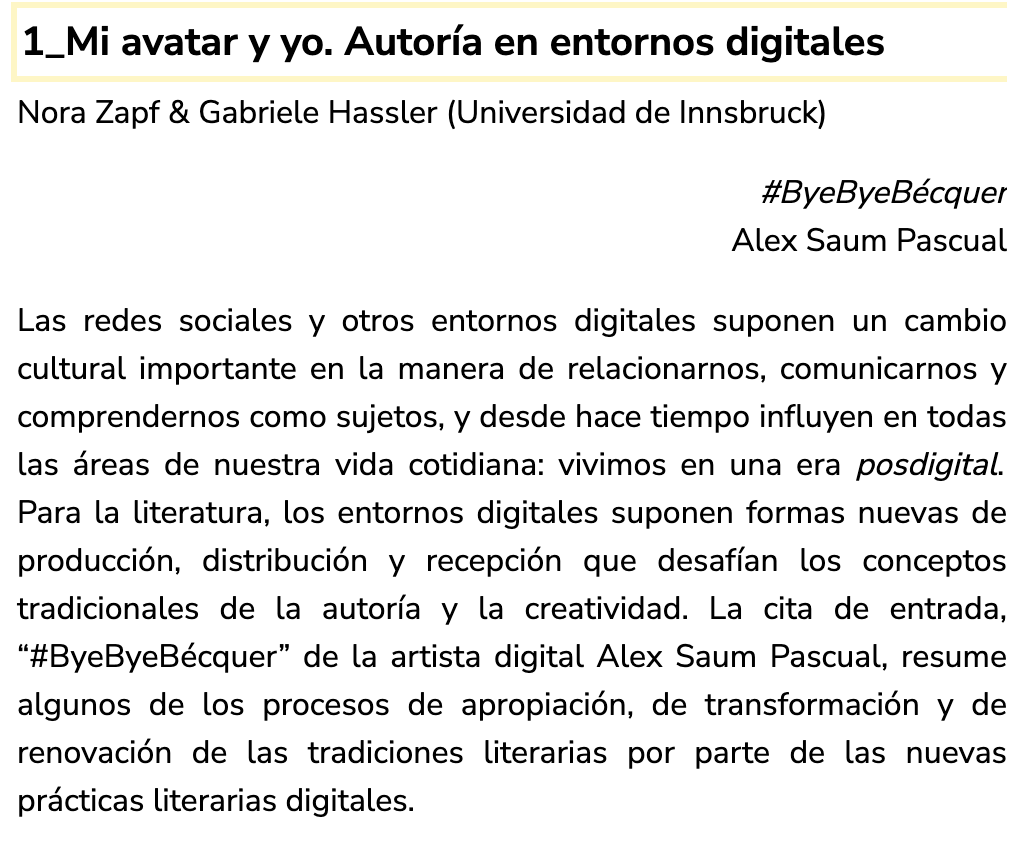
Siento un tipo de orgullo muy muy especial al encontrarme este texto donde oficialmente se establece que he acuñado un #hashtag; un extraño tipo de autoría digital sin duda! #ByeByeBécquer forever! #elit #postweb
#hashtag #byebyebecquer #elit #postweb