
seinecle · @seinecle
262 followers · 133 posts · Server ioc.exchange
New free, click and point function:
create a network of scientific publications just from an Excel file storing their titles or DOIs.
The network is following the principles of "bibliographic coupling" and can be visualized online and exported to Gephi.
Feedback welcome! 🙏
The blog post with the link to the function and how to use it:
#bibliometrics #scientometrics #dataviz #sna

Kate Nyhan · @kdnyhan
621 followers · 1507 posts · Server social.esmarconf.orgAnyone know a citation graph with good coverage of Chinese-language journals in environmental health sciences/toxicology?
#medlibs #datalibs #ResearchImpact #bibliometrics #scientometrics #ResearchOnResearch
An English interface preferable but by no means is its absence a dealbreaker
#medlibs #datalibs #researchimpact #bibliometrics #scientometrics #researchonresearch

Bibliolater 📚📜🖋📐 · @bibliolater
335 followers · 1262 posts · Server qoto.org
Bickley, S.J., Chan, H.F. & Torgler, B. Artificial intelligence in the field of economics. Scientometrics 127, 2055–2084 (2022). DOI: https://doi.org/10.1007/s11192-022-04294-w #OpenAccess #OA #Journal #Article #ArtificialIntelligence #AI #MachineLearning #Economics #Finance #Scientometrics #Science #Bibliometrics #Academia #Academic #Academics @economics @science
#ai #machinelearning #economics #openaccess #oa #journal #article #artificialintelligence #finance #scientometrics #science #bibliometrics #academia #academic #academics

Serhii Nazarovets · @serhii
315 followers · 109 posts · Server mstdn.science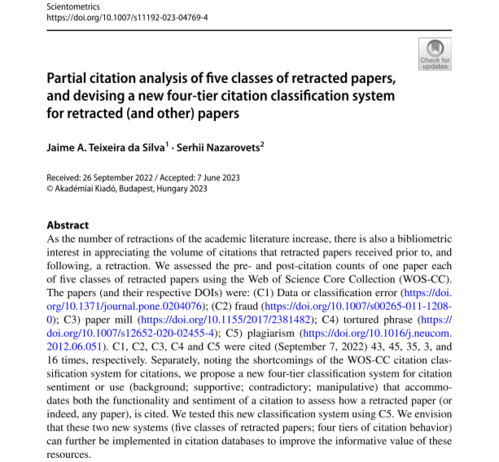
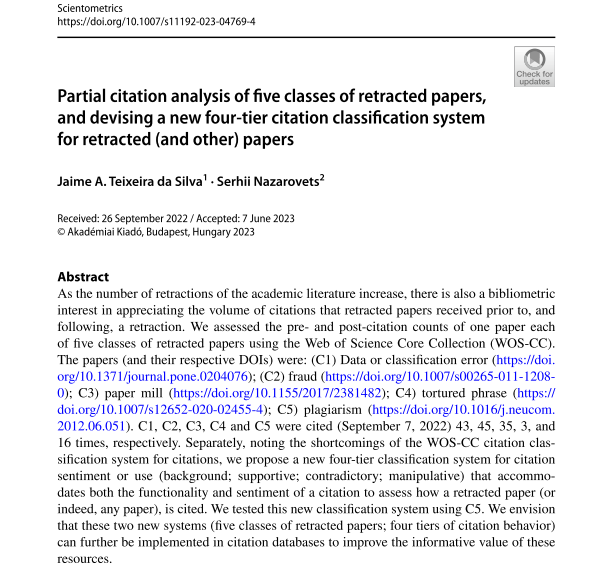
In our new #Scientometrics paper, we assessed the pre- and post-citation counts of one paper each of five classes of retracted papers using the WoS:
:doi: https://doi.org/10.1007/s11192-023-04769-4
We propose a new four-tier classification system for citation sentiment or use (background; supportive; contradictory; manipulative) that accommodates both the functionality and sentiment of a #citation to assess how a #retractedpapers (or indeed, any paper), is cited.
#scientometrics #citation #retractedpapers
Serhii Nazarovets · @serhii
309 followers · 95 posts · Server mstdn.science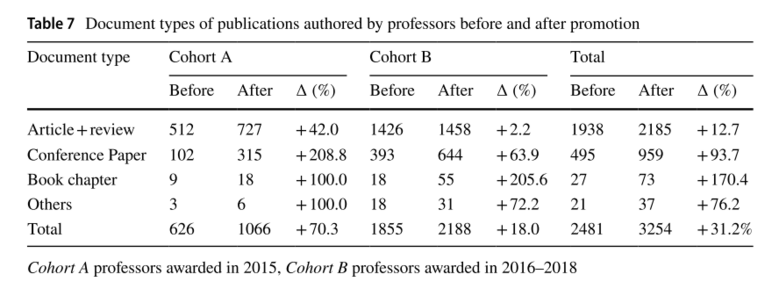
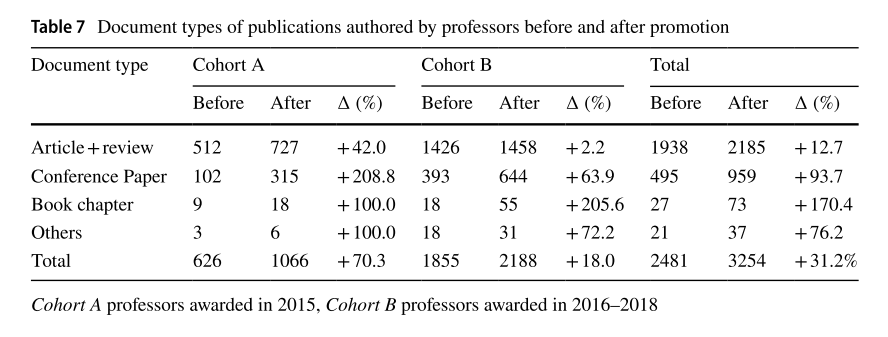
New article in #Scientometrics explores the effects of #Ukraine policy reform on the professors' publication behaviour:
:doi: https://doi.org/10.1007/s11192-023-04753-y
The increase in output after 🇺🇦 academics were awarded the title of professor involved a significant growth in book chapters (+ 170.4%), conference papers (+ 93.7%) and only a slight increase in articles and reviews (+ 12.7%).
#scientometrics #ukraine #research #policy #evaluation #Professorship #academia
Serhii Nazarovets · @serhii
310 followers · 88 posts · Server mstdn.science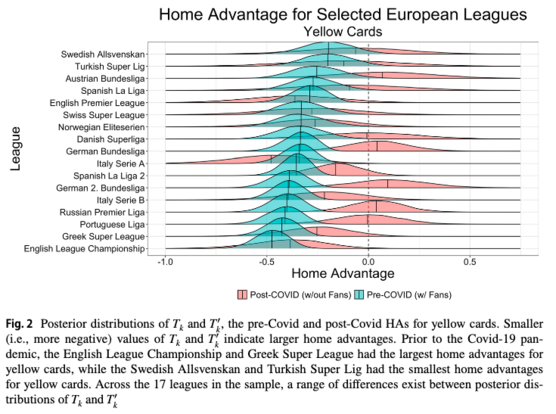
Today, I unexpectedly got fascinated by the Poisson distribution 🤩 and found:
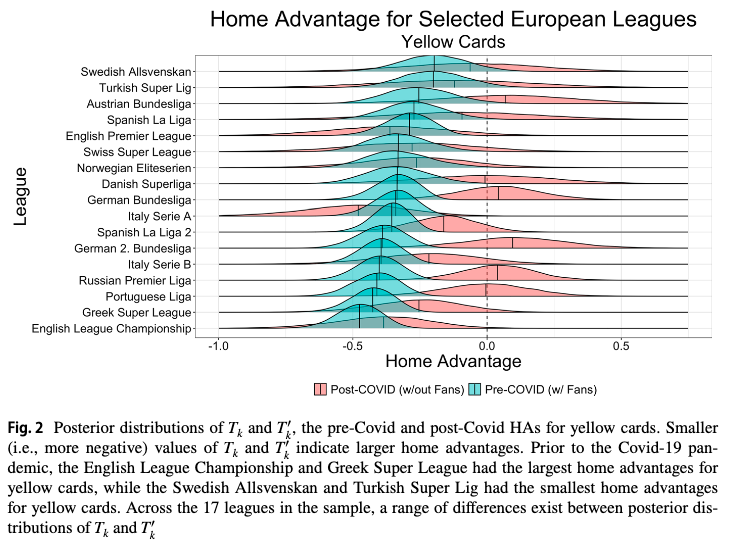
⚽ Estimating the change in soccer’s home advantage during the #COVID19 pandemic using bivariate Poisson regression https://doi.org/10.1007/s10182-021-00413-9
I don't know yet how to apply it to scientometrics and libraries 🤔 There is, of course, a great article in #Scientometrics about Modeling the obsolescence of research literature in disciplinary journals, but football in 🇺🇦 is much better funded than science and libraries)

CWTS, Leiden University · @cwts
549 followers · 113 posts · Server social.cwts.nlWe are happy to say that registration for the CWTS Scientometrics Summer School 2023 has now opened! ✔️ Please visit out website for more information and registration:
https://www.cwts.nl/education/cwts-course-program/cwts-scientometrics-summer-school-2023 #scientometrics #bibliometrics #summerschool
#scientometrics #bibliometrics #summerschool

Andrea Mannocci :BA: · @andremanno
135 followers · 74 posts · Server mas.toQ&A time
What would be your preferred mapping of #ScienceOfScience #QuantitativeScienceStudies #scientometrics #bibliometrics #informetrics onto ERC Field Classification? Pick your 3 best choices.
https://erc.europa.eu/sites/default/files/document/file/ERC_Panel_structure_2021_2022.pdf
#informetrics #bibliometrics #scientometrics #quantitativesciencestudies #scienceofscience
Serhii Nazarovets · @serhii
301 followers · 76 posts · Server mstdn.science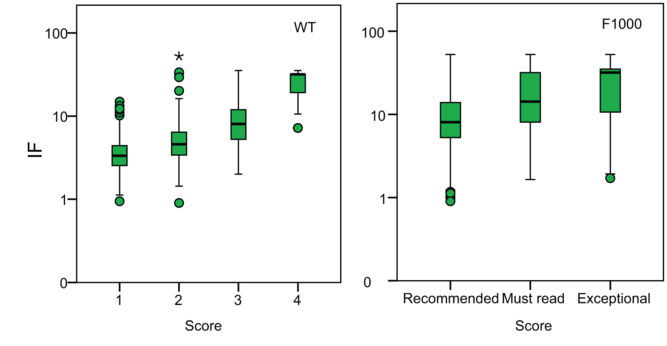
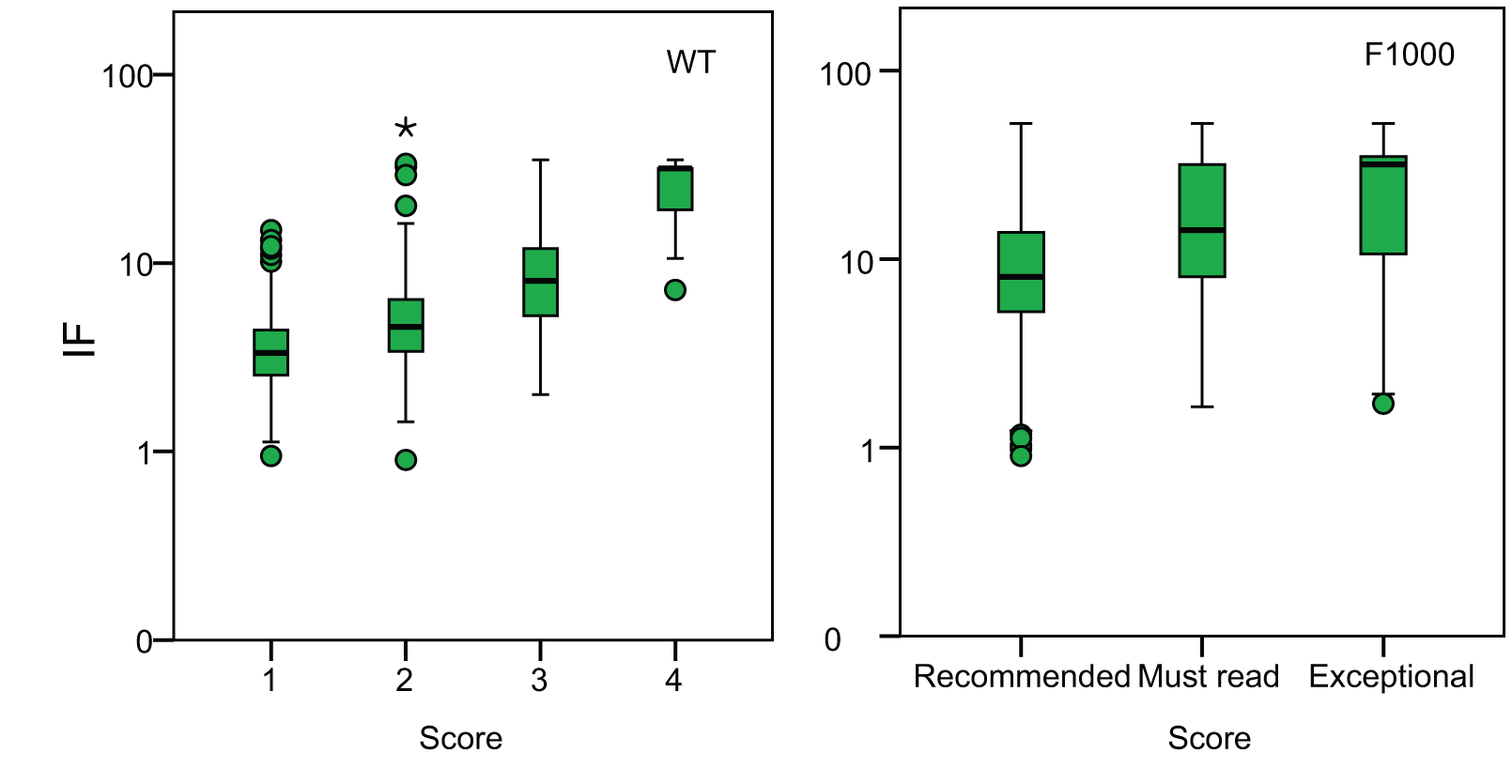
Adam Eyre-Walker & Nina Stoletzki once showed that assessor score depends strongly on the journal in which the paper is published, n that assessors tend to over-rate papers published in journals with high #impactfactor:
:doi: https://doi.org/10.1371/journal.pbio.1001675
Perhaps I'm being subjective, but I suspect that in the field of #scientometrics, scientists could more correctly evaluate articles without even knowing the journals in which they were published.
#impactfactor #scientometrics #assessment #review #citations

Dennis Donathan II · @Shillywakes
15 followers · 3 posts · Server scicomm.xyzRealized I let my #introduction post get auto-deleted, so I’ll make a new one:
I’m into #altmetrics, #scientometrics, and #scholcomm. Specifically, I’m really interested in Reddit and GitHub to find important insights into the impact of research(ers).
I believe the quality of engagements is far more meaningful than the quantity, so I’m inherently distrustful fanciful metrics (*cough* altmetric score).
Spare time, I like being with my family, cooking, listening to music, and playing chess.
#scholcomm #scientometrics #altmetrics #introduction
Serhii Nazarovets · @serhii
301 followers · 76 posts · Server mstdn.science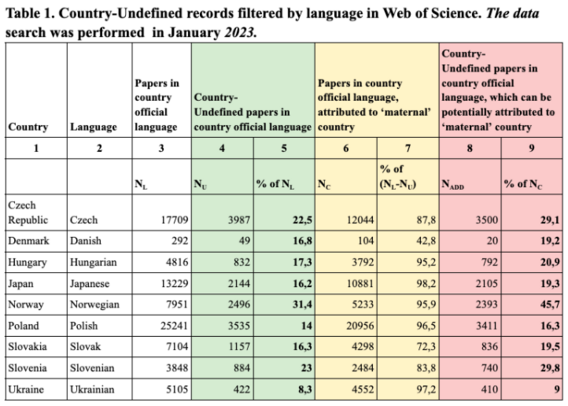
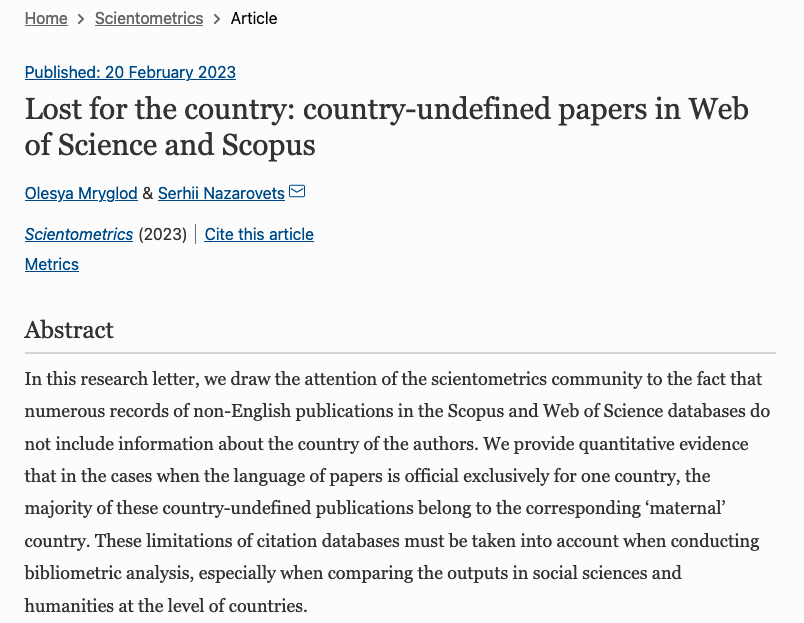
In this research letter 📮 , we draw the attention of the #scientometrics community to the fact that numerous records of non-English publications in the #Scopus and #WoS do not include information about the country of the authors:
:doi: https://doi.org/10.1007/s11192-023-04661-1
These limitations of #citation databases must be taken into account when conducting #bibliometric analysis, especially when comparing the outputs in #SSH at the level of countries.
#scientometrics #scopus #wos #citation #bibliometric #SSH #language #country #affiliation
Serhii Nazarovets · @serhii
301 followers · 76 posts · Server mstdn.science
Our new publication in #Scientometrics:
👉 https://link.springer.com/article/10.1007/s11192-023-04661-1
During the #bibliometric analysis, we noticed that numerous records for non-English publications in #Scopus and #WoS don't include information about the country of the authors. We suspected that most of these country-undefined papers are written by authors from a country where the language of the paper is official. Thus, the incompleteness of #metadata may distort the quantitative comparison of output at the country level ⚠️
#scientometrics #bibliometric #scopus #wos #metadata
Andrea Mannocci :BA: · @andremanno
135 followers · 74 posts · Server mas.toRT @vergoulis
I am really glad to be a presenter in this #ISSI2023 tutorial. Apart from the theoretical part, we also plan to have a hands-on session to demonstrate in practice the use of an Open Science Graph in #scientometrics scenarios, using the @OpenAIRE_eu Graph as an example. 🤓 https://twitter.com/andremanno/status/1625438482402353152
CWTS, Leiden University · @cwts
534 followers · 69 posts · Server social.cwts.nlCWTS is proud to introduce its newly developed course program including the courses Bibliometric Data Sources and Indicators, Visualizing Science Using VOSviewer and Scientometrics Using Open Data. Which one would you like to follow first? Check our website for more info: https://www.cwts.nl/education/cwts-course-program" #bibliometrics #opendata #scientometrics
#bibliometrics #opendata #scientometrics

Thanasis Vergoulis · @vergoulis
18 followers · 18 posts · Server scicomm.xyz@andremanno @IUBloomington
I am really glad to be a presenter in this #ISSI2023 tutorial. Apart from the theoretical part, we also plan to have a hands-on session to demonstrate in practice the use of an Open Science Graph in #scientometrics scenarios, using the OpenAIRE Graph as an example. 🤓
CWTS, Leiden University · @cwts
534 followers · 64 posts · Server social.cwts.nl📣 We are happy to present the 2023 edition of our CWTS Scientometrics Summer School! This fifth edition will again be hybrid, and is scheduled to take place on September 18-26, just before the @sti2023 conference in Leiden. https://www.cwts.nl/education/cwts-scientometrics-summer-school-2023 #CS3 #Scientometrics #Bibliometrics.
#cs3 #scientometrics #bibliometrics
Andrea Mannocci :BA: · @andremanno
135 followers · 74 posts · Server mas.to📢 Stoked! Our #tutorial "Transitioning towards Open Scientometrics with Open Science Graphs" has just been accepted at #ISSI2023!!
@vergoulis @paolomanghi
Dimitris Sacharidis @scik_workshop
📅 2 Jul 2023
📌 @IUBloomington
#scientometrics #informetrics #openscience @OpenAIRE_eu
#openscience #informetrics #scientometrics #issi2023 #tutorial

ndocist · @ndocist
76 followers · 225 posts · Server oc.todon.fr
#clarivate lance le Preprint Citation Index™ intégré à #webofscience ™ graphe de #preprints issus de dépôts "de confiance" : arXiv, bioRxiv, chemRxiv, medRxiv and preprint.org
#scientometrics #bibliometrics
https://clarivate.com/blog/the-preprint-citation-index-linking-preprints-to-the-trusted-web-of-science-ecosystem/
#clarivate #webofscience #preprints #scientometrics #bibliometrics

Jonny · @jonny
559 followers · 1358 posts · Server neuromatch.socialAs an academic, I view the journal impact factor as
- A good and useful indicator of journal and paper quality
- An imperfect, sometimes wrong, sometimes noisy, but still useful metric for some applications
- A metric that is useless, but not purposely so, just because it is noisy or poorly constructed. Other, similar metrics could be useful.
- A hoax and a scam, a deliberately manipulated metric that props up entrenched power
@neuroscience @academicchatter
#JIF #ImpactFactor #Scientometrics #Bibliometrics
#jif #impactfactor #scientometrics #bibliometrics
Serhii Nazarovets · @serhii
301 followers · 76 posts · Server mstdn.science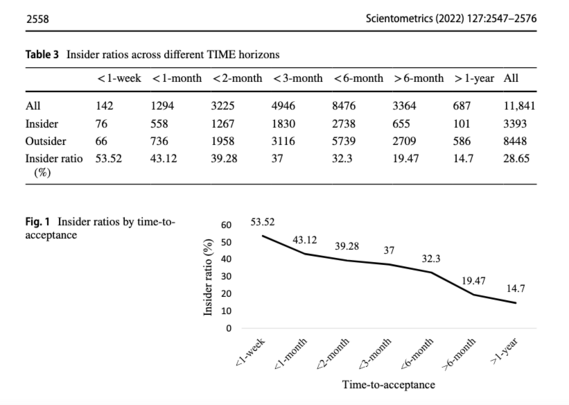


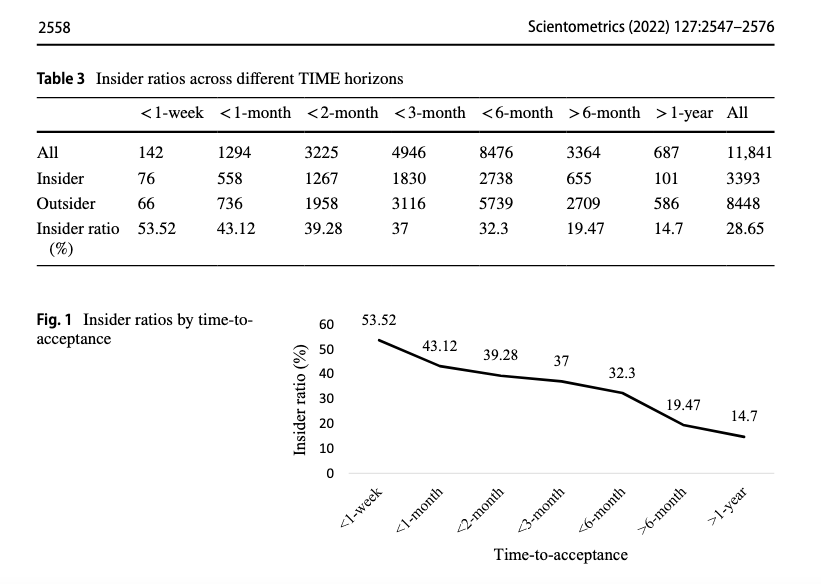
Great research about Academic #favoritism at work: insider bias in 🇹🇷 Turkish national journals:
:doi: https://doi.org/10.1007/s11192-022-04355-0
"The findings show that insiders not only publish in large numbers in their affiliated institutions’ journals, but also do so at significantly faster speeds. Specifically, 4938 (29.79% of) papers have at least one insider author, and they are accepted 41.5 days faster than the average outsider submission".
#favoritism #scientometrics #editorial #journals