
Doc Edward Morbius ⭕ · @dredmorbius
2127 followers · 14863 posts · Server toot.cat@pnathan I've run across TRIZ before, though only given it a fairly cursory look.
https://en.wikipedia.org/wiki/TRIZ
Thanks for the reminder.
Altshuller's four components of systems ("Any working system must have 4 parts: the engine, the transmission, the working unit (working organ) and the control element (organ of steering). The engine generates the needed energy, the transmission guides this energy to the working unit, which ensures contact with outside world (processed object), and the control element makes the system adaptable.") reminds me of my own ontology of technological mechanisms, with nine components:
- Fuels & energy storage/release
- Materials
- Energy transmission and transformation
- Process knowledge ("technology")
- Causal knowledge ("science")
- Information (sensing, parsing, storage, retrieval, processing, transmission)
- Networks (nodes and links)
- Systems (feedback and control)
- Hygiene: addressing / mitigating unintended consequences
#triz #genrichaltshuller #ltse #systems #techontology

Aaron · @aawa
7 followers · 16 posts · Server nerdculture.de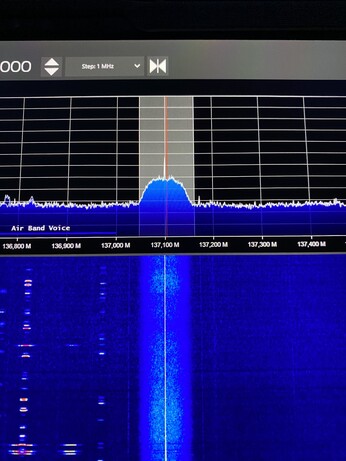
Probiere gerade Daten von einem Wettersatelliten zu empfangen. Dem Meteor M2. Ein Signal ist da. Mal schauen ob am Ende auch ein Bild zu sehen ist.
#techontology #satellitenbildern #meteor #technik
Doc Edward Morbius ⭕ · @dredmorbius
2082 followers · 14677 posts · Server toot.catDoes the concept of dividing technology in "freestanding" vs. "integrated" ring bells for anyone?
I'm trying to track this down. Thought that #UsulaMFranklin might have been a source, but her Massey Lectures text doesn't include the terms AFAICT.
#DearMastomind #DearHiveMind #DearLazyWeb #Technology #TechOntology
#UsulaMFranklin #dearMastomind #dearhivemind #dearlazyweb #technology #techontology
Doc Edward Morbius ⭕ · @dredmorbius
2082 followers · 14677 posts · Server toot.catI'm looking for a freely-available full text (PDF, ePub preferably) of Charles Babbage, On the Economy of Machinery and Manufactures (1846).
There's a start of one at Wikisource, but it's only the contents, index, and other supplemental material.
Neither LibGen nor Archive Org seem to have a copy of the text in English and out of copyright. (There's a copyrighted repriint at Archive.Org.)
#DearMastomind #PDFMe #Books #CharlesBabbage #DearHivemind #EconomyOfMachinery #TechOntology
#dearMastomind #pdfme #books #CharlesBabbage #dearhivemind #EconomyOfMachinery #techontology
Doc Edward Morbius ⭕ · @dredmorbius
2082 followers · 14677 posts · Server toot.cat
@dlovell Incidentally, on what technology is, in terms of what its operating mechanisms are, I've arrived at a nine-element list:
- Fuels: energy stored in some physical medium, includes foods.
- Materials: raw substrate for interaction.
- Energy/power transmission & tranformation: simple machines to complex mechanisms, inclusive of electric transmission & application.
- Process knowlege: what's typically understood by "technology". Do A to accomplish B.
- Empirical causal knowledge: generally "science", classification of phenomena and mechanisms, not necessarily applied as technology.
- Networks: nodes and links.
- Systems: processes with feedback and adaptation.
- Information: sensing, storage, retrieval, processing, transmission. Includes media and comms.
- Hygiene factors: Identifying and addressing unintended / unwanted consequences of technology.
Early development here:
https://ello.co/dredmorbius/post/klsjjjzzl9plqxz-ms8nww
I've written more on this at https://old.reddit.com/r/dredmorbius and here under the #TechOntology tag.
Again, information is specifically included as a technological mechanism. This includes gestures, speech, writing, maths, logic, mechanical storage and retrieval, computing, printing, telecoms, broadcast, etc. All of these have profound impacts on the societies and cultures into which they emerge.
Doc Edward Morbius ⭕ · @dredmorbius
2081 followers · 14668 posts · Server toot.cat@kensanata
An alternative is the traditional "chinese doctor payment model": you pay the doctor when you're well, the doctor's incentive is to keep you well, and to restore your health at minimal cost and time.
Keep in mind that this can still be a market-based mechanism. What's changed, though, is the notion of what specificially the good or service being sought is, where the value lies, and what constitutes cost.
Though it might also be considered a state (or other collective) interest, and that the healthcare sector is delivering a service (a healthy and capable population) to the community as a whole.
(Education and other social services might be similarly considered, though here, education as a service to employers in delivering a capable workforce is another interpretation --- not without its own set of implications.)
#RobertKMerton #Hygiene #CovertFunctions #ManifestFunctions #TechOntology
3/end/
#RobertKMerton #hygiene #CovertFunctions #ManifestFunctions #techontology
Doc Edward Morbius ⭕ · @dredmorbius
2081 followers · 14668 posts · Server toot.cat@kensanata
Because of numerous aspects of market function, we tend to compensate based on service or product delivery rather than based on achieved results. There's also a challenge in measuring or assessing hygiene interventions, simply because they're long-term, indirect, and in general covert rather than manifest.
The sociologist Robert K. Merton came up with (or substantially developed) the notions of manifest & covert functions as well as intended and unintended consequences. He makes a strong argument that covert functions are conceptually more significant knowledge simply by fact that they're less evident or obvious.
#TechOntology #ManifestFunctions #CovertFunctions #Hygiene #RobertKMerton
2/
#techontology #ManifestFunctions #CovertFunctions #hygiene #RobertKMerton
Doc Edward Morbius ⭕ · @dredmorbius
2081 followers · 14668 posts · Server toot.cat@kensanata That you're discussing this in the context of health care / healing is highly appropriate.
I think you'll find this is the case in many (all?) of the areas I consider to be "hygine factors" in my #TechOntology.
That is:
- Hygiene looks after the health of a system (not just humans or individuals).
- Quite often it's dealing with unintended or unwanted consequences.
- These tend to accumulate as a particular system is developed to greater degrees of complexity.
1/
Doc Edward Morbius ⭕ · @dredmorbius
2071 followers · 14632 posts · Server toot.cat
@vortex_egg Rhetoric. The Sophists. Most of the field of Communications.
There's my own recent realisation that media monopoly is directly tied to censorship, surveillance, propaganda, and targeted manipulation:
https://joindiaspora.com/posts/7bfcf170eefc013863fa002590d8e506 (HN discussion: https://news.ycombinator.com/item?id=24771470)
I've found bits of that in the works of others, notably Shoshana Zuboff's Surveillance Capitalism (and earlier), Tim Wu, Bruce Schneier, and Cory Doctorow (most of which are mentioned/linked in comments to the original and/or HN threads).
There's the understanding of what information does. My view is that it's not power itself but a power multiplier. As such it enhances an existing power imbalance, though it may offer some corrective capabilities. I've addressed that in some #TechOntology threads / posts here and elsewhere.
This "light reading list" includes references to some of that (the list could be updated, it remains pretty good):
https://old.reddit.com/r/dredmorbius/comments/7k7l4m/media_advertising_sustainability_externalities/
#media #information #power #media #monopoly #censorship #propaganda #surveillance #manipulation #advertising #intimidation
#techontology #media #information #power #monopoly #censorship #propaganda #surveillance #manipulation #advertising #intimidation
Doc Edward Morbius ⭕ · @dredmorbius
2071 followers · 14632 posts · Server toot.catI'm trying to think about it in terms of system dynamics and feedback loops.
This is a very solid approach, and addresses technology's impacts on society and civilisation.
There's also the questions of what technology IS and how it operates, neither of which seem to be well-formed that I can tell. I'm increasingly frustrated that there seems not to be a good philosophy or theory of technology generally. (Ellul, Foucault, Heidigger, Mumford, Schumpeter, and a few others try, though I find it weak sauce despite some good points). But definition and mechanism both address the good/evil/neutral question.
The work I keep returning to, and finding despite some weaknesses (very dry & technical) compelling strengths (excellent organisation and reasoning) is Michael and Joyce Heusemann's Techno-Fix. It's by technologists, though critical ones, and looks specifically to mechanism.
Links and some earlier discussion of mine:
http://newtechnologyandsociety.org/
http://www.indiebound.org/book/9780865717046
http://youtube.com/watch?v=SDbmJh8uSAY
https://archive.org/details/scm-33066-michaelhuesemanntechno-fixwhyt
https://old.reddit.com/r/dredmorbius/comments/21pc8c/michael_joyce_heusemann_technofix_why_technology/
#technology #TheoryOfTechnology #PhilosophyOfTechnology #TechnoFix #Heusemann #MichaelHeusemann #JoyceHeusemann #TechOntology
#technology #theoryOfTechnology #philosophyoftechnology #technofix #Heusemann #MichaelHeusemann #JoyceHeusemann #techontology
Doc Edward Morbius ⭕ · @dredmorbius
2071 followers · 14632 posts · Server toot.cat

How do dominant economic activities or modes influence economic systems?
I'm noodling at this idea, and broke out some thoughts in the comments section of this Diaspora post:
https://joindiaspora.com/posts/e045d2304aec0139cee5002590d8e506
Specifically my comment beginning:
I’m referring to a set of economic activities which, if you look at history seem to emerge ...
TL;DR:
There seem to be roughly 3 stages of major economic operation and organisation to date among humans:
Hunter-gatherer, typified by small tribes and a range of organisations, ranging from highly communal to highly authoritarian. Dominant activity is the sourcing mode of the mode's name.
Agricultural cities, monarchies, and empires, with increasing amounts of trading in later periods. Tending strongly toward ultimately feudal systems (both economically and socially) existing in Rome, China, Egypt, the Indus River Valley, and Europe, to about 1750.
Several variants on industrial / monopoly / financialised economies, since about 1750--1850, highly reliant on extractive activities, and dominated by free-market / capitalist / private property economic models.
I see a "hygiene model" being one possible future, which doesn't seem to fit well with the assumptions and institutions of market capitalism.
The general dominant activities are:
- Sourcing
- Making
- Distribution
- Risk
- Information / Management
- Hygiene
(Defined in the link.)
This isn't a value-driven analysis, though it raises some interesting questions.
For those who are into that sort of thing.
#economics #EconomicSystems #TechOntology #EconomicModes #capitalism #postcapitalism
#economics #EconomicSystems #techontology #EconomicModes #capitalism #postcapitalism
Doc Edward Morbius ⭕ · @dredmorbius
2071 followers · 14642 posts · Server toot.catThe 1989 CBC Massey Lectures, "The Real World of Technology"
Technology has always been a part of human existence. Today though, says the experimental physicist, Ursula M. Franklin, technology has large-scale effects on culture itself.
Direct audio:
https://mp3.cbc.ca/radio/CBC_Radio_VMS/793/967/Masseys_1989_01.mp3
https://mp3.cbc.ca/radio/CBC_Radio_VMS/796/395/Masseys_1989_02.mp3
https://mp3.cbc.ca/radio/CBC_Radio_VMS/664/155/ideas_20171016_84064_uploaded.mp3
https://mp3.cbc.ca/radio/CBC_Radio_VMS/665/631/ideas_20171016_87526_uploaded.mp3
https://mp3.cbc.ca/radio/CBC_Radio_VMS/341/254/ideas_20171018_59377_uploaded.mp3
https://www.cbc.ca/radio/ideas/the-1989-cbc-massey-lectures-the-real-world-of-technology-1.2946845
#UrsulaKFranklin #technology #TechOntology #CBC #MasseyLectures
#UrsulaKFranklin #technology #techontology #cbc #MasseyLectures
Doc Edward Morbius ⭕ · @dredmorbius
2072 followers · 14642 posts · Server toot.cat@vortex_egg In his recent talks (his Gizmodo System Reboot podcast interview f'rex: https://rss.art19.com/episodes/f1eb148b-3664-4e9f-935f-05e2371d267a.mp3), Doctorow brings up Lessig's Four Laws of cyberspace; Law, Norms, Markets, and Code.
I'm thinking of that in context of my #TechOntology (https://old.reddit.com/r/dredmorbius/comments/5rnjg0/state_of_the_lair_2017/). "Code" might be a subset of that(Information), or a stand-in for all technological mechanisms.
Another set of frames I've been applying is "Progress, models, institutions, technology, limits, values. Interactions thereof." Which ... maps roughly onto Lessig's classification.
The Values / Norms element matters strongly. How much that can resist monopoly-market dynamics becomes ... an interesting (that is: existential) question.
5/